
 Contact
By Lois Weiss | Jan. 18, 2024
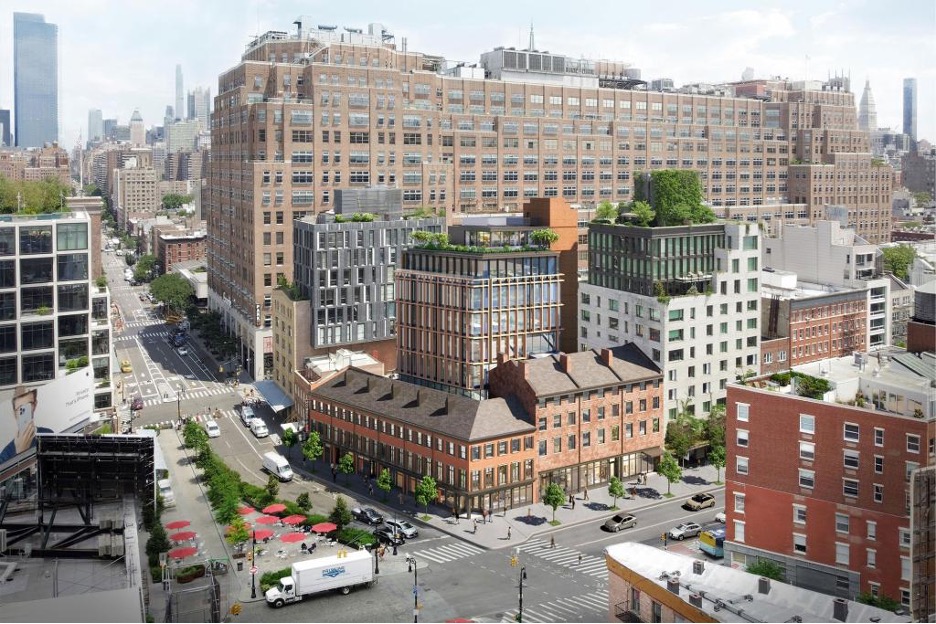
Rolls-Royce is taking over the penthouse of 50 Ninth Ave.
Despite a lethargic 2023, office leasing got its mojo back in the fourth quarter when the year’s largest deals were completed.
Law firms led the action with blockbuster leases inked after Labor Day.
Davis Polk renewed and expanded its lease to 630,000 square feet at RXR’s 450 Lexington Ave. Paul Weiss will relocate from 1285 Sixth and expand to 765,000 square feet at Fisher Bros.’s 1345 Sixth, which has $120 million in new amenities. Quinn Emanuel is leaving 51 Madison Ave. for 132,000 square feet at 295 Fifth Ave., which received a $350 million redevelopment. Its spin-off, Selendy Gay Elsberg, also expanded and signed a direct lease for 101,000 square feet at Vornado’s 1290 Sixth Ave. King & Spalding will join them in 175,000 square feet in a move from nearby 1185 Sixth Ave.
Regardless of the industry, all tenants are looking for the same things. “Location and access to transportation has moved to the top of the criteria list,” said Chris Corrinet of CBRE.
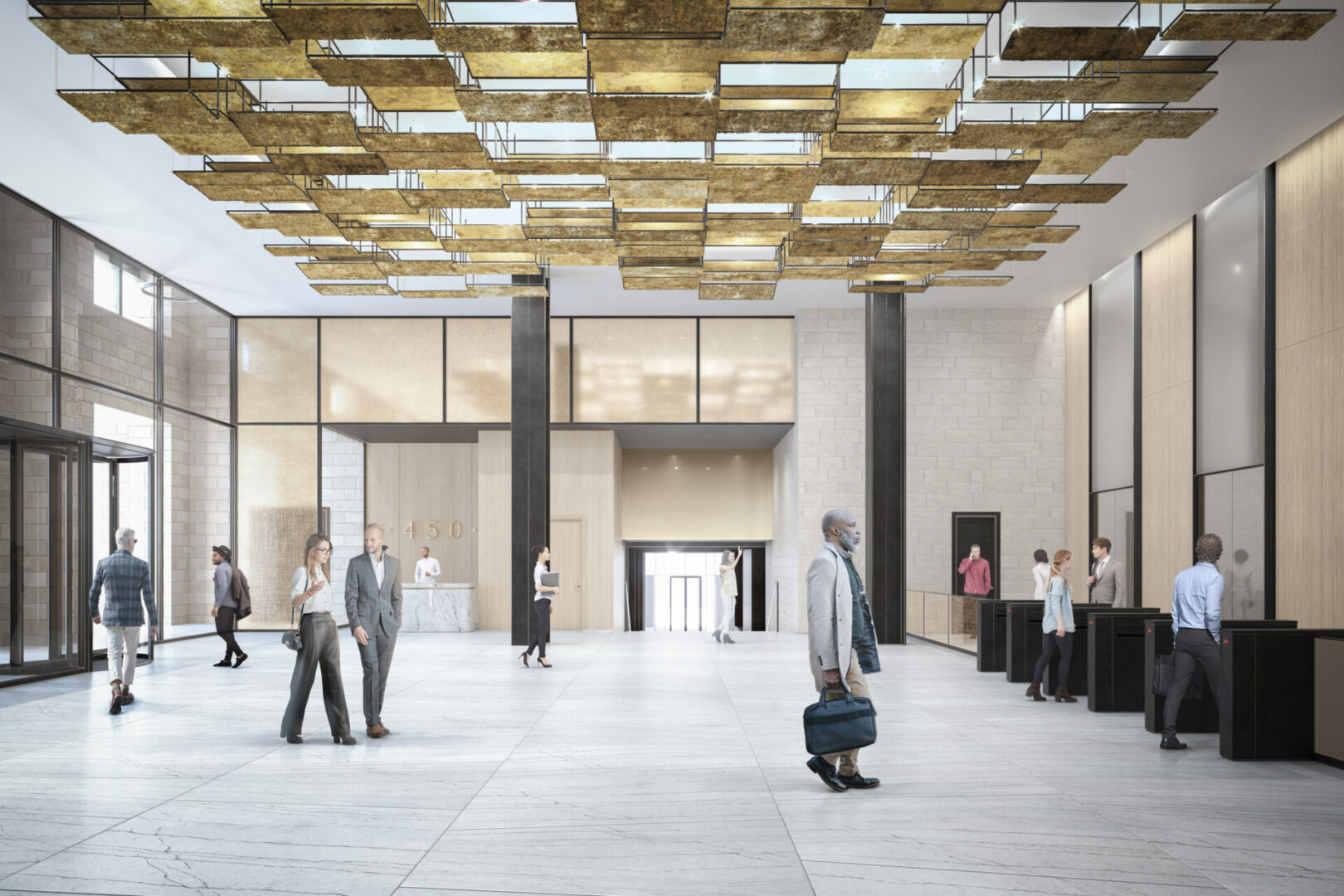
Law firm Davis Polk expanded its lease to 630,000 square feet at RXR’s 450 Lexington Ave.
That’s why Park Avenue, north of 46th Street and around Grand Central are “bright spots in a moribund area,” added David Hoffman of Cushman & Wakefield. An example: MetLife renewed and expanded to 400,000 at its namesake tower at 200 Park Ave., which sits on top of Grand Central and now serves LIRR riders. However, Class A buildings outside of the new sweet spots still have large vacancies. RXR and SL Green’s 5 Times Square has 750,000 square feet available with gorgeous amenities and LED signage.
Commuters to Hudson Yards can hop on the 7 train, making it easy for Wells Fargo employees to relocate from 150 E. 42nd St. to its newly purchased 300,000 square feet at 20 Hudson — where it already has 500,000 square feet at 30 Hudson Yards.
Fresh spaces are equally important to tenants. That’s why Hudson Yards, Manhattan West, the Farley Building over the new Moynihan Station, Morgan North and the area around Penn Station are all completely reinvented.
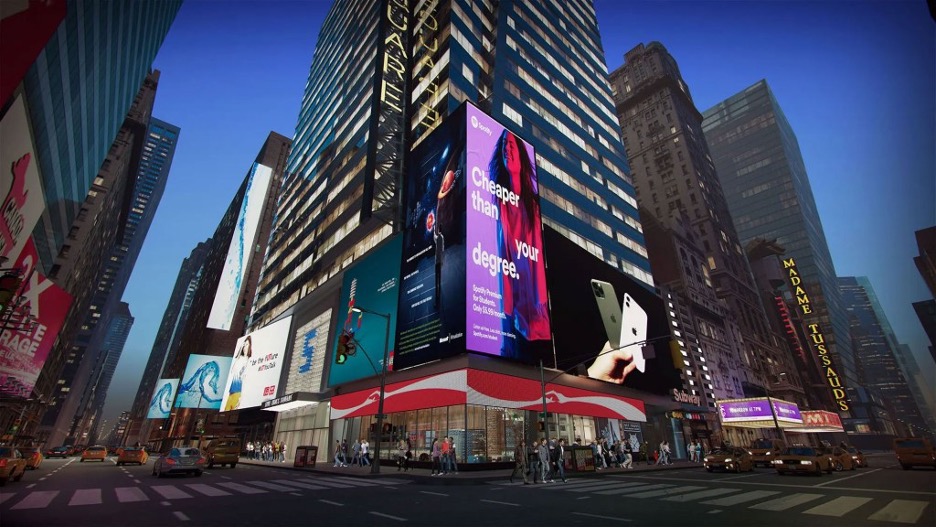
5 Times Square has yet to move 750,000 square feet of office space.
On Seventh Avenue, Vornado’s Penn 2 is now complete and West 33rd Street will soon become a plaza.“You can feel that the area will be transformed and the folks from Vornado have done a good job of changing people’s perceptions,” said Mark Weiss of Cushman & Wakefield, whose colleagues will now lead leasing for Penn 2.
More leasing action is coming from companies facing lease expirations. IBM and Franklin Templeton, for instance, will move to SL Green’s reinvented One Madison in Nomad.
LinkedIn recently renewed and expanded at the Empire State Building to 526,000 square feet.
Anthony Malkin of Empire State Realty Trust said deals like that are thanks to the building’s campus-like amenities, improved energy efficiency and indoor air quality. “If you don’t go to a brand-new, glass-wall building and look for the next tier, you come to us,” he said.
Pricing for such top-tier trophy properties, especially in the Plaza District, is hitting $200 to $300 per square foot — think One Vanderbilt, 550 Madison, 767 Fifth, 425 Park and 9 W. 57th St. In contrast, buildings without amenities are struggling for tenants at anywhere from $30 to $80 per foot.
Office and amenity design continues to be influenced by hospitality, said Gensler architect Robert Fuller.
Baccarat is moving to a penthouse headquarters and showroom with a terrace at Marx Realty’s hospitality-infused 545 Madison Ave. — and signed a branding deal. The building’s lounge will have a Baccarat chandelier and use its barware.
“The Rivian house car will get the Baccarat scent in the car,” said Craig Deitelzweig of Marx Realty.
Marx will raise rents there and at 10 Grand Central Place where a new floor of amenities will include a 150- to 200-seat town hall space, a screening room, a lounge, a fireplace and even a spot for podcasting.
“Is it worth it? Yes, it is,” Deitelzweig said. “It pays for itself.”
More amenities are also coming to 9 W. 57th St., where owner Stefan Soloviev is adding $45 million in improvements. He’s building a 27th-floor amenity center with dining overlooking Central Park and space for 150 people to meet. The lower level has a full gym with a cold plunge pool and a hot pool. “The 150-person meeting area was a suggestion by a tenant,” Soloviev said. “I am listening to what tenants want.”
Jeff Peck of Savills, who has clients seeking 20,000 to 150,000 square feet, calls it the “flight to excitement.”
“If you can make something lackluster into something ‘wow,’ we can lease it all day long,” echoed Deitelzweig.
To drive excitement in the Meatpacking District, Rolls-Royce will create a VIP experience center in a penthouse with a wraparound terrace at the new office tower and historic retail project at 50 Ninth Ave. being developed by Tavros (with an asking rent over $200 per foot).“People want to be in the most dynamic neighborhoods and want to pay a premium to be there and in buildings that have amenities for the employees,” said Nicholas Silvers of Tavros.
How Shopping Mall Icons Are Ditching Their Dying StoresHot Topic, Journey’s, Victoria’s Secret and others are exploring alternative store formats
January 12, 2024 | By Sasha Jones
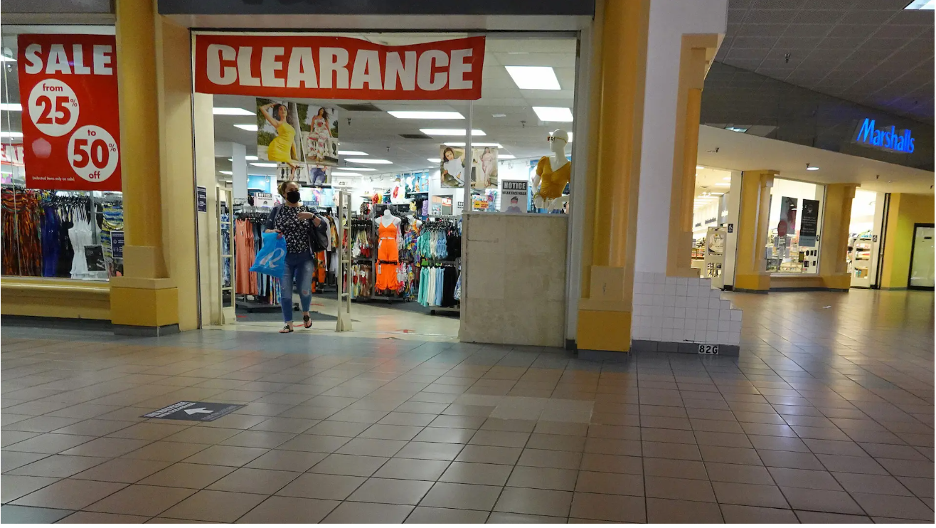
Two in five Americans live near two or more dead malls, and retailers hope to save themselves with different store openings Joe Raedle/Getty Images
Stores have always benefited from the mall’s wormhole effect on shoppers — come to buy just one thing, stay to spend money at Hot Topic, Bath and Body Works and Forever 21. And just try to avoid temptation from Auntie Anne’s.
But as foot traffic slowly dies, the retailers that define a classic trip to the mall are looking for ways to outlive their homes. It’s led them to explore new real estate formats.
“Many of these brands that are operating in enclosed malls are really good retailers,” said David Hinkle, principal of The Outlet Resource Group, who advises shopping center developers. “They may not be the primary reasons someone says, ‘Hey, let’s go shop today,’ but when the customer gets there, the stores are typically well merchandised, visually fantastic and they do a lot of volume.”
Shopping center vacancy rates ended last year at an all-time low, according to a report by commercial brokerage Cushman and Wakefield. Though malls saw brighter days compared to the doom days of the pandemic, foot traffic is still 13% below 2019 levels.
And that’s just for the malls that are still operational. Two in five Americans live near two or more dead malls — defined as having a high vacancy rate, low traffic level or completely abandoned — according to a report by real estate consultant group IPX1031.
Among the retailers fleeing malls is Journey’s, known for selling shoes like Heelys and Vans. At the end of 2023, it shut down 100 mall stores, replacing them with 25 off-mall leases, the company said in its second quarter earnings call. Those new locations will be able to carry a larger assortment of adult and kids shoes and accessories.
One of those is in New York’s Cross County Center.
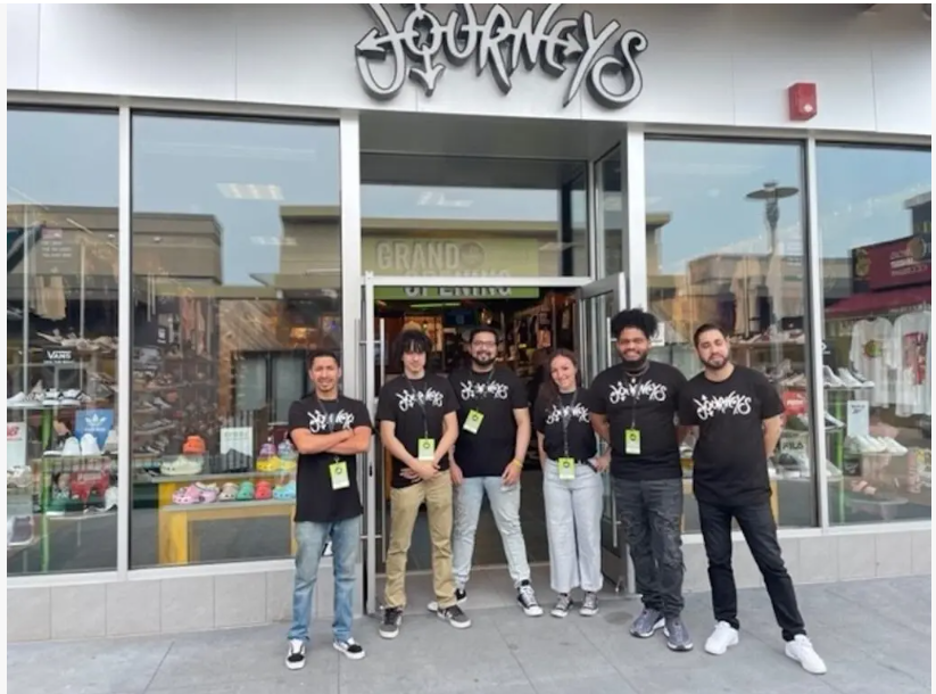
The newly opened Journey’s at Cross County Center Marx Realty
Craig Deitelzweig, CEO of Marx Realty, which owns the center, said that the mall environment has pushed shoppers away, not the retailers. In new spaces, the brands are able to experiment with layout and design, he said.
The landlord added that hosting events and activities on the lawns outside the shops brings customers into the center for longer.
“The ability to [entertain] kids and families — that’s what malls used to be like,” Deitelzweig said. “Now people don’t want to be stuck, for lack of a better word, in that environment.”
The giant 100-store open-air shopping center is also home to mall staple Cinnabon. However, instead of being secluded to mall kiosks, the bakery operates in a standalone store with seating.
In a move of self-awareness, both Journey’s and Hot Topic — remembered as a dimly lit store blasting 2000’s pop punk, always equipped with an emo, teenaged cashier — have launched collaborations with online resale platform thredUp to sell their, now nostalgic, 2000’s band tees.
Hot Topic has also popped up in outlet malls, which have appealed to inflation-pressured shoppers in recent years.
For many companies, the plan to leave malls behind has been in the works for years.
By the end of this year, Gap and Banana Republic will complete a real estate restructuring that will result in 80% of its stores being outside of malls, according to previous investor reports.
Macy’s similarly plans to triple its fleet of small-format stores in 2024 and 2025 — an initiative that began in 2020.
In August, Victoria’s Secret CEO Martin Waters outlined the company’s three strategies moving forward: opening smaller stores, its “Store of the Future” modernizes its layout and embracing digital sales.
“If you think about new competitors that have come into the market in recent years, they tend to be digitally-native players,” Waters told investors. “We’re doing okay in digital.”
In moving outside of the mall, brands will find out whether they still resonate with shoppers or if it’s time to admit defeat, The Outlet Resource Group’s Hinkle said.
“At the end of the day, I always say the consumer votes with a checkbook. These brands who migrate their way into the outlet sector, they have to be good,” Hinkle said. “If they don’t perform they’re not going to stay there nor will the landlord want them.”
French Luxury Brand Baccarat To Relocate Manhattan Office
By Andria Cheng | December 19, 2023
French luxury crystal label Baccarat is expanding its New York office footprint in a planned relocation to a renovated boutique office building a few blocks south of its current home.
Baccarat will relocate its Manhattan office to a 10,000-square-foot penthouse and mezzanine space, including a private terrace, on the 18th floor of 545 Madison Ave. by French Luxury Brand Baccarat To Relocate Manhattan Office 55th Street, landlord Marx Realty said Monday in a statement. Baccarat is moving from its space just four blocks north at 635 Madison Ave., where it occupies 5,809 square feet, a Marx Realty spokesperson told CoStar News.
Baccarat’s new lease lasts 11 years with an asking rent of $135 per square foot, the spokesperson said. The brand’s retail location will remain in its current building just north of 59th Street.
As part of the luxury brand’s planned move, 545 Madison will co-brand with the luxury house and install its logo near the building’s entry marquee. Marx also will feature Baccarat’s crystal chandeliers as well as other luxury goods in its lobby and at its exclusive tenant lounge and terrace amenities space on the eighth floor.
“We proposed this partnership to Baccarat as we knew it would represent the perfect coupling of the 545 Madison brand and the Baccarat brand and would best reinforce the building’s position at the intersection of office, luxury, and hospitality,”Craig Deitelzweig, Marx president and chief executive, said in the statement.“It’s the next step in blurring the lines between the office and hotel experiences while aligning with the regal elegance of the Baccarat brand.”
Deitelzweig has been adopting hotel-like amenities and designs in Marx’s office portfolio to help attract tenants as New York’s vacancy rate has jumped to what CoStar data shows as a record high of 14%.
For instance, after the developer bought 545 Madison in late 2019, it renovated the building during the pandemic with hospitality elements and finishes, including warm walnut wood, velvet and bronze.
A uniformed doorman is stationed outside each office property, Deitelzweig has previously told CoStar News. 545 Madison has an occupancy rate of 90%, the Marx spokesperson said. That equates to a vacancy rate of 10%, below CoStar’s city average and the 13.3% rate in the Plaza where the building sits.
At another Marx property, 10 Grand Central, Marx last year introduced a hotel-like house-car concept to whisk office tenants around Manhattan. Vacancy at that building is about 10.5%, also below market average, CoStar data shows.Baccarat, for its part, is no stranger to hospitality. Its namesake luxury hotel is nearby at
At another Marx property, 10 Grand Central, Marx last year introduced a hotel-like house-car concept to whisk office tenants around Manhattan. Vacancy at that building is about 10.5%, also below market average, CoStar data shows.
Baccarat, for its part, is no stranger to hospitality. Its namesake luxury hotel is nearby at 28 W 53rd Street.
For the Record
A Cushman & Wakefield team of Tara Stacom, Harry Blair, Peter Trivelas, Remy Liebersohn, Connor Daugstrup and Bianca Di Mauro represented Marx in the transaction. Lantern Company’s Matt Siegel and Jessica Adler represented Baccarat. David Burns and Kristin Kaiser of Studios Architecture worked with Marx’s in-house design team to re-imagine the lobby and amenity spaces at 545 Madison.
Baccarat to Move Office to 545 Madison with 10K-SF LeaseBy: Emily Fu | December 18, 2023
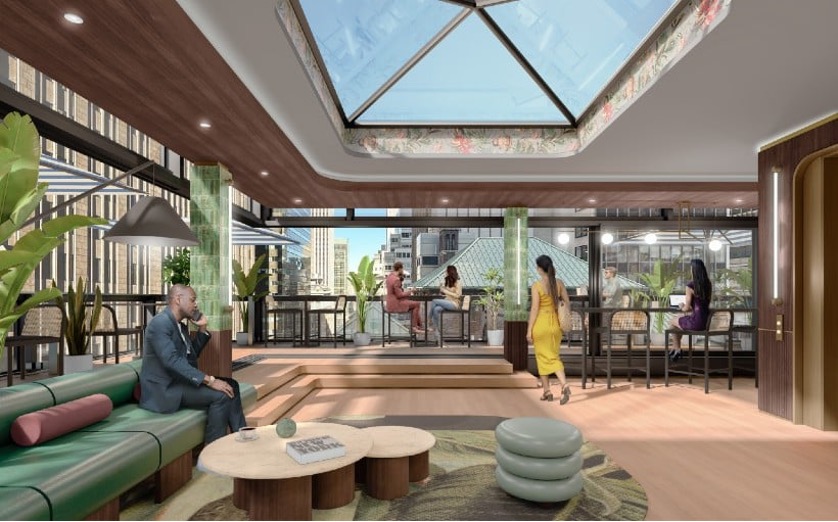
Marx Realty has announced that Baccarat will relocate its corporate offices to a 10,000-square-foot penthouse and mezzanine space – including a private terrace — on the 18th floor at 545 Madison Avein the Plaza District.
“We proposed this partnership to Baccarat as we knew it would represent the perfect coupling of the 545 Madison brand and the Baccarat brand and would best reinforce the building’s position at the intersection of office, luxury, and hospitality,” said Craig Deitelzweig, president and CEO of Marx Realty. “It’s the next step in blurring the lines between the office and hotel experiences while aligning with the regal elegance of the Baccarat brand.”
A Cushman & Wakefield team of Tara Stacom, Harry Blair, Peter Trivelas, Remy Liebersohn, Connor Daugstrup and Bianca Di Mauro represented Marx Realty in the transaction. Lantern Company’s Matt Siegel and Jessica Adler represented Baccarat.
Marx Rebranding 545 Madison Office Property With Crystal Maker BaccaratBy Abigail Nehring | December 18, 2023
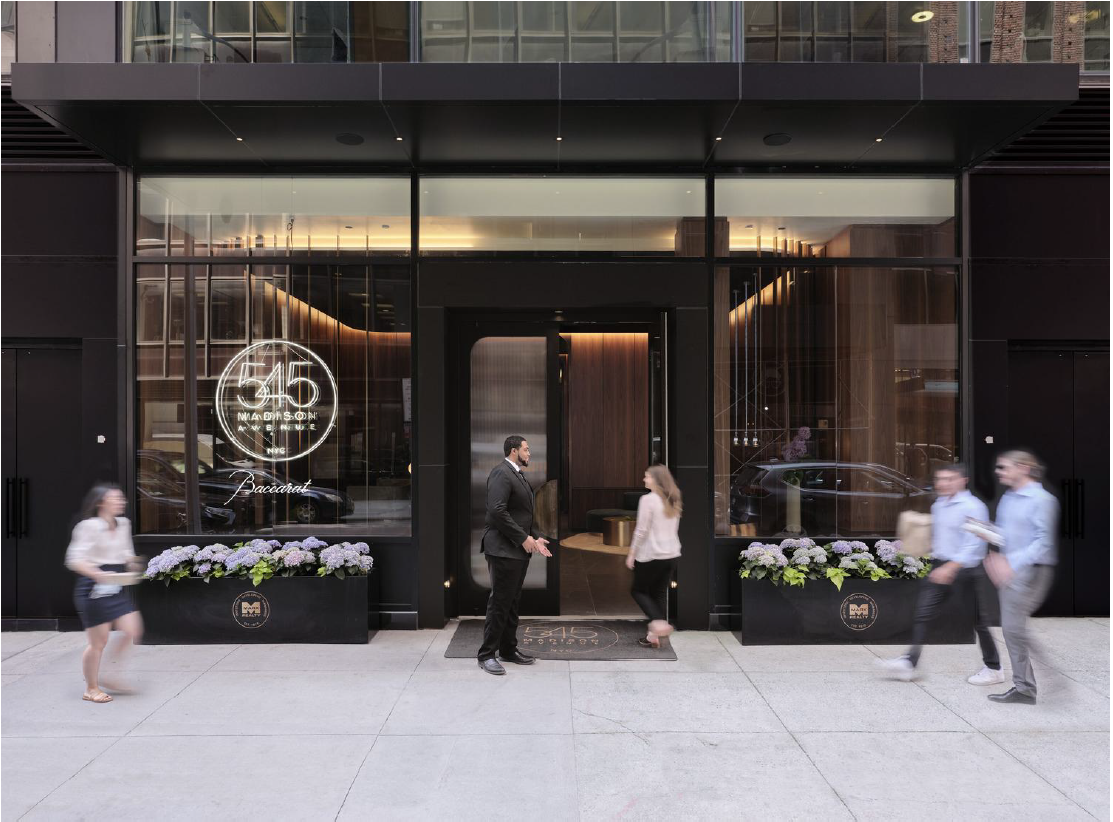
Baccarat also signed on for 10,138 square feet at the Plaza District property
French fine glassmaker Baccarat is relocating its New York office and leaving a shimmering trail in its wake.
Landlord Marx Realty plans to rebrand its office property at 545 Madison Avenue with Baccarat as part of the deal, installing Baccarat crystal chandeliers and barware in the lobby and tenant lounge, the New York Post first reported.
Aside from the branding agreement, Baccarat signed an 11-year lease for 10,138 square feet on the top floor of the 18-story building, according to Marx. Asking rent was $135 per square foot.
The move will increase the size of Baccarat’s New York office footprint by 75 percent from its current 5,809 square feet at 635 Madison Avenue, four blocks north of its new address. The brand’s retail location on the ground floor of 635 Madison will stay put, a Marx spokesperson said.
Baccarat was founded in the 18th century and is still based in its namesake Baccarat in northeast France. It has been in the hotel business for close to a decade. It opened the 116-room Baccarat Hotel with Starwood Capital at 29 West 53rd Street in 2015.
“They’ve been around for 260 years. It made so much sense to collaborate on the building,” Marx President and CEO Craig Deitelzweig said. “Our buildings are hospitality-inspired, and they have the Baccarat hotels.”
Deitelzweig added that tenants are increasingly seeking luxurious amenities, and Marx Realty has been trying to oblige.
Marx dropped $100,000 last year on a Porsche Taycan emblazoned with the landlord’s logo to shuttle tenants of its 10 Grand Central office tower around Midtown.
Now, the landlord will outfit 545 Madison’ eighth-floor Leonard Lounge with Baccarat pendant lights and its Lady Crinoline chandelier.
“The experience that the building offers is the No. 1 thing tenants look for,” Deitelzweig said. “It feels like a social club, but it’s for the tenants in the building.”
Financial software developer Strike Technologies is one of the oldest tenants in the building. Others include private equity firms Snow Phipps, Kohlberg & Company, Vialto Partners and Orangewood Capital.
Cushman & Wakefield (CWK)’s Tara Stacom, Harry Blair, Peter Trivelas, Remy Liebersohn, Connor Daugstrup and Bianca Di Mauro brokered the deal for Marx, while Baccarat was represented by Lantern Real Estate’s Matthew Siegel and Jessica Adler.
C&W’s brokers declined to comment. Siegel and Adler did not immediately respond to a request for comment.
French luxury crystal line Baccarat to move its New York City officeDecember 18, 2023 | By Julian Nazar
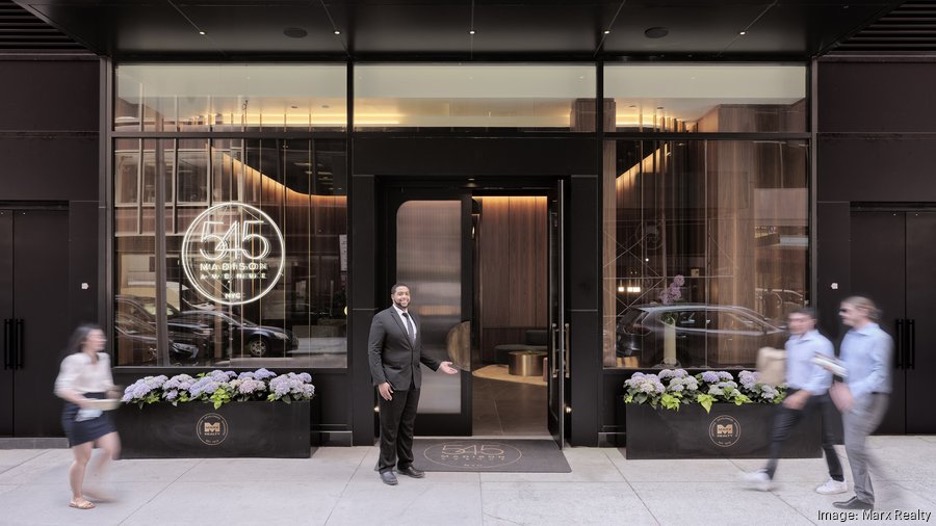
Baccarat is moving its New York City office to 545 Madison Ave.
Baccarat, a French luxury crystal line, has a signed an 11-year lease to move its New York City office to 545 Madison Ave.
The 10,000-square-foot penthouse and mezzanine space is on the 18th floor and includes a private terrace. In addition, Baccarat will have its crystal pieces displayed throughout the building as part of co-branding partnership with building owner Marx Realty.
Asking rent was $135 per square foot.
Baccarat is relocating its New York City office from 635 Madison where it spent the past seven years.
Cushman & Wakefield’s Tara Stacom, Harry Blair, Peter Trivelas, Remy Liebersohn, Connor Daugstrup and Bianca Di Mauro represented Marx Realty on the deal. Lantern Real Estate Advisors + Partners’ Matt Siegel and Jessica Adler represented Baccarat.
“We proposed this partnership to Baccarat as we knew it would represent the perfect coupling of the 545 Madison brand and the Baccarat brand, and would best reinforce the building’s position at the intersection of office, luxury and hospitality,” Marx Realty CEO Craig Deitelzweig said in a statement. “It’s the next step in blurring the lines between the office and hotel experiences while aligning with the regal elegance of the Baccarat brand.”
The property features the “Leonard Lounge,” named after Marx Realty founder Leonard Marx, on the eighth floor, which includes a 7,000-square-foot café, a 2,000-square-foot landscaped terrace, a 40-seat boardroom and a ceiling-suspended fireplace.
Notable tenants at the property include financial software and applications developer Strike Technologies and private equity firms Snow Phipps, Kohlberg & Co., Vialto Partners and Orangewood Capital.
December 18, 2023 | By: Holden Walter-Warner
Luxury crystal company leasing 10K sf for US HQ

Baccarat CEO Maggie Henriquez and Marx Realty CEO Craig Deitelzweig with 545 Madison Avenue (Getty, Marx Realty, Google Maps)
If amenities won’t bring employees back to the office, one landlord is hoping the sight of crystals will.
Marx Realty signed a deal with Baccarat to rebrand the office building at 545 Madison Avenue, the New York Post reported. The rebrand is the first in the office space for the French luxury crystal company, which has a branded hotel on West 53rd Street.
The financial terms of the arrangement were not reported. In addition to an updated name, the Midtown Manhattan property will feature Baccarat chandeliers in the lobby and common areas, Baccarat barware in the lounge and company branding on the ground-floor windows.
The rebrand comes after Marx spent $24 million to upgrade the property, including transforming the lobby, along with adding a library and tenants’ club floor.
Baccarat is shifting its U.S. headquarters from 635 Madison Avenue — where it will retain a store — to 10,000 square feet at 545 Madison. The company is paying $135 per square foot, the ceiling of asking rents at the property.
The 145,000-square-foot property is 90 percent leased, according to Marx CEO Craig Deitelzweig. Last year, real estate firm Ogden CAP Properties, the real estate arm of the Milstein clan, signed a three-year renewal of its 42,000 square feet at the building through 2027.
Marx took control of the property in 2019, evicting Joe Sitt’s Thor Equities from a ground lease after months of unpaid rent and outstanding real estate taxes.
While this is Baccarat’s first branded office building, the company’s name is on the hotel at 28 West 53rd Street in Manhattan and could be coming to a luxury condo development in Miami, too. That project’s future is murky, however, after artifacts and both human and animal remains dating thousands of years were discovered during the excavation of the site.
Baccarat signs branding deal with owners of 545 MadisonDecember 18, 2023 | By: Steve Cuozzo
There’s a Baccarat hotel on West 53rd Street. Soon, there will be a Baccarat-branded boutique office building, too.
The French luxury crystal line is moving its US office headquarters from 635 Madison Avenue, where it has an elegant store, to Marx Realty’s 545 Madison Ave. — which would make the boutique property possibly the first office tower to identify itself with a luxury brand.
Baccarat signed for 10,000 square feet. But the deal with Marx goes beyond the space commitment. The 260-year-old brand’s esthetic will be “woven into the fabric of the building,” Marx CEO Craig Deitelzweig said, “to complement its hotel-like sensibility.”
Baccarat chandeliers will soon adorn the lobby and public areas and its barware will be used in the lounge. The ground-floor window will have the Baccarat name’s distinctive logotype.
“It will be their first branded office building,” Deitelzweig said. “It started when they were looking for new office space. They liked the way 545 Madison looked, it was in synch with their brand, and then we started talking about a kind of partnership.”
Marx previously spent $24 million to juice up the property with a hotel-like lobby, a tenants’ club floor, library, walnut and bronze trim, and curved lobby surfaces.
The tower’s 145,000 square feet are 90 percent leased, Deitelzweig said. Asking rents range from $86 to $135 per square foot — the highest figure applying to the Baccarat space.
2023 Commercial Real Estate Visionaries: Craig Deitelzweig of Marx RealtyNovember 14, 2023
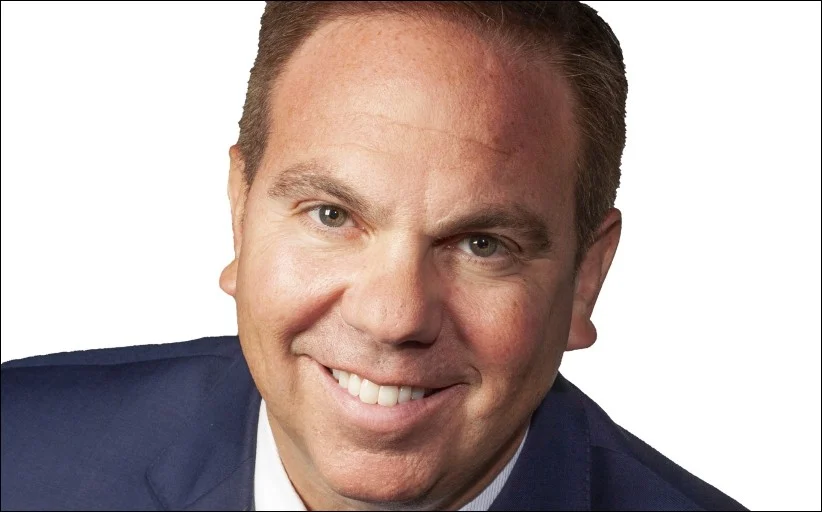
Craig Deitelzweig manages 5 million s/f of commercial office, retail and residential space and oversees development, construction, leasing and property management. His vision for future-proofing the office and retail sectors provided office and retail tenants with holistic sensory experiences before they even knew they wanted or needed them.
What recent project, transaction, or accomplishment are you most proud of?
My pioneering strategy to infuse a hotel-like sensibility into office spaces became a benchmark in commercial real estate with a distinctive aesthetic inspired by the world’s finest hotel properties. Marx Realty’s office assets in New York City are thriving and the 1.5 million s/f Cross County Center Yonkers, NY is growing.
November 6, 2023
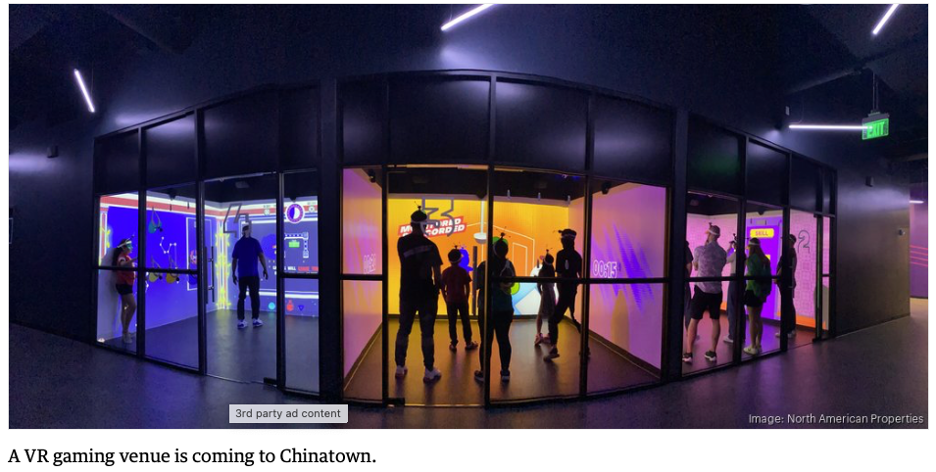
Immersive Gamebox, an experiential retailer that features virtual reality-style games with aliens, “Paw Patrol” characters and more, has signed on for 4,500 square feet inside a D.C. office building.
It will be the first Immersive Gamebox in the District and the second in the region. The London-based company opened a 2,217 square-foot location in Arlington’s Ballston Quarter mall in 2022.
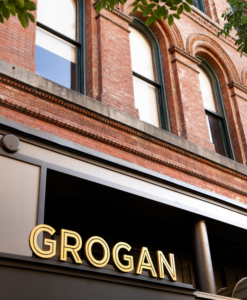
The D.C. venue will be located at Marx Realty’s The Grogan office building at 819 7th Street NW in D.C.’s Chinatown. The 21,000-square-foot building is named after a furniture store that occupied the building in the early 20th century. Immersive Gamebox is taking both street-level and lower-level space in the building. Part of that space previously housed D.C.’s first-ever Nando’s Peri-Peri.
Immersive Gamebox was represented in the deal by Logan Chambers Powell at Dochter & Alexander Retail Advisors and Marx Realty was represented by Lindsey St. Maxens and Jennifer Price at KLNB.
Marx purchased the building in 2018. It said it has launched an overhaul of the building that will include new entry doors, updated façade and renovated lobby. The mezzanine level of the penthouse will be remade into a collaboration space with café and city views.
Marx Realty also owns two other D.C. office buildings: The Herald, at 1307 New York Ave. NW and One Glover at 2121 Wisconsin Ave. NW.
Immersive Gamebox currently has more than a dozen U.S. locations, with plans for many more in the years ahead.