
 Contact
Marx Realty (MNPP), a New York-based owner, developer and manager of office, retail and multifamily property across the United States, announced investment advisory firm Helix Partners Management has signed a 5-year, 7,000-square-foot lease on the 8th floor at 545 Madison. The firm is relocating from 399 Park Avenue.
“We are excited to have Helix Partners join the impressive lineup of top-tier financial companies at 545 Madison,” said Marx Realty’s President and CEO, Craig Deitelzweig. “This lease comes just weeks after we unveiled the Leonard Lounge – a spacious lounge on the same floor complete with a café, fireplace, landscaped terrace, and boardroom.”
Helix Partners was represented by Greg Maurer-Hollaender of CBRE, while a Cushman & Wakefield team led by Tara Stacom represented Marx Realty.
Marx Realty infused the spaces at 545 Madison with its signature hospitality aesthetic, resulting in a remarkable transformation. The $24 million project went beyond superficial changes, essentially creating a home-away-from-home experience in the office. The one-of-a-kind strategy set a new industry standard, catering to the demand for high-quality office spaces. As a result, Marx Realty has achieved higher occupancy rates, increased asking rents, and attracted a prestigious tenant mix.
“Helix Partners was particularly attracted to the well-appointed pre-built suites at 545 Madison as well as the elegant and elevated environment that the property offers to their employees and guests,” added Deitelzweig.
The recently unveiled Leonard Lounge represents the culmination of 545 Madison’s top-to-bottom renovation. Spanning 7,000 square feet, this stunning space is composed of three distinct areas: a café, a 2,000-square-foot landscaped terrace, and a 40-seat boardroom. The Leonard Lounge is reminiscent of a members-only club and was named after Leonard Marx, the founder of Marx Realty. It boasts a variety of elegant features, including a ceiling-suspended fireplace surrounded by plush velvet seating, which gives the lounge a rare, sophisticated ambiance not often found in traditional office settings. Whether users are looking for a bespoke workspace outside of the usual office environment or a cozy nook to unwind with a cocktail after a long day, the Leonard Lounge provides the perfect respite.
The entrance and lobby of 545 Madison underwent a complete transformation, featuring a uniformed doorman at the entry and warm materials and soft curves in the redesigned lobby. From sophisticated mood music to soothing lighting and a signature scent, the lobby provides a welcoming ambiance reminiscent of the world’s finest hotel lobbies. Tenants and guests also have access to a well-stocked library, adding to the hotel-like experience of the space.
Marx Realty took over the 140,000-square-foot, 18-story office tower in 2019 with occupancy rates at 68 percent and the possibility of sinking to 40 percent. The real estate developer’s strategy managed to turn things around completely; today, the office tower is at almost full capacity. Not only has Marx Realty increased the occupancy rates, but they have also managed to command higher rents for the available spaces. Asking rents now range from $88 to $130 per square foot, a significant jump from prior asking rents ranging from $60 to $70 per square foot. The top penthouse floor will be available next year at an asking rent of $130 per square foot, a testament to the building’s desirability.
As part of Marx Realty’s ongoing commitment to the environment, the company is planting three trees in the local community for each lease signed in any of its office properties. This initiative is just one of many ways in which Marx Realty gives back to the community and ensures sustainability throughout its properties. By continuing this tradition, Marx Realty is helping promote healthier and more vibrant communities for all.
Financial software and applications developer Strike Technologies was the first to sign at 545 Madison soon after Marx took over and presented its plans for the building. Other notable tenants include private equity firm Snow Phipps, Vialto Partners (a spinoff of Price Waterhouse Coopers), Qurate Retail Group (formerly HSN), Ogden Capital, Corniche Growth Advisors, as well as additional top-tier wealth management and private equity firms.
Deals of the Day: May 10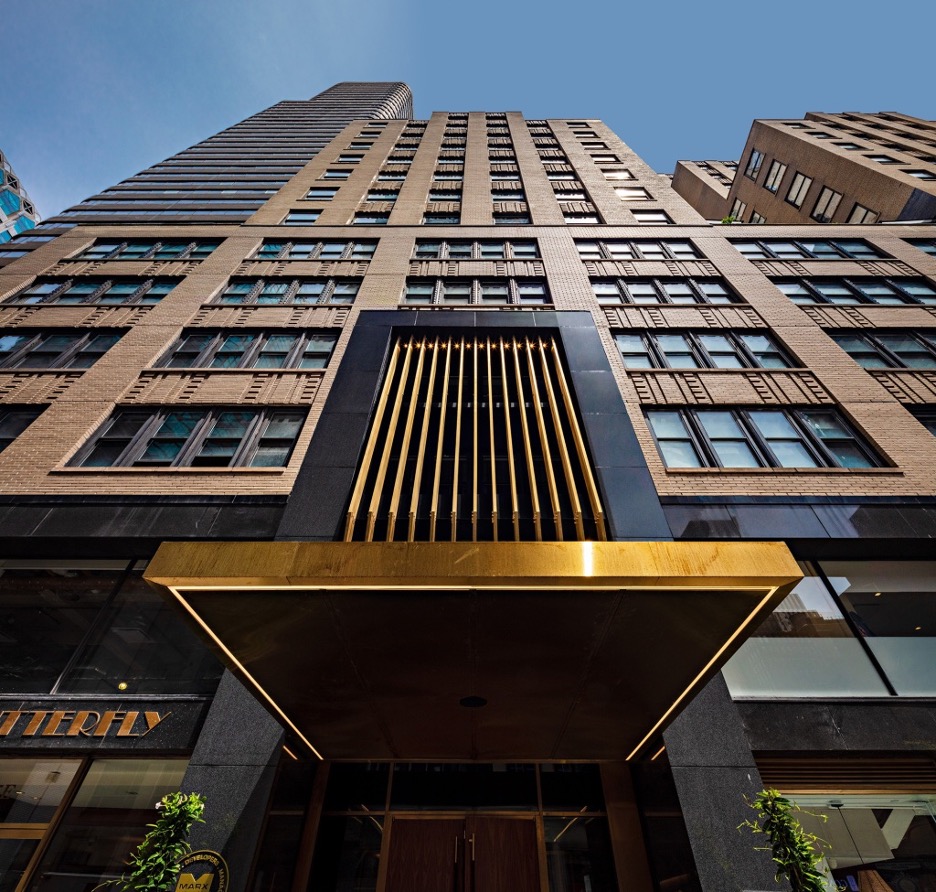
Investment advisory firm moving from Park Avenue to Madison Avenue
Address: 545 Madison Ave., Manhattan
Landlord: Marx Realty
Tenant: Helix Partners Management
Lease size: 7,000 square feet
Lease length: Five years
Asset type: Office
Brokers: CBRE’s Greg Maurer-Hollaender represented the tenant, and a Cushman & Wakefield team led by Tara Stacom represented the landlord.
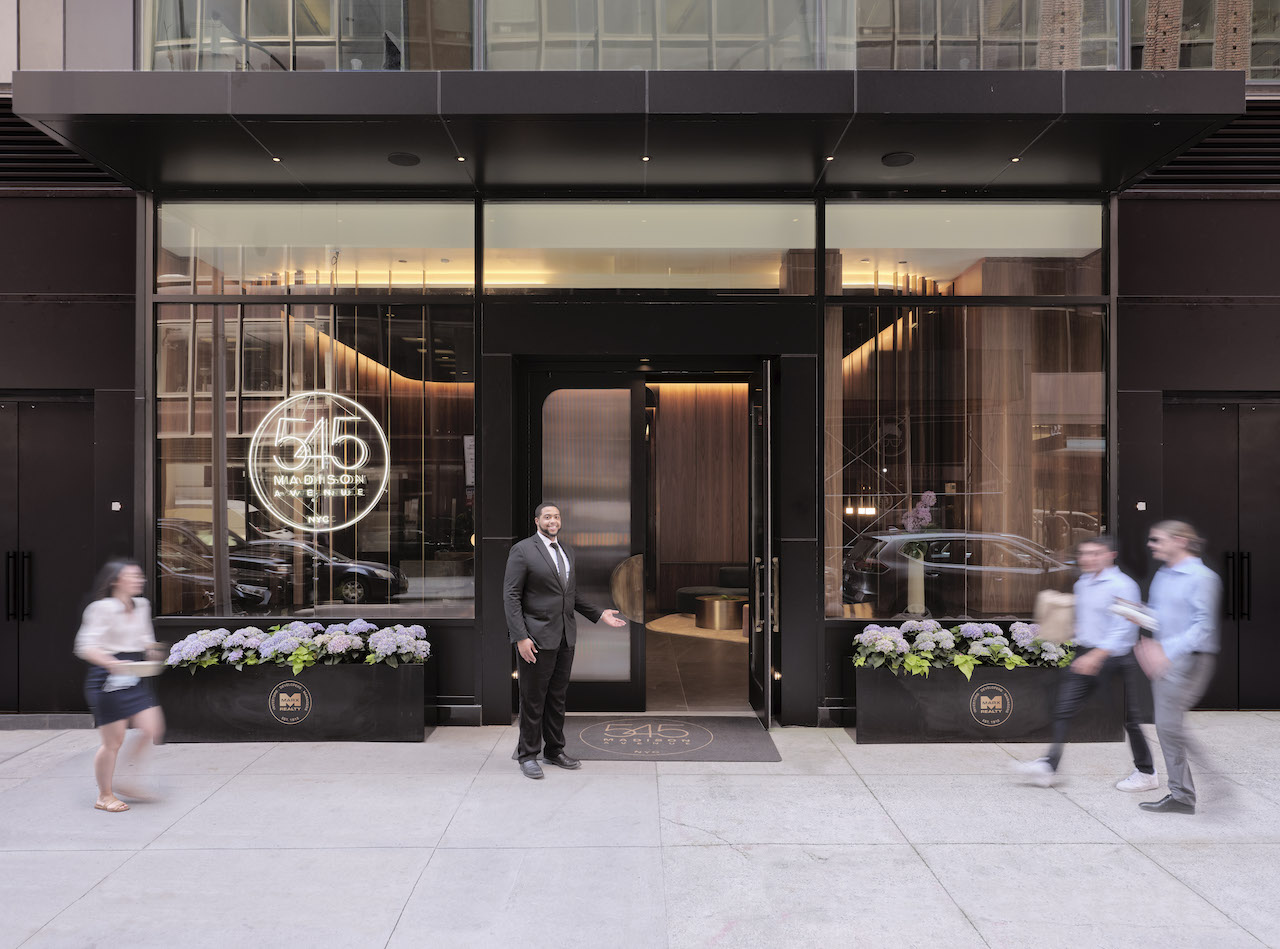
Investment adviser Helix Partners Management has tied the knot on its new offices at 545 Madison Avenue.
Helix signed a five-year lease for 7,000 square feet across the eighth floor of the building between East 54th and East 55th streets, according to landlord Marx Realty. Asking rent was $98 per square foot.
The firm plans to relocate from its offices within backer Millennium Management’s space at 399 Park Avenue to its own spot in June, Marx Realty CEO Craig Deitelzweig said.
Helix approached Marx in January looking for space in the building, and it was the property’s 7,000-square-foot lounge and cafè, dubbed the Leonard Lounge, that sealed the deal, Deitelzweig said.
“They loved the aesthetic of the space,” Deitelzweig said. “They’re adjacent to the Leonard Lounge and I think they really liked the appearance of the lounge, and it solidified how special the building is.”
Plus, it didn’t hurt that Marx is launching another swanky amenity at the building with Marx dropping $100,000 on an electric Rivian SUV to ferry tenants of 545 Madison Avenue around Midtown starting next year, Deitelzweig said.
Other tenants at the 17-story property include private equity firm Snow Phipps Group, real estate company Ogden CAP Properties and consultants Vialto Partners.
CBRE’s Greg Maurer-Hollaender, Ryan Alexander and Jared Isaacsonrepresented the tenant in the deal. Cushman & Wakefield’s Tara Stacom, Harry Blair, Peter Trivelas, Connor Daugstrup, Remy Liebersohn and Bianca Di Maurohandled it for the landlord.
Spokespeople for Millennium, CBRE and C&W declined to comment.
Marx Realty Reveals Renderings for Hospitality-Infused Repositioning of One Glover in Washington, DC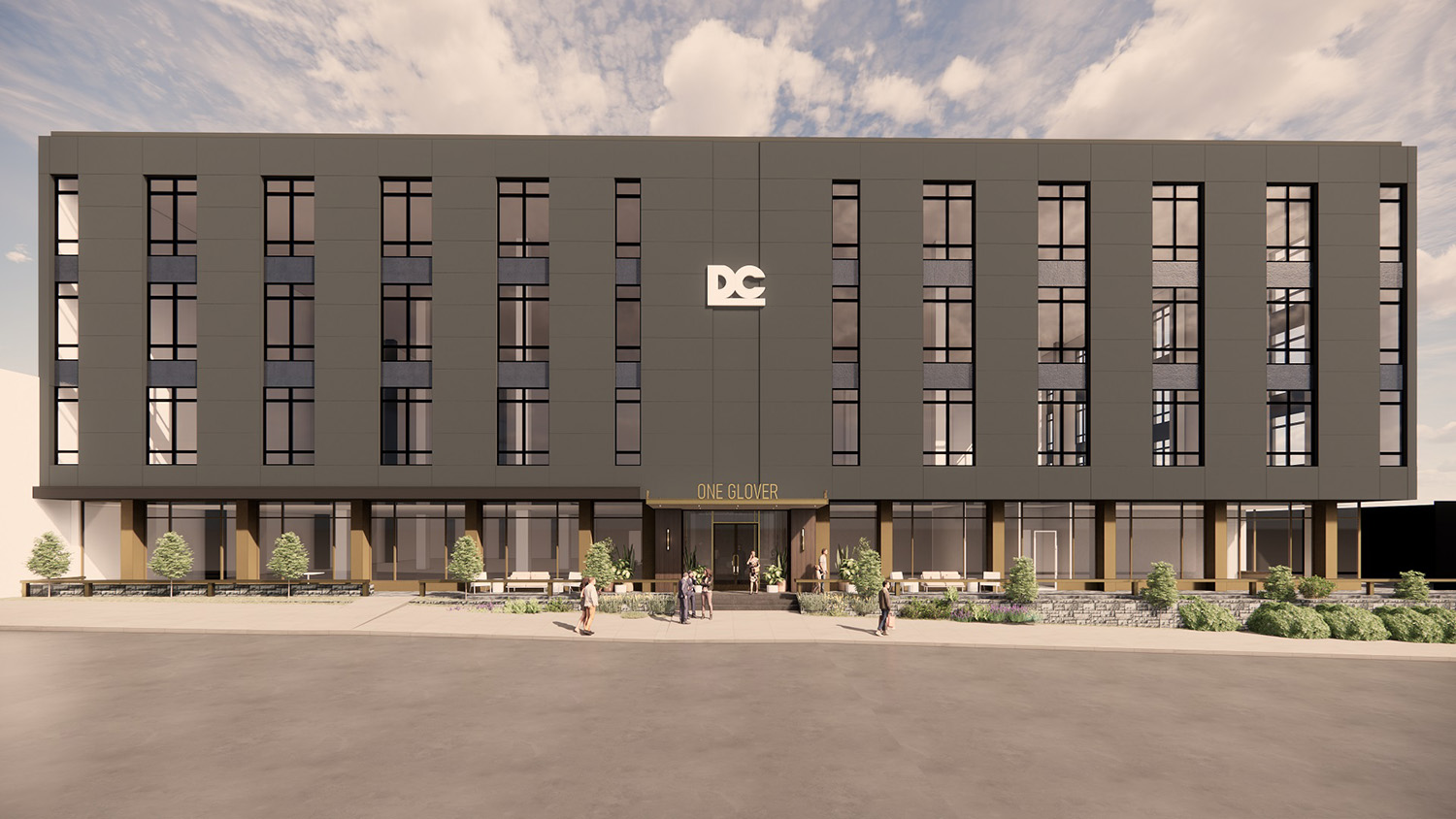
Marx Realty (MNPP), a New York-based owner, developer and manager of office, retail and multifamily properties across the United States, has revealed renderings for the newly renamed One Glover, located at 2121 Wisconsin Ave. NW in Washington, DC’s Georgetown/Glover Park neighborhood. The 110,000-square-foot building was last renovated in 2000 and was acquired by Marx Realty in 2022. The firm was attracted by the building’s strong tenancy, including two TV broadcasting stations, and its potential for a statement-making repositioning.
“One Glover has terrific ceiling heights and column spacing which is why it’s so attractive for studio and creative space,” said Craig Deitelzweig, president and CEO of Marx Realty. “It’s exciting to embark on this dramatic new phase of its life cycle while the undeniable flight to quality in the DC office market supports the potential for success in terms of increased asking rents and occupancy here as we’ve seen across our portfolio of hospitality-inspired office assets. We are committed to enhancing and expanding our footprint in the DC market with unique and special office assets that appeal to today’s discerning tenants.”
The repositioning begins with a sleek reimagining of the stark white façade. The exterior will be painted a dark iron ore shade for a striking effect synonymous with precision and professionalism and will include warm wood panels near the entry and a bronze-clad canopy with the One Glover name fashioned in bronze marquee-style lettering and new oversized fluted glass doors with brass hardware. The overall entry experience will also include a ‘front porch’ in a nod to the many parks and green spaces of the Glover Park neighborhood.
Marx Realty will transform the lobby into a club-like lounge experience with sophisticated finishes that provide a welcoming and organic vibe. From the mixed wood accents, white-washed wood flooring and lime-washed walls, cork accents and a tiled feature wall depicting local nature scenes (commissioned by a local artisan) to defined seating areas, the lounge at One Glover will exude a decidedly luxurious aesthetic. The original waffle-style ceiling will be transformed with artful light fixtures throughout and enhanced with dramatic lighting and wall sconces surrounding the seating areas. The lounge features three rooms – a coffee and water station with cork walls and ceilings, a garden room and a serene space with an olive tree and organic cork features – to punctuate a members-only club-like ambience. Additionally, the new lounge at One Glover features a uniformed doorman, consistent with the world’s finest hotels while Marx Realty’s signature scent and mood music round out a soothing sensory experience.
“One Glover gave us the perfect palette to infuse the space with our signature hospitality treatment,” said Deitelzweig. “The various recesses provide ample opportunity to incorporate sophisticated art and eye-catching architectural elements that are sure to inspire tenants and guests. We are already seeing an uptick in tenant tours based on our reputation for creating distinctive and unique office experiences.”
Drawn by the area’s ample parks, shopping, dining and retail options, tenants will benefit from Marx Realty’s owner/operator expertise and its forward-thinking team of professional and industry experts. One Glover is situated in the heart of the Wisconsin Avenue Corridor offering convenient access to shopping and dining, including a Trader Joe’s and Whole Foods just steps from the building. The location, and its built-in neighborhood amenities, are attractive for studio spaces, cultural organizations and media and technology companies seeking to provide a welcoming environment. Office suites boast expansive views of the Washington Monument and the National Cathedral while an onsite parking garage and bicycle storage are available for tenant use.
“Our work at The Herald in DC has been widely regarded as the first to bring a true sense of hospitality to the office space as has our track record as pioneers in transformative real estate and we expect a similar response at One Glover,” said Deitelzweig. “Our signature hospitality-driven design combined with the spectacular location is sure to capture the attention of tenants seeking a next-level office experience.”
The repositioning of One Glover comes on the heels of Marx Realty’s top-to-bottom renovation at The Herald which was once home to the offices and printing presses of The Washington-Herald — where Jaqueline Kennedy Onassis (then Bouvier) once worked as the “Inquiring Camera Girl.” The transformation there has resulted in attracting a remarkable tenant base of best-in-class government affairs, consulting firms and think tanks.
Marx Realty is partnering with Studios Architecture and its in-house design to execute a timeless and uniquely luxe hospitality design vision at One Glover.
In 2021, anchor tenant Nexstar Media Group expanded its footprint in the building to 28,766 square feet, occupying the entire third floor and part of the first floor at One Glover. CommuniKids, a language immersion preschool, joined the tenant roster with an 8,900-square-foot lease also on the first floor and architectural lighting firm George Sexton and Associates occupies 7,500 square feet at One Glover.
Marx Realty looks to next rehab project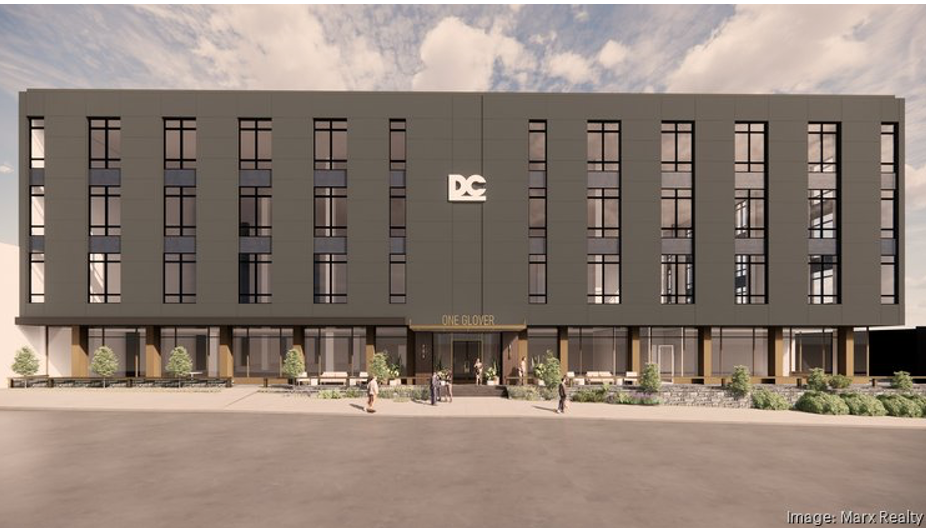
New York-based Marx Realty is planning its next renovation project — and it’s one that involves a heavy dose of green.
A wood-lined lobby with a large central tree, a front porch and new amenities are on tap for the six-story, 110,000-square-foot 2121 Wisconsin Ave. NW, said Craig Deitelzweig, president and CEO of Marx Realty. That will be a nod to the Glover Park and Georgetown neighborhoods.
Marx is getting rid of dropped ceilings that will add 14 feet of vertical space in some places. As for the lobby, expect a veritabel forest of new color including cork finishes, brass hardware, white oak floorboards, walnut panels and burl wood decorations. The idea is to open up the building and make it more welcoming, Deitelzweig said.
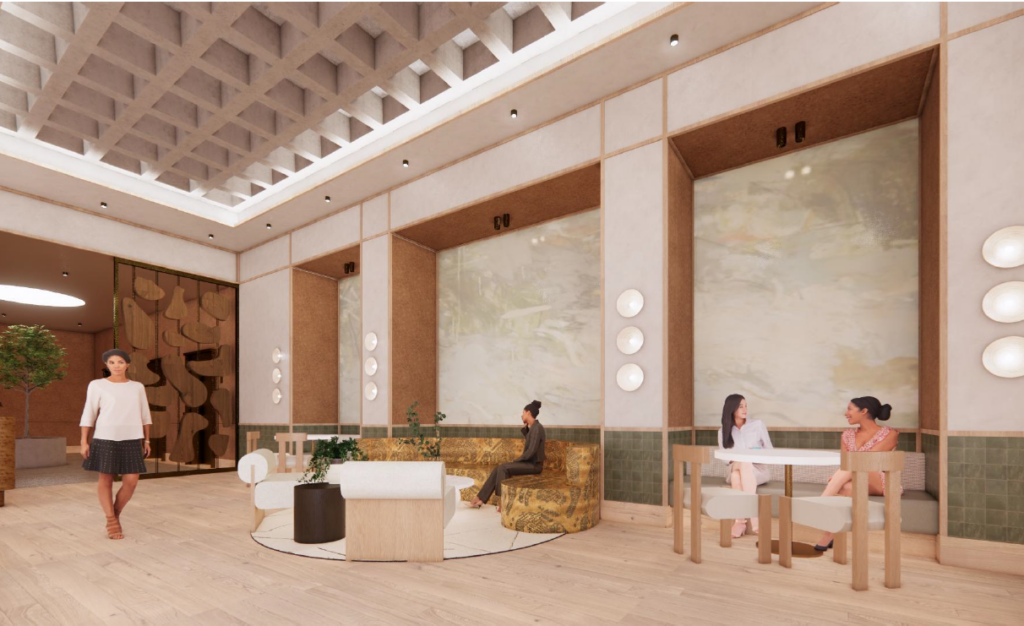
“It’s going to be more organic and green,” he said. “We want to bring a natural feel.”
JBG Smith Properties sold the building to Marx for $27.7 million last year. After that, NexStar Media Group signed on for an additional 29,000 square feet in order to expand the studio of one of its two local channels, WDCW virtual channel 50. At least one full floor is available. Mark Wooters and James Collins of Cushman & Wakefield are managing leasing for the building.
How snappy, pre-furnished office spaces get companies moving fast
For instant gratification, tenants needing up to 20,000 square feet are snapping up fully furnished pre-built offices that are designed with a hospitality-infused vibe.
Meanwhile, owners hope that by wrapping up the lengthy build-out process on the front end, they can compete with the nearly 25 million square feet of sublease space now available in Manhattan alone.
“It is still very difficult for landlords to compete with heavily discounted sublet rents as they have lenders and investors that monitor their rental rates,” said Ruth Colp-Haber, CEO of Wharton Property Advisors who specializes in sublets. To win the deals, “landlords are starting to offer turnkey space with the furniture in place.”
Tenants also want to hang onto their cash, not wait months to get into the space and pick a term tailored to their business. “Capital preservation by tenants has gotten really critical,” added Matt Astrachan, vice chairman of JLL, on the cost to buy furniture and fit out offices. “It’s also supply chain avoidance.”
The ongoing supply chain issues that arose during the pandemic also made tenants fret about when they could get their furniture and actually move in. To relieve that anxiety, Craig Deitelzweig, CEO of Marx Realty, launched Marx Ready pre-builts.
“We put in furniture that is aspirational,” he noted. “It’s something they want and gets them excited.”
To make a faster leap from leasing to working, the Durst Organization kicked off its Durst Ready furnished pre-builts in 2019. They have since completed over 31 transactions totaling 350,000 square feet and averaging five- to seven-year terms.
Lauren Ferrentino, managing director of Durst’s commercial portfolio, explained, “We are not only speaking to the tenancy that needs a short-term solution but also those who just need plug-and-play space for longer terms.”
That’s why the core offering, Durst Ready, is fully furnished and wired pre-built spaces.
“Effectively, all a tenant needs to do is call their internet telephone provider and have the suite activated,” said Eric Engelhardt, senior vice president of Durst.
Justin Myers, executive managing director and principal of Lee & Associates NYC, has toured multiple furnished pre-builts with his clients. “It seems to be resonating with tenants,” he said.
The Empire State Building is offering a 22,620-square-foot prebuilt on the 68th floor designed by Fogarty Finger. “It was furnished with really nice furniture,” Myers recalled.
Empire State Realty Trust’s CEO, Anthony Malkin, said the floor serves as a model for other spaces. Its asking rent is $79 a foot — and would be about $75 per foot without furniture because there wouldn’t be a period of free rent for construction. “We want to present people with the easiest pathway to get a deal done,” Malkin said. ESRT will therefore pre-build with or without furniture and/or wiring.
The building owners say additional pricing for furnished spaces can range from nothing to as much as $20 per foot, depending on the size of the space, the furnishings and technology. But most insisted that the costs largely even out because they no longer have to provide months of free rent, tenant improvement allowances or work letters.
Jane Luger, vice president of Taconic Partners, is rolling out furnished pre-builts at Essex Crossing’s 145 Delancey St. “It’s been a wild success,” she said of other buildings. “By the time the lease is negotiated it’s ready,” so the owners get their revenue stream faster and tenants get to work.
“Imagine being from a space occupier perspective and the relief you would have from leasing a space that is pre-furnished?” said James Keenoy, president of Farrell Flynne, a procurement company which is executing the furnishings for Taconic. The Essex Crossing space includes 14,000 square feet of offices on the third floor plus 7,500 square feet on the second floor for shared collaborative amenity space.
“We are keeping the furniture a neutral palate and using plants and art to give the pops of color and make the space bright,” Keenoy explained.
Greg Kraut, Co-Founder and CEO of KPG Funds, is sourcing the furnishings himself for their boutique office properties, which include 446 Broadway, 40 Crosby and the upcoming 142 W. 14th St. — a reinvention of a former Salvation Army building.
“It’s white glove, high design and we focus on the kitchens and bathrooms and easy-to-use technology,” Kraut said. “We put in these beautiful changing rooms with a full shower and it’s gorgeous — it’s like a high-end hotel.”
Meanwhile, RXR offers modular spaces that can be rearranged without building permits.
Teladoc Health Signs Lease with Marx Realty at 10 Grand Central
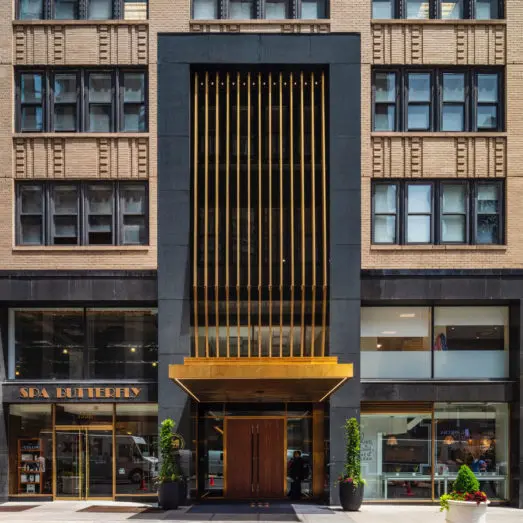 Teladoc Health, a telemedicine and virtual healthcare company, has inked a long-term lease for 7,000 square feet of office space on the 16th floor of 10 Grand Central. The New York-based office tower underwent an extensive $48 million repositioning in 2019 which included modernizing its façade with marquee brass fins and oversized walnut doors as well as adding an indoor/outdoor lounge, café, conference space and outdoor area.
Teladoc Inks Deal for 7,000 Square Feet at 10 Grand CentralCraig Deitelzweig – President & CEO of Marx Realty – commented that “Midtown Manhattan’s post-pandemic office destination is one of the most compelling around; this influx of tenants is testament to our unique hospitality-infused repositioning strategy resonating with innovative organizations.” JLL’s Mitchell Konsker Kyle Young Simon Landmann Carlee Palmer Thomas Schwartz represented Teladoc Health during negotiations at an asking rent rate per square foot was $82.
Virtual healthcare service provider Teladoc has signed a long-term lease deal at 10 Grand Central in Manhattan. The company will vacate its current premises near the Penn Station area by the end of the year, following which it will occupy 7,000 square feet of prime Midtown office space on the 16th floor of the Marx Realty-owned skyscraper. The asking rent was $82 per square foot.
A JLL team comprised of Kevin Duffy and Sean Lynch represented Teladoc during the negotiations, while JLL’s Mitchell Konsker, Kyle Young, Simon Landmann, Carlee Palmer, and Thomas Schwartz handled the deal on behalf of the landlord.
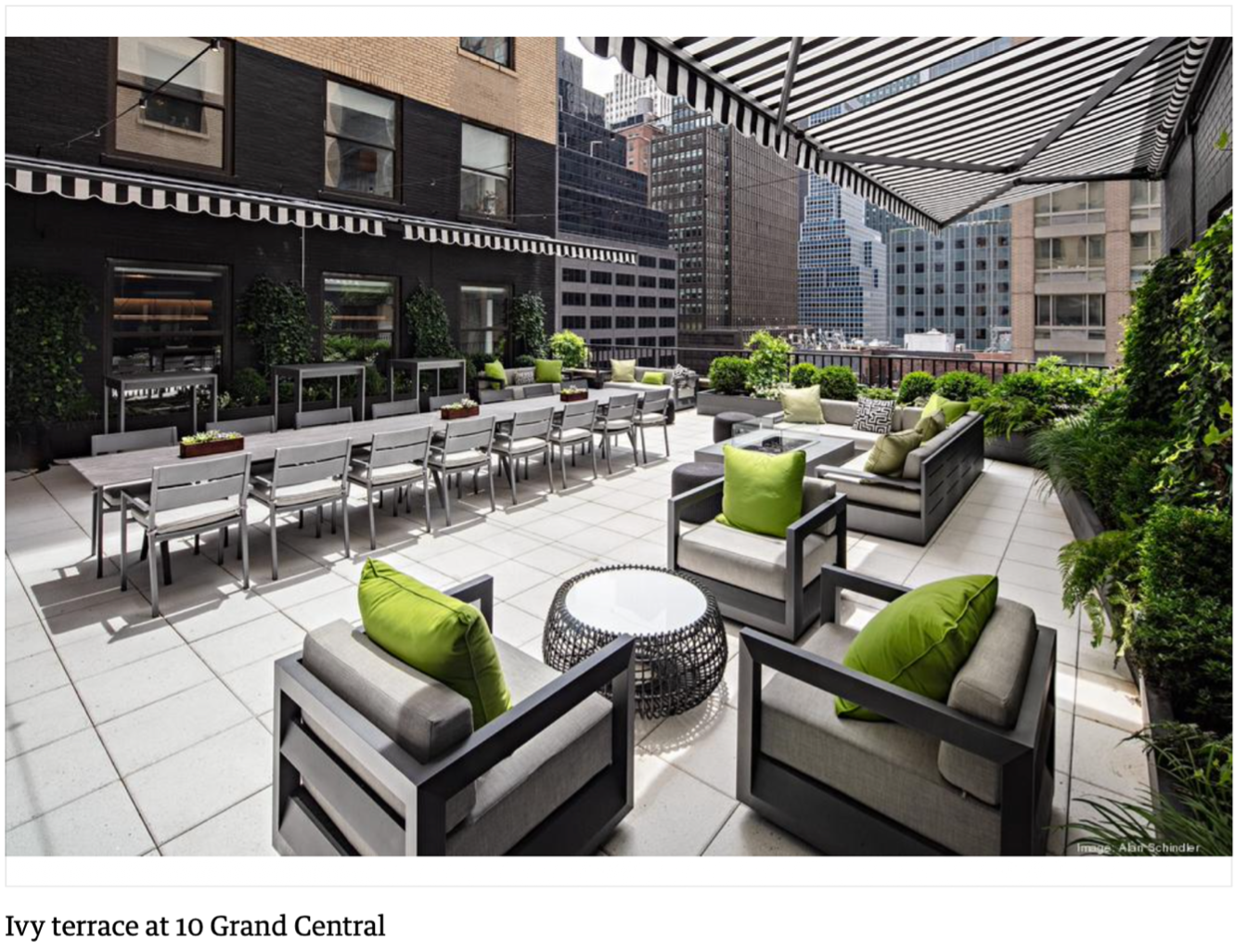
Originally built in 1931, the Ely Jacques-Kahn-designed 35-story skyscraper underwent a $48 million renovation in 2019 led by Studios Architecture’s David Burns. Following these improvements, 10 Grand Central now features an indoor/outdoor lounge area, a fully-equipped café, a 40-seat conference space, and an outdoor 1930s-style space called “The Ivy Terrace.”
“We are delighted to have Teladoc join the prestigious and diverse tenant roster at 10 Grand Central,” said Craig Deitelzweig, president and CEO of Marx Realty. “As one of Midtown Manhattan’s most compelling post-pandemic office destinations, this iconic building continues to attract top-tier companies. The recent influx of tenants is a testament to the success of our one-of-a-kind hospitality-infused repositioning strategy, which has resonated with the most innovative and exciting organizations.”
10 Grand Central features an extensive and diverse tenant roster, which includes the likes of Dwayne “The Rock” Johnson’s production company, Seven Bucks Productions; insurance giant MassMutual; bank holding company Merchants Bancorp; international news agency Agence France-Presse; real estate investment and management company Strata Equity Group; weekly online news magazine The Week; golf investing and tour organizing company LIV Golf Inc.; real estate investment firm Benenson Capital Partners; Goldman Sachs-backed Crux Informatics; global asset manager Fin Capital; global independent fund manager DIF Capital Partners; conference organizer for health innovation HLTH; and venture capital firm Colibri Equity Ventures.
Teladoc Health Inks New Lease with Marx Realty at 10 Grand Central
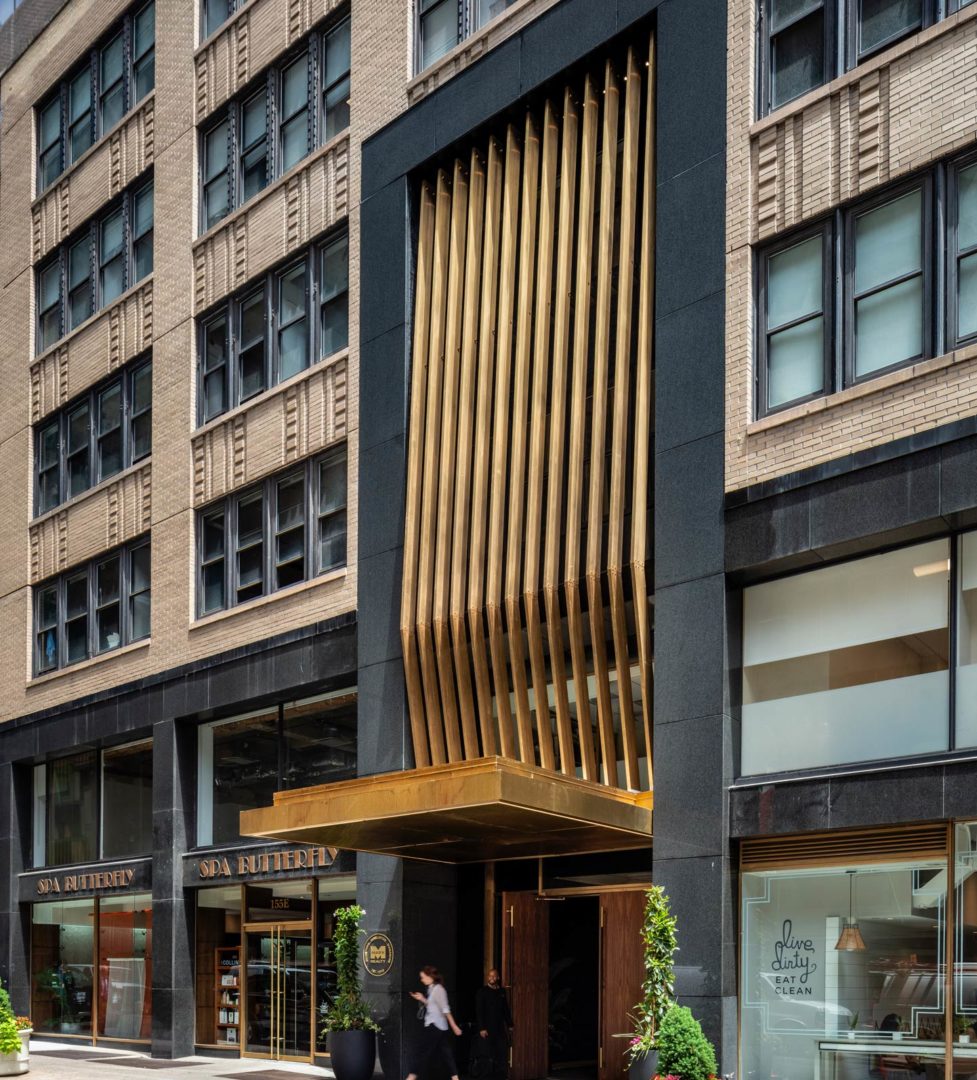
Teladoc Health, a telemedicine and virtual healthcare company, has signed a long-term, 7,000-square-foot lease at 10 Grand Central’s 16th floor from Marx Realty. The New York-based office tower underwent a $48 million repositioning in 2019. The building now features a new façade with marquee brass fins and oversized walnut doors, an indoor/outdoor lounge, a café, a conference space, and an outdoor space.
“As one of Midtown Manhattan’s most compelling post-pandemic office destinations, this iconic building continues to attract top-tier companies. The recent influx of tenants is a testament to the success of our one-of-a-kind hospitality-infused repositioning strategy, which has resonated with the most innovative and exciting organizations,” said Craig Deitelzweig, president and CEO of Marx Realty.
Teladoc Health was represented by JLL’s Mitchell Konsker, Kyle Young, Simon Landmann, Carlee Palmer, and Thomas Schwartz. The asking rent for the space was $82 per square foot.
Marx Realty Signs Teladoc Health at 10 Grand Central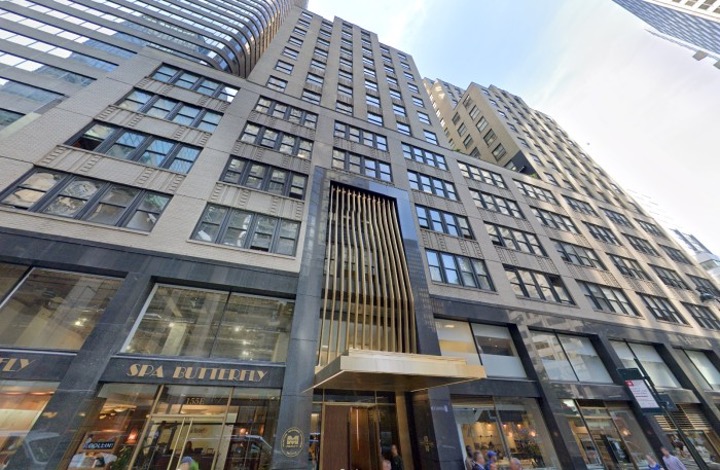
Marx Realty (MNPP), a New York-based owner, developer and manager of office, retail and multifamily property across the United States, announced Teladoc Health has signed a long-term, 7,000-square-foot lease at 10 Grand Central’s 16th floor.
“We are delighted to have Teladoc join the prestigious and diverse tenant roster at 10 Grand Central,” said Craig Deitelzweig, president and CEO of Marx Realty. “As one of Midtown Manhattan’s most compelling post-pandemic office destinations, this iconic building continues to attract top-tier companies. The recent influx of tenants is a testament to the success of our one-of-a-kind hospitality-infused repositioning strategy, which has resonated with the most innovative and exciting organizations.”
Teladoc Health was represented by Kevin Duffy and Sean Lynch of JLL. Asking rent was of $82 per square foot.
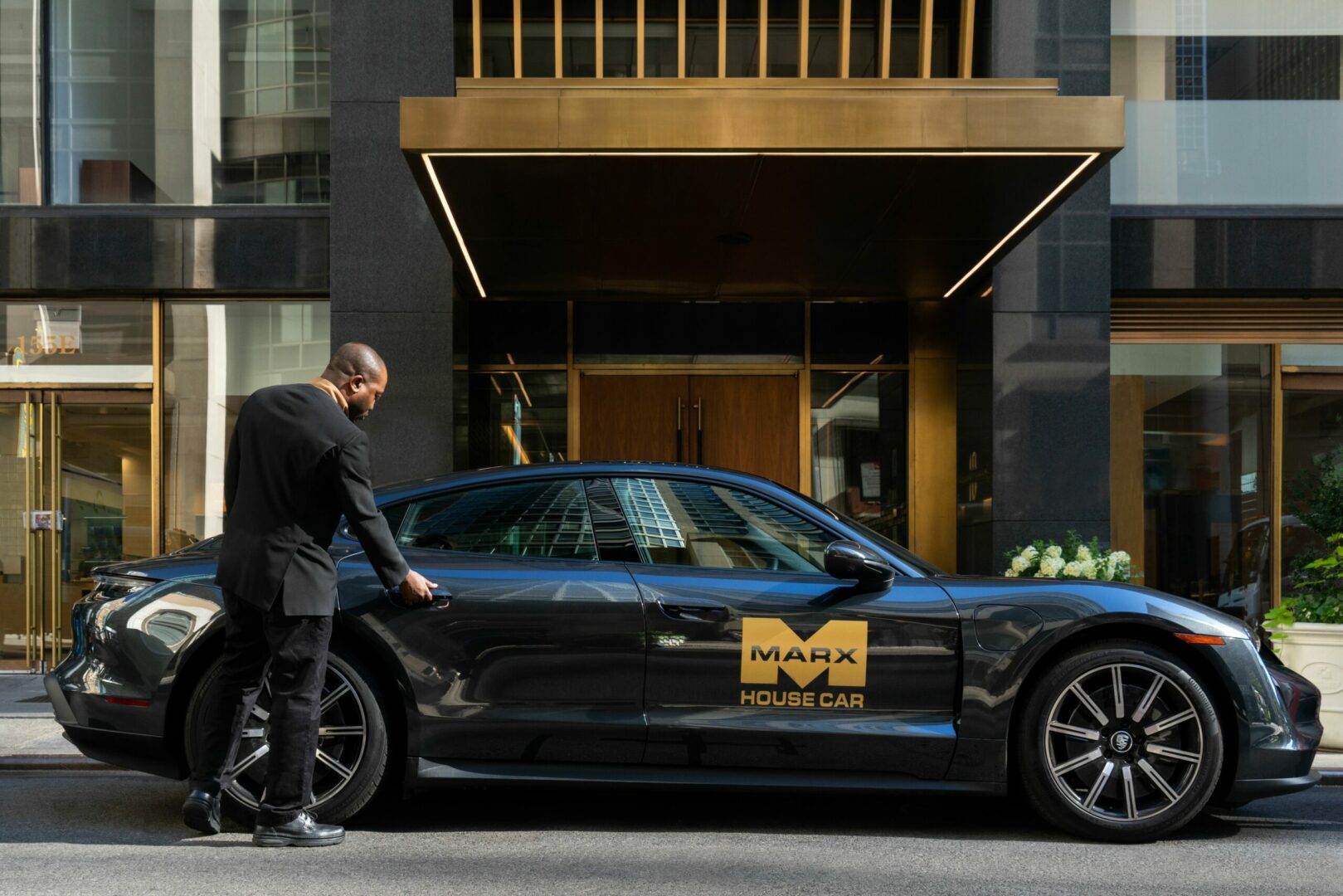
Following a $48 million repositioning in 2019, the Ely Jacques-Kahn-designed office tower now features a stunning new façade with marquee brass fins and oversized walnut doors, attended by a uniformed doorman. The lobby is sleekly styled with walnut wood and brushed brass, while the indoor/outdoor lounge and club floor spans 7,500 square feet and boasts oversized artwork, a café equipped with built-in appliances (including a gelato machine), a 40-seat conference space, and The Ivy Terrace, an outdoor space reminiscent of a 1930s garden party. In 2022, the building unveiled the Marx Mobile, a state-of-the-art luxury electric Porsche Taycan that serves as the building’s house car. Available to all tenants through the MarxConnect software, the Marx Mobile will transport tenants around Manhattan in style.
“Teladoc was situated in the Penn Station area and seeking to plant its flag in a location that would inspire associates while providing a compelling experience, and 10 Grand Central was the clear choice to meet and exceed their needs,” added Deitelzweig. “With our MarxReady program, we were able to provide a fully furnished pre-built space, designed in collaboration with Teladoc’s team, to meet the tenant’s timeline for relocation. The modern tenant space along with the building’s beautiful amenities will help attract Teladoc’s employees back to the office.”
Marx Realty recently launched its MarxReady program offering fully furnished pre-built office spaces that are tailored to meet the needs of today’s tenants. The team provides move-in ready spaces that also maintain the building’s overall hospitality-based design approach and supports tenants’ brands.
Teladoc Health’s lease comes just weeks after law firm Lewis Baach (relocating from the Chrysler Building) and glass wall interior firm MetroWall signed long-term leases at the building. 10 Grand Central has signed over 80,000 square feet of office and ground floor retail space in the last year; the building’s notable roster of tenants includes bank holding company Merchants Bancorp; real estate investment and management company Strata Equity Group; conference organizer for health innovation HLTH; golf investing and tour organizing company LIV Golf Inc.; weekly online news magazine The Week; real estate investment firm Benenson Capital Partners; Goldman Sachs-backed Crux Informatics; global asset manager Fin Capital; global independent fund manager DIF Capital Partners; and venture capital firm Colibri Equity Ventures. High-profile tenants also include Dwayne “The Rock” Johnson’s production company, Seven Bucks Productions (as reported by the New York Post); insurance giant MassMutual, and international news agency Agence France-Presse.
The redesign was led by David Burns, principal of Studios Architecture. JLL’s Mitchell Konsker, Kyle Young, Simon Landmann, Carlee Palmer, and Thomas Schwartz are leading a team handling the leasing for Marx Realty. The building’s asking rents range between $68 and $120 per square foot.