
 Contact
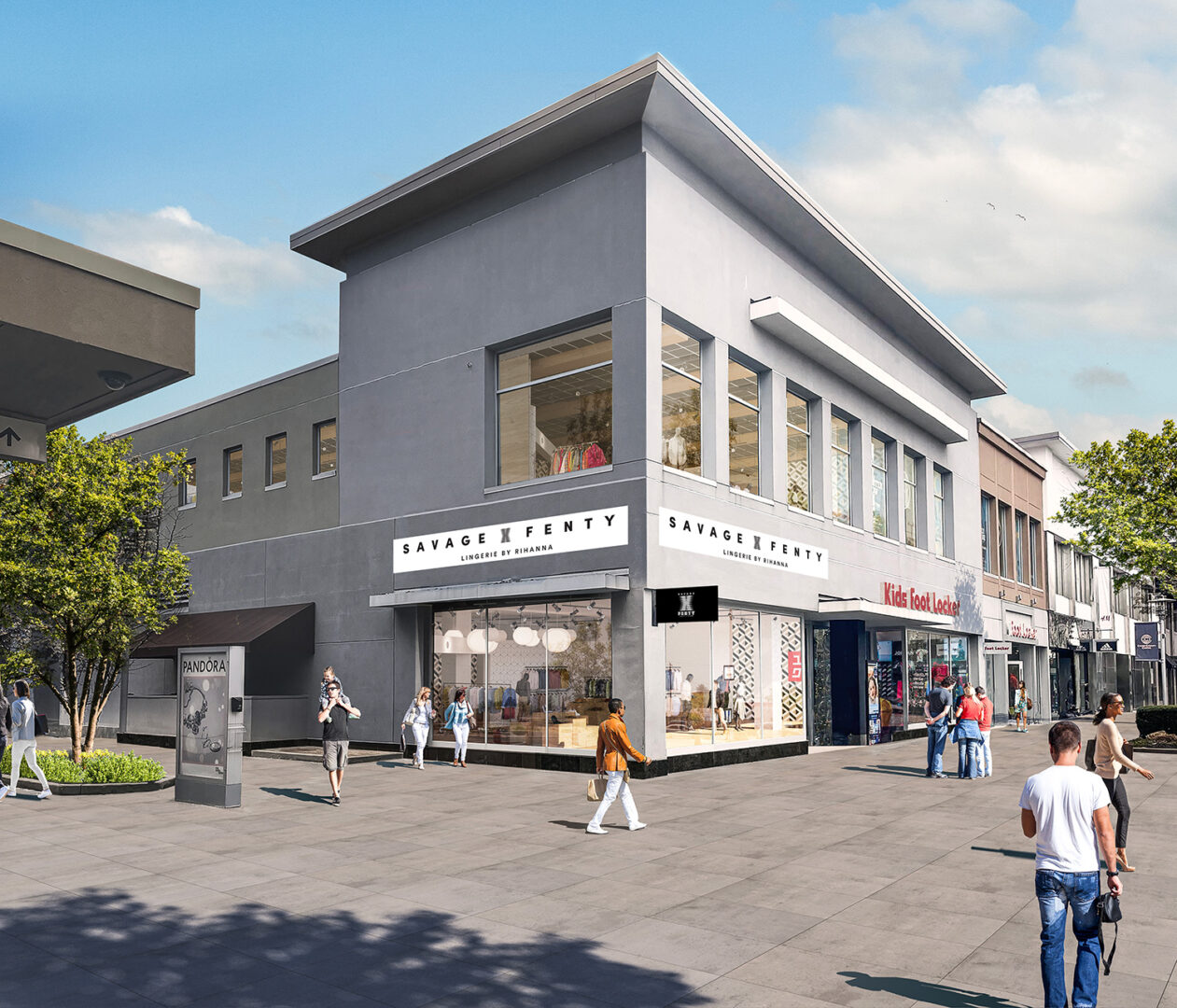
Rihanna is bringing her Savage X Fenty lingerie product line to the New York City area. The brand’s flagship location in New York is expected to open in mid-2023. It will be in a 3,300-square-foot space, located at the open-air shopping center Cross County Center in Yonkers, New York. Asking rent was $225 per square foot. The lease is for 10 years. Savage X Fenty had in-house representation for the deal.
The space was previously occupied by New York & Company.This comes on the heels of the news that Rihana is expected to open her first Chicago-area lingerie store in 2023, as previously reported. Savage X Fenty has brick-and-mortar locations in cities such as Las Vegas, Houston and Philadelphia.
Cross County Center, which is jointly owned by Marx Realty and Benenson Capital Partners, is a 1.2 million-square-foot, open-air shopping center. Marx Realty took over management of the center in 2019. Notable retailers at the shopping center include Shake Shack and Zara.
Cross County Center is located at the intersection of Cross County Parkway and I-87.
Having already secured the likes of Merchants Bancorp, Bucks Productions, and online news magazine The Week as part of its roster, Marx Realty recently closed on three more lease deals with fintech companies at 10 Grand Central. Specifically, Fin Capital will occupy 5,212 square feet on the 33rd floor of the 35-story Midtown Manhattan office. Meanwhile, DIF Capital Partners and Colibri Equity Ventures will open their offices on the 23rd floor, having agreed to 3,745 square feet and 2,915 square feet of space, respectively. Asking rents ranged between $87 and $99 per square foot.
JLL’s Mitchell Konsker, Simon Landmann, Kyle Young, Carlee Palmer and Thomas Swartz negotiated on behalf of Marx Realty. JLL’s Palmer also handled Colibri Equity’s deal. Additionally, CBRE’s Anthony Manginelli and Jeff Kilimnick handled the deal for DIF Capital, and Gabi Koshgarian of Vicus Partners represented Fin Capital.
“10 Grand Central continues to attract outstanding tenants,” said Craig Deitelzweig, president and CEO of Marx Realty. “The building’s repositioning strategy and role in Midtown Manhattan’s post-pandemic rebirth has resonated with the market, and it’s incredibly exciting to elevate 10 Grand Central’s position as one of Midtown’s most exciting office offerings.”
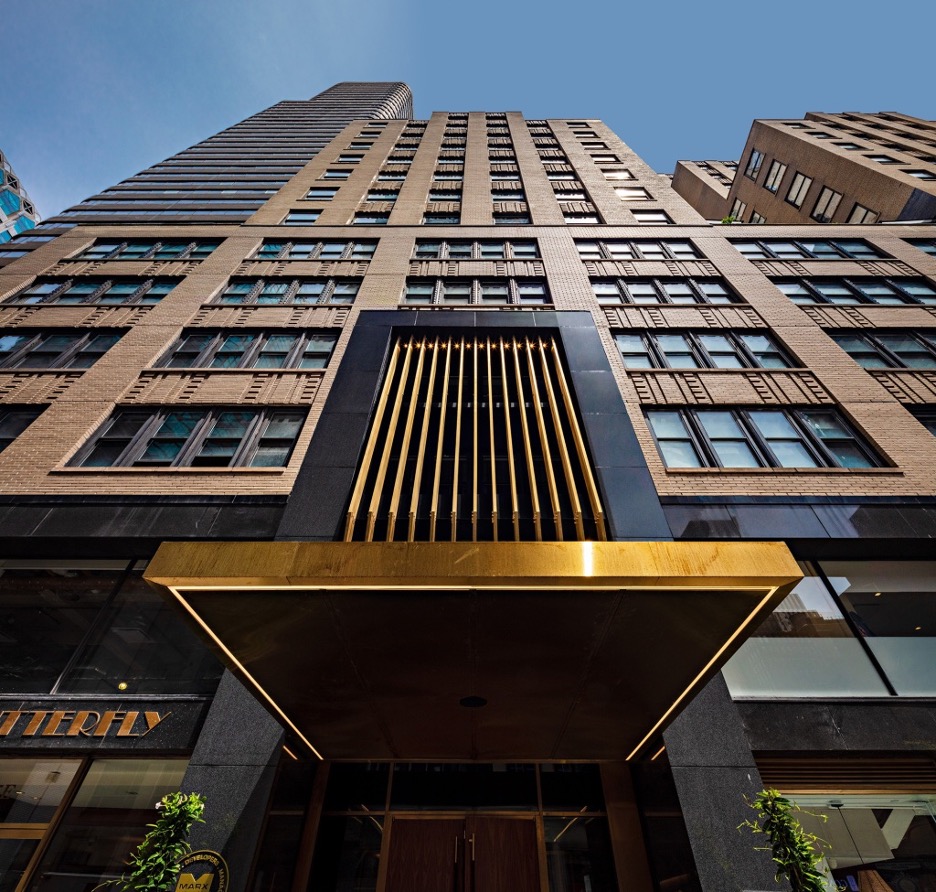
Designed by Ely Jacques-Kahn, 10 Grand Central has undergone major renovations since 2019. The effort — lead by David Burns, principal of Studios Architecture — was part of Marx Realty’s repositioning strategy for the 359,000-square-foot tower. Notably, the new façade features soaring marquee brass fins and oversized walnut doors. The lobby has also been refurbished, boasting a 7,500-square-foot indoor/outdoor lounge and club floor. The property also has a 40-seat conference space and a 1930s-inspired garden party outdoor space, dubbed The Ivy Terrace.
“10 Grand Central has more terraces than floors,” said Marx Realty President & CEO, Craig Deitelzweig. “The Ivy Terrace is only one of 44 terraces. Our repositioning strategy brought back multiple outdoor terraces that were once unused and undervalued and are now a key amenity for many in the building’s remarkable tenant roster.”
This year, lease deals at 10 Grand Central added up to more than 50,000 square feet of office and ground floor retail space. The building is home to notable companies, such as: real estate investment and management firm Strata Equity Group; conference organizer for health innovation HLTH; golf investing and tour organizing company LIV Golf Inc.; real estate investment firm Benenson Capital Partners; and international news agency Agence France-Presse.
Marx Realty Signs Three at 10 Grand Central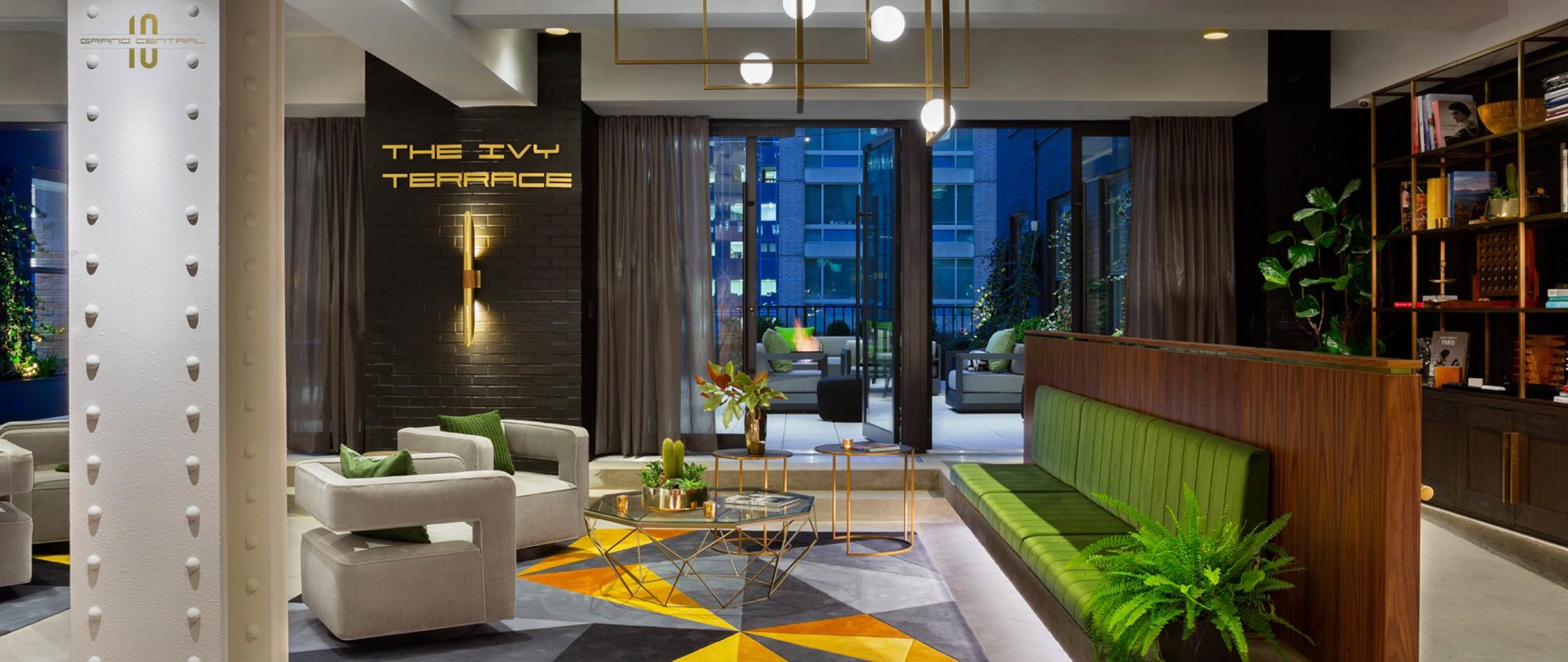
DIF Capital Partners, Colibri Equity Ventures and Fin Capital have signed long-term leases totaling 11,872 square feet at 10 Grand Central, announced landlord Marx Realty. Global asset manager Fin Capital will be taking the entire 5,212-square-foot space on the 33rd floor while global independent fund manager DIF Capital Partners and venture capital firm Colibri Equity Ventures took 3,745 square feet and 2,915 square feet respectively on the 23s floor.
“10 Grand Central continues to attract outstanding tenants,” said Craig Deitelzweig, president and CEO of Marx Realty. “The building’s repositioning strategy and role in Midtown Manhattan’s post-pandemic rebirth has resonated with the market.”
DIF Capital Partners was represented by Anthony Manginelli of CBRE while Gabi Koshgarian of Vicus Partners represented Fin Capital. JLL’s Carlee Palmer represented Colibri Equity Ventures in the transaction. The leases asking rents ranged between $87 and $99 per square foot.
The Ely Jacques-Kahn-designed office tower underwent Marx Realty’s signature top-to-bottom reposition strategy in 2019. The building’s features include a new façade sporting marquee brass fins and oversized walnut doors, attended by a uniformed doorman; a lobby featuring walnut wood and brushed brass and a 7,500-square-foot indoor/outdoor lounge and club floor boasting oversized artwork, a café complete with built-in appliances (including a gelato machine), a 40-seat conference space and The Ivy Terrace, an inviting outdoor space reminiscent of a 1930s era garden party.
“10 Grand Central has more terraces than floors,” added Deitelzweig. “The Ivy Terrace is only one of 44 terraces. Our repositioning strategy brought back multiple outdoor terraces that were once unused and undervalued and are now a key amenity for many in the building’s remarkable tenant roster.”
The latest amenity offering at 10 Grand Central is the Marx Mobile, a branded state-of-the-art luxury electric Porsche Taycan that will serve as the building’s house car. Marx Mobile is accessible to all the building’s tenants through the company’s proprietary MarxConnect software and will transport tenants as they traverse Manhattan — east/west from the East River to Eighth Avenue and north/south from Central Park to Union Square.
SUNY Westchester Community College Opens Expanded Yorkers Location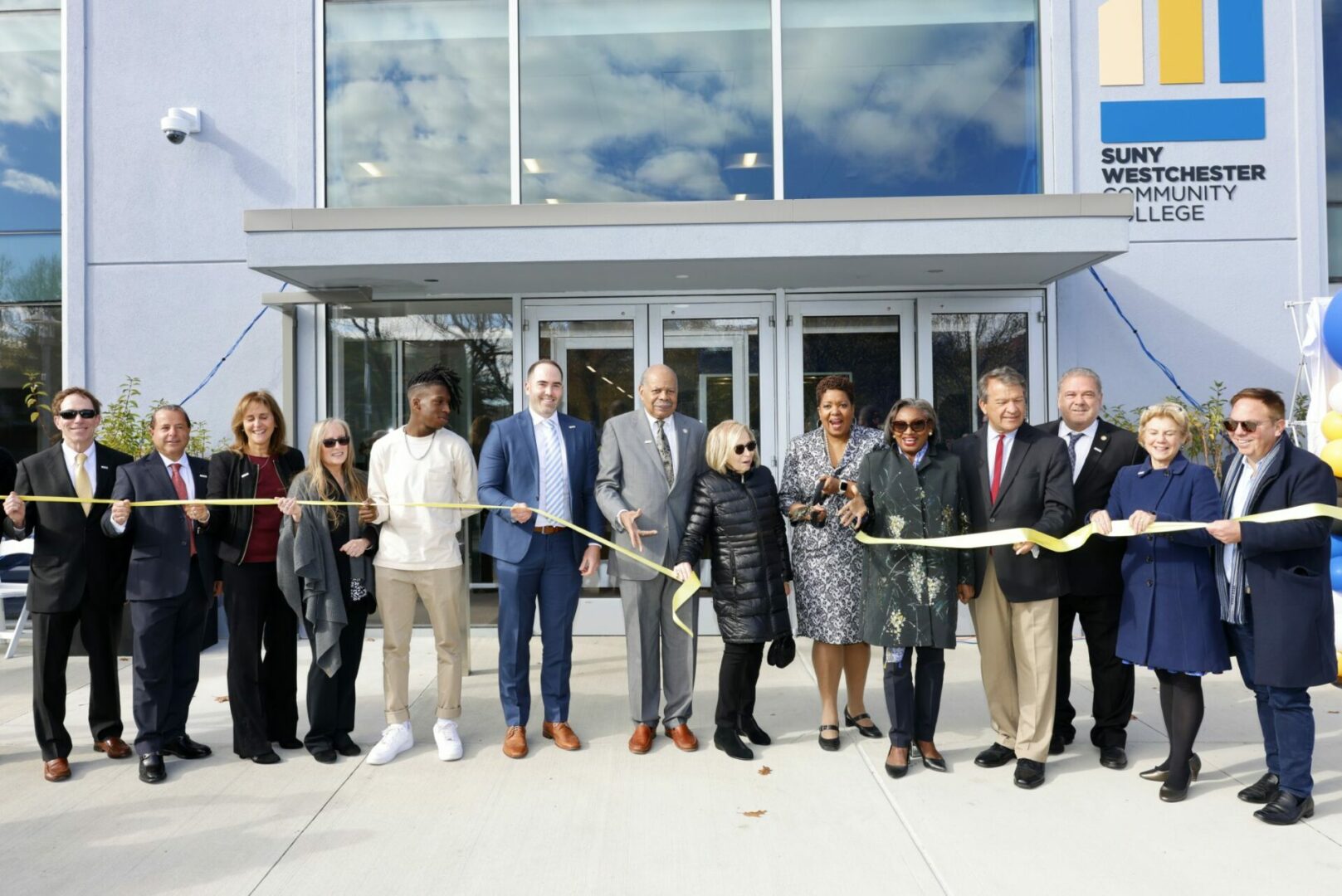
SUNY Westchester Community College (SUNY WCC), in a continuation of its commitment to deploying innovative ways to extend access to higher learning, launched a new state-of-the-art location in Yonkers to expand pathways to high-demand jobs and workforce development for the growing college population. SUNY Westchester Yonkers, located in the Cross County Center, is easily accessible for residents of southern Westchester and northern Bronx looking to pursue degree programs or workforce training. Today’s ceremonial ribbon cutting marks a new era for SUNY Westchester’s partnerships in Yonkers.
SUNY Westchester Yonkers offers a full array of student services, over 130 classes, and courses for selected associate degree programs. Its high-tech facilities include HyFlex Classrooms configured to support a flexible teaching environment utilizing advanced equipment that enables face-to-face and synchronous online learning simultaneously. The new location includes a fashion design lab for students who want to earn a degree in Fashion Design & Technology, as well as computer and science labs.
Other programs offered at SUNY Westchester Yonkers include Criminal Justice, Business Management and Liberal Arts. Workforce development and English as a Second Language (ESL) programs are also offered. Additionally, students have access to clubs, student support services, and academic support.
“Supporting students where they live and work is essential to the SUNY WCC experience,” said Westchester County Executive George Latimer. “I am proud of our efforts to freeze tuition and expand services so the residents of southern Westchester can have even more opportunities to better themselves and their families both now and for generations to come.”
“This partnership with SUNY Westchester allows students to continue achieving academic excellence while training to develop important skills required for the workforce,” said Yonkers Mayor Mike Spano. “This location opens the door to students in Yonkers and the surrounding areas to experience education in a setting unlike any other. I am confident the City of Yonkers can offer internship and job opportunities for students to continue to grow.”
“SUNY Westchester Community College has a mission of providing high quality education that is accessible and affordable,” said Dr. Belinda S. Miles, President of Westchester Community College. “Our new Yonkers location makes the most affordable college in the region geographically convenient for the thousands of residents in southern Westchester and the northern Bronx who seek a high-quality post-secondary education and gain high-demand middle skills jobs.”
“We are thrilled to welcome SUNY Westchester community to Cross County Center,” said Craig Deitelzweig, president and CEO of Marx Realty. “Cross County Center operates as a ‘town square’ for the community and we believe SUNY Westchester’s expansion and commitment to the Center will further its success and add to its dynamism and vibrancy.”
“SUNY Westchester Community College has been a long-time tenant at Cross County Center, and we are delighted by their continued expansion and success” added Jim Stifel, Executive Vice President, Benenson Capital Management.
SUNY Westchester Yonkers, located in Cross County Center at the intersection of Route I-87 and the Cross County Parkway, is easily accessible via public transportation or by car with ample free parking. Registration is open for spring classes that begin January 17.
For more information about programs and services at the SUNY Westchester Yonkers.
Marx Realty Signs DIF Capital Partners, Colibri Equity Ventures
Financial Firms Attracted to the Building’s Location and Premiere Hospitality Offering
Marx Realty (MNPP), a New York-based owner, developer and manager of office, retail and multifamily property across the United States, announced DIF Capital Partners, Colibri Equity Ventures, and Fin Capital have signed long-term leases totaling 11,872 square feet at 10 Grand Central. Global asset manager Fin Capital will be taking the entire 5,212-square-foot space on the 33rd floor while global independent fund manager DIF Capital Partners and venture capital firm Colibri Equity Ventures take 3,745 square feet and 2,915 square feet respectively on the 23rd floor.
“10 Grand Central continues to attract outstanding tenants,” said Craig Deitelzweig, president and CEO of Marx Realty. “The building’s repositioning strategy and role in Midtown Manhattan’s post-pandemic rebirth has resonated with the market and it’s incredibly exciting to elevate 10 Grand Central’s position as one of Midtown’s most exciting office offerings.”
DIF Capital Partners was represented by Anthony Manginelli of CBRE while Gabi Koshgarian of Vicus Partners represented Fin Capital. JLL’s Carlee Palmer represented Colibri Equity Ventures in the transaction. The leases asking rents ranged between $87 and $99 per square foot.
The Ely Jacques-Kahn-designed office tower underwent Marx Realty’s signature top-to-bottom reposition strategy in 2019. Among the building’s most impressive features are the new façade’s soaring marquee brass fins and oversized walnut doors, attended by a uniformed doorman; a sleekly styled lobby featuring walnut wood and brushed brass; as well as a 7,500-square-foot indoor/outdoor lounge and club floor boasting oversized artwork, a café complete with built-in appliances (including a gelato machine), a 40-seat conference space and The Ivy Terrace, an inviting outdoor space reminiscent of a 1930’s era garden party.
“10 Grand Central has more terraces than floors,” added Deitelzweig. “The Ivy Terrace is only one of 44 terraces. Our repositioning strategy brought back multiple outdoor terraces that were once unused and undervalued and are now a key amenity for many in the building’s remarkable tenant roster.”
The latest amenity offering at 10 Grand Central is the Marx Mobile, a branded state-of-the-art luxury electric Porsche Taycan that will serve as the building’s house car. Marx Mobile is accessible to all the building’s tenants through the company’s proprietary MarxConnect software and will transport tenants as they traverse Manhattan — east/west from the East River to 8th Avenue and north/south from Central Park to Union Square.
10 Grand Central has signed over 50,000 square feet of office and ground floor retail space so far in 2022; the building’s notable roster of tenants includes bank holding company Merchants Bancorp; real estate investment and management company Strata Equity Group; conference organizer for health innovation HLTH; golf investing and tour organizing company LIV Golf Inc.; weekly online news magazine The Week; real estate investment firm Benenson Capital Partners; and Goldman Sachs-backed Crux Informatics. High-profile tenants also include Dwayne “The Rock” Johnson’s production company, Seven Bucks Productions (as reported by the New York Post); insurance giant MassMutual, and international news agency Agence France-Presse.
The redesign was led by David Burns, principal of Studios Architecture. JLL’s Mitchell Konsker, Benjamin Bass, Kip Orban, Carlee Palmer, and Thomas Schwartz are leading a team handling the leasing for Marx Realty. The building’s asking rents range between $65 and $120 per square foot.
10 Grand Central Adds Trio of Financial Tenants
By: Paul Bubny
DIF Capital Partners, Colibri Equity Ventures and Fin Capital have signed long-term leases totaling 11,872 square feet at Marx Realty’s 10 Grand Central in Midtown Manhattan. Global asset manager Fin Capital leased the entire 5,212-square-foot space on the 33rd floor while global independent fund manager DIF Capital Partners and venture capital firm Colibri Equity Ventures took 3,745 square feet and 2,915 square feet, respectively on the 23rd floor.
“10 Grand Central continues to attract outstanding tenants,” said Craig Deitelzweig, president and CEO of Marx Realty. “The building’s repositioning strategy and role in Midtown Manhattan’s post-pandemic rebirth has resonated with the market and it’s incredibly exciting to elevate 10 Grand Central’s position as one of Midtown’s most exciting office offerings.”
DIF Capital Partners was represented by Anthony Manginelli of CBRE, while Gabi Koshgarian of Vicus Partners represented Fin Capital. JLL’s Carlee Palmer represented Colibri Equity Ventures.
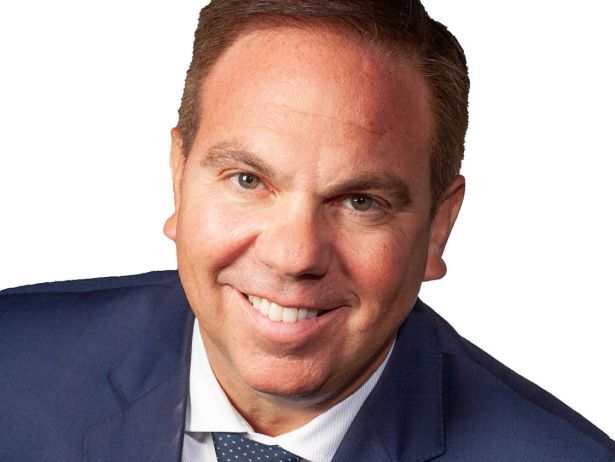
Marx Realty CEO Craig Deitelzweig
Craig Deitelzweig, President & CEO of Marx Realty, joined the Daily Beat for an interview. He laid out his bullish outlook for the office market and why he thinks it’s a generational buying opportunity.
Daily Beat: Can you please share your background?
Craig Deitelzweig: I started out as a real estate lawyer at Skadden and really enjoyed working there. I developed a love for real estate and wanted to focus more on the business side than the legal.
I then worked for a private developer and subsequently joined a private equity firm. At that point, I realized that I had a real aptitude for repositioning assets. Over the years, I have been fortunate to reposition more than fifty.
Around five years ago, I joined Marx and have been growing the company. We have been rethinking our assets and bringing a hospitality mentality into the office space.
Daily Beat: That trend has certainly accelerated over the past few years.
Craig Deitelzweig: We did it at 10 Grand Central about four and a half years ago and it’s really successful today. The whole experience is very hospitality-like. We have a doorman outside, a Marx Mobile, which is a house car that drives our tenants to different meetings and lunches.
The building is very anti-corporate. We are the opposite of so many of these buildings that are white, marble, and cold –– Marx buildings are warm and inviting. That’s really been our success before the pandemic, but it’s really accelerated ever since then.
Daily Beat: What’s your portfolio breakdown?
Craig Deitelzweig: Probably around 60% office, and the rest retail.
Daily Beat: What’s the average age of the office buildings?
Craig Deitelzweig: We have a lot of historic buildings from the 1920’s and 1930s, but we think of them as modern new buildings, even though they have a historic shell. Our average age is probably around 50 years old.
We’ve been buying a lot recently too and bought two older office buildings during the pandemic. Both became generic and lackluster and we brought back its heritage, beauty, and soul. One was called the Herald, which is where Jackie Kennedy had worked for her first job. All the furniture is based on items of clothing that she wore.
This approach is not commonplace in the market, but tenants really gravitate toward these types of buildings that have been repositioned.
We also have had great success with 545 Madison, which we repositioned during Covid. Occupancy increased from 68% to now 100%. When tenants came to tour that space, they appreciated the hospitality aesthetic.
Daily Beat: ADP Research found that 64% of workers would rather quit their jobs than return to an office full time. How has occupancy been in your buildings?
Craig Deitelzweig: Flight to quality is real and we have been the beneficiaries. Our physical occupancy has been at 87%.
Leasing and touring activity from August was the most robust it’s ever been. People are touring spaces and we’re seeing a lot of employers bringing in groups of workers to get buy-in on the new space.
They all want space that will get their employees excited to go back into the office.
Leaders have often said they want their employees back in the office because they think it’s the best way for them to engage with their employees and create culture. When people are remote, they’re more inclined to quit because they don’t have any attachment to their company. That’s what you’re seeing in the poll.
Daily Beat: So it sounds like you believe that office will fully come back.
Craig Deitelzweig: Yes. If you look at these companies that say that they’re going to remain remote forever, my guess is they will not exist in five years. When Yahoo and IBM experimented with it, remote work failed. It’s really hard to get your mojo back once you make that shift. That’s what a lot of companies are going through right now. The various polls don’t paint a full picture.
For instance, my son recently graduated college and he wants to be in the office and learn. Younger people really do want to be in the office.
Daily Beat: Kastle says that average physical occupancy is around 47%. I just want to make sure that Marx’s buildings are at 87%?
Craig Deitelzweig: Yes. People who come into this building have come in for a reason and want to be there. We have a lot of groups who were coming in four days, and are now coming in five days a week.
Additionally, a lot of tenants are expanding because there was a lot of growth during the pandemic period and they now need more physical space. It’s a lot of contradictions that you’re seeing, but I think it’s all going to settle out in a really good place. I’m bullish on New York City office.
Daily Beat: Is flight to quality overrated? Ultimately, are employees going to work?
Craig Deitelzweig: No. It’s really an experience that starts with the doorman outside. I think we’re still the only office building that has a doorman opening the doors for their guests and visitors. That whole experience is really important to the psyche of the employees in the building.
A lot of tenants really care about our lounge floors and conferencing spaces. It’s probably more important than the actual physical office spaces that they’re using, which was never the case previously. Tenants really do use those spaces all the time for meetings and also more casual types of experiences.
Daily Beat: Where else do you own office assets?
Craig Deitelzweig: We’ve been focusing on New York, Washington DC, and Atlanta, but we’re in 16 states.
Daily Beat: Vornado had too floating rate debt and they didn’t prepare for macro conditions. What have you done to prepare your financing?
Craig Deitelzweig: We saw this coming and thought that inflation rising would have an impact on interest rates. Marx Really therefore locked in all of our debts for the long term, so we don’t have any debt maturing for the next three years.
Daily Beat: How much have operating expenses increased?
Craig Deitelzweig: We have locked in a lot of our energy expenses, so we’re good in that sense. The same with our cleaning, which are the two biggest cost items. Ultimately, we’re going to start to see increases in operating expenses, but it hasn’t been that impactful yet. In terms of build outs, those have continued to increase because of supply chain issues.
Daily Beat: Do you manage your own buildings?
Craig Deitelzweig: Yes. That’s something that changed since I joined. Nobody is better than an owner in managing their physical properties. We see things that others won’t see and add thoughtful details that make all the difference in the world to tenants.
Daily Beat: Do you see opportunities in the market for office assets?
Craig Deitelzweig: We’ve been looking in New York for years to acquire assets and we just haven’t seen properties at a cost basis that made sense to us. Now we’re finally seeing deals that make sense, but you have to be very careful in this market.
The downtown market is a difficult one, so we’re focused on mostly Midtown, which is a dynamic area near transportation. In terms of the assets itself, we have to make sure it’s not just a price play and has the physical attributes that can really excite people to that space.
Daily Beat: Have you seen a shift to shorter lease terms? We’ve seen many five to seven-year renewals.
Craig Deitelzweig: That’s been happening for a while. Renewals are typically five or seven years, while new lease are 10 or more. We’ve been seeing that for quite some time.
Daily Beat: What’s your typical structure? Do you go out and raise for every new acquisition or do you operate out of a fund?
Craig Deitelzweig: We acquire some assets from our own balance sheet and there are also multiple groups that we partner with. Our team plans to increase institutional partnerships right now, especially with the generational types of opportunities that we are seeing in the office market.
Daily Beat: A borrower loses control once they close on a loan, with a A CMBS deal being the most obvious example. How do you protect yourself as a borrower?
Craig Deitelzweig: We don’t take on CMBS debt. All of our debt is with lenders where we have relationships with and they keep it on their balance sheet for that very reason, but in the CMBS world, you have no control over it. Additionally, there’s nobody to talk to if something goes wrong.
Daily Beat: Even if you have a good relationship with a lender, I guess there’s really no way to prevent them from selling it too.
Craig Deitelzweig: The lender groups we work with have a history of keeping loans on their balance sheet, which we have seen across many deals with them. Moreover, when underwriting your company, if they feel particularly comfortable, they’re going to want to keep it on their balance sheet. We have not run into that issue.
With that being said, we do think that there will be assets or notes to acquire based on borrowers having a difficult time with their lenders.
Daily Beat: Do you think Proptech is a complete bubble or is there any valuable technology at play?
Craig Deitelzweig: I think it’s a mix. Some of the technology is not necessarily very unique, but there is some that’s meaningful. I think Proptech on the construction side has enormous possibilities. For instance, using robots to lay bricks is wonderful for labor.
In our Cross County Center in Westchester, we now have a robot that supplements our regular security, which is really helpful because we have cameras all over. It is especially helpful in the evening shift when it’s dark.
The reality is that a lot of the big names in the space like WeWork are not real technology companies.
*The interview has been edited and condensed for clarity.
Three Financial Firms Ink Deals at 10 Grand Central
Three financial firms are taking their employees, and their cash, to 10 Grand Central.
In the largest deal, fintech investor Fin Capital inked a five-year deal for 5,212 square feet across the 33rd floor of the building at the corner of Third Avenue and East 44th Street, according to landlord Marx Realty. Asking rent was $99 per square foot, said tenant broker Vicus Partners’ Gabi Koshgarian.
Fin Capital moved from roughly 3,193 square feet at 286 Madison Avenue to Marx Realty’s building, which has an alternative address of 155 East 44th Street, on Nov. 1. The firm jumped on the deal partly because of the property’s classy aesthetics designed by Ely Jacques Kahn, Koshgarian said.
“They wanted an experience for their employees and investors and this is exactly that,” Koshgarian said. “The lobby is beautiful, the tenant amenity center is beautiful [and] they loved that it was in such close proximity to Grand Central because a couple of the partners come in from Grand Central.”
JLL’s Mitchell Konsker, Simon Landmann, Kyle Young, Carlee Palmer and Thomas Swartz handled the deal for the landlord. A spokesperson for JLL did not immediately respond to a request for comment.
Fin Capital isn’t the only financial firm moving to the 359,000-square-foot tower. Fund manager DIF Capital Partners inked a lease for 3,745 square feet on the 23rd floor while venture capital firm Colibri Equity Ventures signed on for 2,915 square feet on that same floor.
Marx did not immediately disclose the length of the leases but said asking rents for both ranged from $87 to $99 per square foot.
CBRE’s Anthony Manginelli represented DIF Capital while JLL’s Palmer handled Colibri Equity’s deal. A spokesperson for CBRE did not immediately respond to a request for comment.
Other tenants at the 35-story building include Merchants Bancorp, Dwayne “The Rock” Johnson’s production company Seven Bucks Productions, and online news magazine The Week.
Red Phone Booth Cocktail Bar Team Snatches Up a Big Downtown Atlanta Building.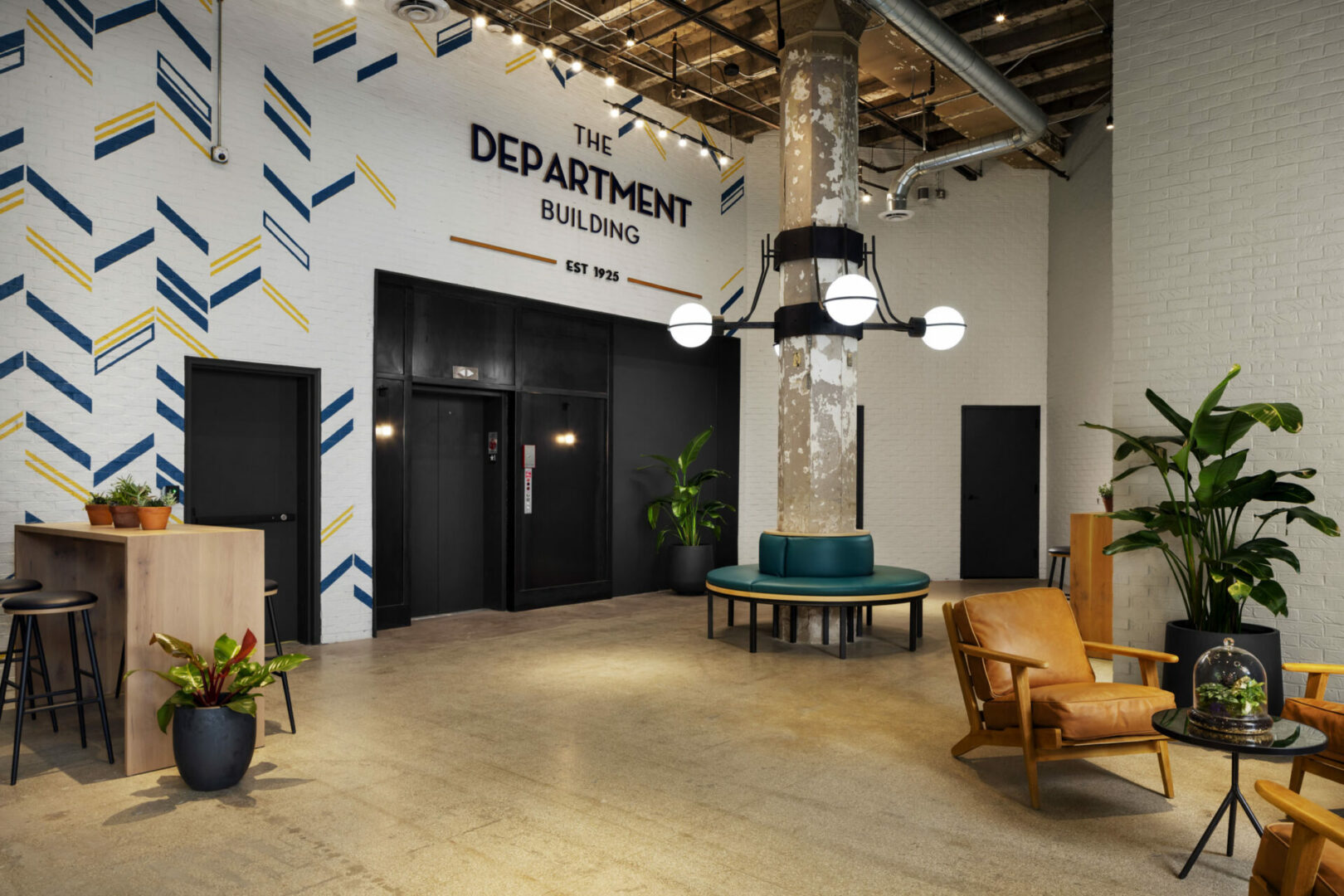
The group is planning multiple dining establishments at the former Regenstein’s department store building, including a rooftop spot.
By: Beth McKibben
Red Phone Booth Hospitality Group, the owners behind cocktail bar Red Phone Booth, Amalfi Pizza, and Saito – Sushi, Steak and Cocktails, just took over the remaining spaces at the Department Building in downtown Atlanta. Saito Sushi opened last year in the lobby of the former Regenstein’s department store at 207 Peachtree Street.
It’s unclear what the group’s plans are for their new spaces at the three-story building, only saying they’re currently developing “conceptual plans” and will share more details “in the months ahead.” The press release indicates the group may be working on a “family-friendly entertainment concept” with “multiple dining and entertainment destinations.” A rooftop establishment from the group is also in the works for the building.
The circa-1925 Department Building underwent a $10.5 million renovation in an effort meant to preserve its historic aesthetic, including many Art Deco and historic design features like the terracotta barrel vaulted ceilings, fluted columns, and wood floors. Prior to the renovation, the building had remained mostly vacant for forty years.
Second locations of cocktail lounge and cigar bar Red Phone Booth and pizzeria and Italian restaurant Amalfi opened in Buckhead last year, taking over the former Gordon Biersch space on Peachtree Road in Midtown. As in downtown Atlanta, people can only access the cocktail bar by dialing a secret code on a telephone inside an antique red phone booth out front.
Owners Magazine 2022’s Most Likely…
We polled owners and asked who among their colleagues deserved superlatives such as most likely to succeed, best dressed, best car, most likely to be mayor, best athlete, best celebrity lookalike and class clown
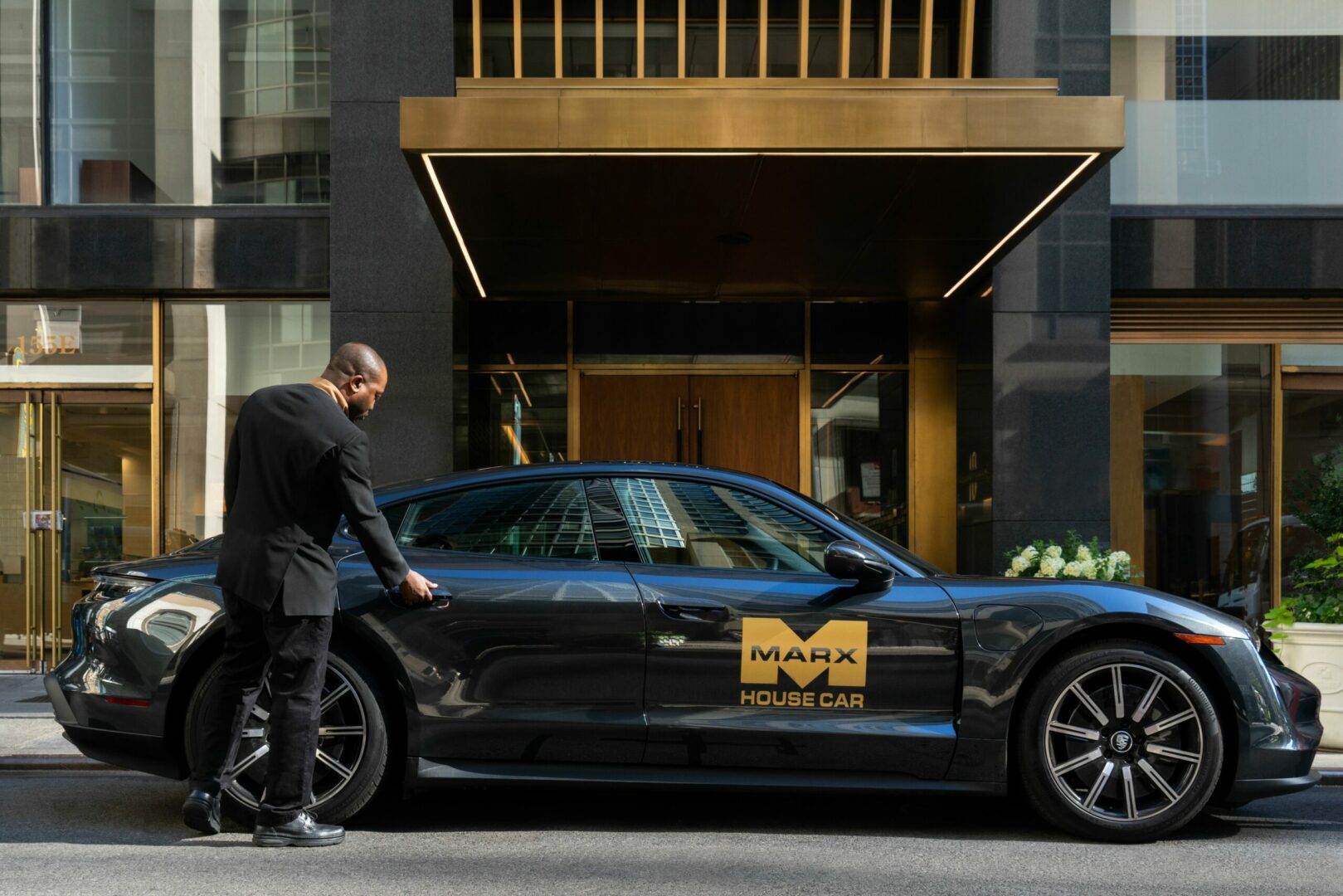
Best Car
The Marx Mobile
The question of who has the best car is a slightly dubious distinction for those of us raised on John Hughes movies. The unbearable preppy schmuck invariably had some sort of shmancy sports car with a license plate reading “So Cool,” or some variant. (At least that was Mike Todwell’s plate in “Adventures in Babysitting.”) But it remains a rite of high school yearbooks to acknowledge who’s got the best. Among the real estate figures nominated were the cars of Paul Massey, Michael Shvo, Peter Kalikow, Barry Gosin, Harry Macklowe and Derek Trulson. (So feel free to hit them up for a drive someday.) But the most votes were tallied for Marx Realty’s $100,000 electric Porsche Taycan — the one emblazoned with Marx Realty’s logo that’s available to tenants at 10 Grand Central and goes by the moniker “the Marx Mobile.” (Karl would be spinning in his grave.) Given that this is a seriously cool perk that goes not to one but many (we suspect Karl wouldn’t be fully appeased, but it’s something) we hereby declare it a Porsche that’s free from any teenage comedy snobbery.