
 Contact
Also Bath & Body Works is renovating its store and adding a popular home fragrance designer.
Aug 13, 2019 6:05 pm ET
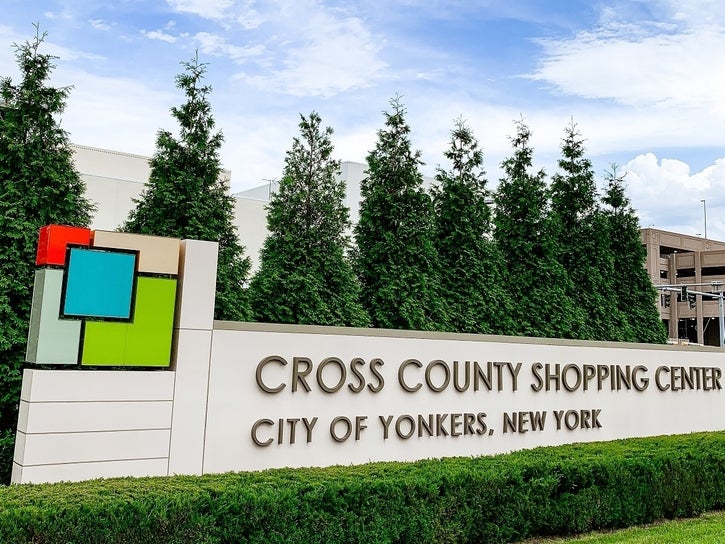
Shoppers traveling to Yonkers’ Cross County Shopping Center will find three new retailers later this year: Mito Asian Fusion, Invicta Watches and Carvel Ice Cream. Bath & Body Works also announced that it is completing a full remodel of its existing store and will add the White Barn Candle concept to the location.
Adding these brands is part of an ongoing strategy to bring the most current and fresh retail concepts to Cross County, according to a spokeswoman.
“These three new retailers will perfectly complement the existing brands at Cross County Shopping Center and provide something new and fresh for shoppers to experience,” said James Stifel, chief investment officer for Benenson Capital Partners LLC, which co-owns the shopping center with Marx Realty.
Here are the details provided by Cross County Shopping Center:
Mito Asian Fusion is a restaurant hot spot for Asian fusion and Japanese fare. The menu features sushi and noodles, Hibachi, plus cocktails and more. With the original location in Forrest Hills, the Cross County location will be the second restaurant to open, in 5,000 sq. ft. near Old Navy, this winter.
The Invicta Watch Company will open in 963 sq. ft. adjacent to Macy’s in winter 2019. Invicta watches are Swiss made and are among the most popular timepieces in the world. There are thousands of men’s and women’s styles to choose from, including collaborations with Character Collection, DC Comics, Disney Limited Edition, Jason Taylor, Marvel, NFL and Star Wars.
Carvel Ice Cream is an American ice cream franchise, which will open in a 375 sq. ft. space, near Old Navy in fall 2019. Carvel is best known for its soft-serve ice cream and ice cream cakes, which feature a layer of distinctive “crunchies.” It also sells a variety of novelty ice cream bars and ice cream sandwiches. Carvel has deep roots in Westchester and Yonkers in particular. In 1967, the corporation bought the Westchester Town House Motel, on Tuckahoe Road in Yonkers, and renamed it the Carvel Inn, converting it for use as corporate headquarters, while still operating it as a hotel, providing them with a conference center for the annual franchisee conventions.
Bath & Body Works, a long-time retailer at Cross County Shopping Center, has recently committed to a 10-year lease renewal and has begun a complete store-wide renovation of the 4,100 sq. ft. space, located at Center Court. Bath & Body Works is one of the world’s leading specialty retailers and home to America’s Favorite Fragrances®. The NEW Bath & Body Works at Cross County Shopping Center will also feature a White Barn Candle Company, a popular home fragrance designer with a range of signature scents and products to choose from, including wallflowers, candle, hand soap and more.
Cross County Shopping Center was built in 1954 and is the largest outdoor shopping center in Westchester County. It is located at the intersection of Cross County Parkway and I-87.
MassMutual Signs Up for Full Floor at 10 Grand CentralAugust 14, 2019
Global insurer MassMutual signed a 22,000-square-foot, 10-year lease for the entire 12th floor at Marx Realty’s 10 Grand Central. The company is relocating from 200 Park Ave.
Additionally, international news agency Agence France-Presse, UK-based sports private equity firm 23 Capital, asset management firm Everside Capital Partners and educational technology company Decoded have signed long-term new leases at the newly repositioned office tower. Marx is also negotiating with three tenants from the Seagram Building looking to relocate to 10 Grand Central.
“The repositioning has transformed 10 Grand Central into one of the most desired office buildings in the city,” said Marx CEO Craig Deitelzweig. “Incoming tenants and brokers are awestruck by the attention to detail on display throughout the property.”
JLL’s Howard Hersch, Sam Seiler, Brett Harvey and Cynthia Wasserberger are leading a team handling the leasing for Marx Realty. Cushman & Wakefield’s Stuart Romanoff and Amy Fox represented MassMutual.
MassMutual Signs 22,000SF Lease at 10 Grand CentralMarx Realty has signed more than 160,000SF in new leases, upon the building’s $48M repositioning.
By Ingrid Tunberg | August 13, 2019 at 12:18 PM
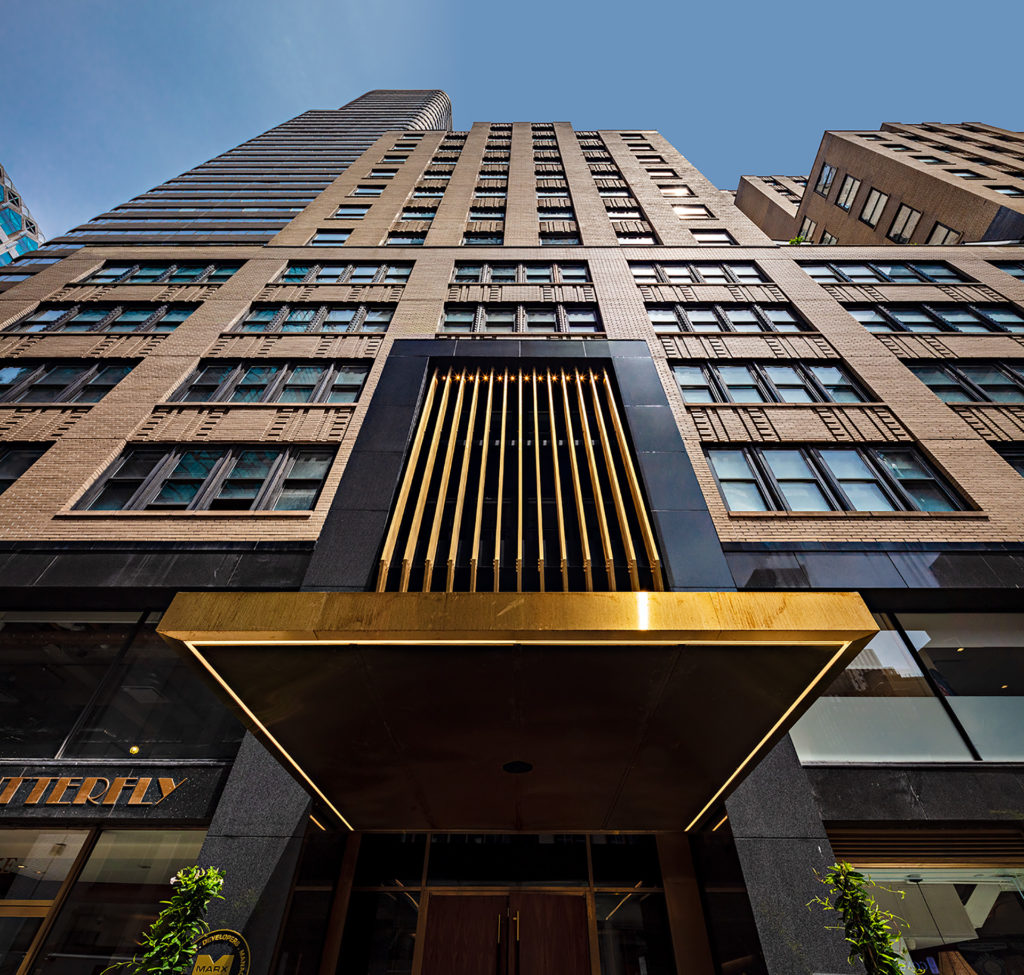
NEW YORK – MassMutual has signed a ten-year, 22,000-square-foot lease at Marx Realty’s 10 Grand Central in Midtown Manhattan. The global life insurance company is relocating from 200 Park Avenue in Midtown, to the entire 12th floor of the refurbished 35-story building.
Since announcing the $48 million repositioning of the Ely Jacques-Kahn-designed office tower less than a year ago, Marx Realty has signed more than 160,000 square feet of new leases in the nearly 500,000-square-foot building.
The newly reimagined, 1931 tower has attracted long-term leases, including 2,700 square feet for the international news agency, Agence France-Presse; 3,600 square feet for the UK-based sports private equity firm, 23 Capital; 4,200 square feet for the asset management firm, Everside Capital Partners, and 4,000 square feet for the educational technology company, Decoded. Other notable tenants for 10 Grand Central include Benenson Capital Partners, Dennis Publishing’s The Week, ANA, HLTH, Macro Risk Advisors, White Oak Partners, as well as various film production, fintech and private equity firms and companies. Marx Realty is additionally in negotiations with three tenants from the Midtown Seagram Building, who are looking to relocate to 10 Grand Central.
The recently completed building renovations began by relocating the entrance portal to its original location on 44th Street, showcasing its proximity to Grand Central Station. Transformations to the property included redesigning the lobby, four-story entrance portal, marquee, lounge, the Ivy Terrace and a 40-seat conference space. The design team implemented hotel-like amenities, lobby accents of walnut wood, brushed brass and polished concrete, and a 7,500-square-foot indoor/outdoor café and lounge inspired by 1930s design.
Building occupancy has increased from 78% to 91% since the refurbishment project. Asking rents for the tower range from $72 to $120 per square foot.
David Burns, principal of Studios Architecture has led the property’s redesign efforts. Howard Hersch, Sam Seiler, Brett Harvey and Cynthia Wasserberger of JLL are handling the leasing for Marx Realty.
Marx Realty is a New York-based owner, developer and manager of office, retail and multifamily property across the US. A division of Merchants National Properties (MNPP), founded in 1915, Marx Realty holds a current portfolio of more than 5 million square feet of properties.
MassMutual signs lease for new office spaceBy Steve Cuozzo | August 12, 2019 | 10:51pm

MassMutual has signed for 22,000 square feet for 10 years at Marx Realty’s 10 Grand Central, the Ely Jacques Kahn-designed office tower previously known as 708 Third Ave.
It’s the latest advance for the property where Marx recently spent $48 million to move the entrance off the avenue onto East 44th Street and to create a new lobby, lounge, outdoor terrace and conference space. The amenities and luxury finishes are more reminiscent of a hip downtown property than of a once-stodgy East Midtown address.
The MassMutual lease brings the 405,000-square- foot tower to 91 percent occupied, up from 78 percent just one year ago. Recent signings include Agence France-Presse, 23 Capital and Everside Capital Partners.
Only 34,000 square feet are still available. Marx CEO Craig Deitelzweig credited the leasing boom to the building’s “proximity to Grand Central Terminal and game-changing design sensibility.”
Asking rents range from $72 to $120 per square foot.
BOMA New York captures the global stage and prepares for the 2020 Pinnacle AwardsAugust 06, 2019
New York, NY BOMA International presented 17 International TOBY Awards at the annual conference last month. Two NYC buildings returned with the TOBY, beating dozens of buildings from around the globe. The Hearst Tower won “Best Corporate Facility,” owned by the Hearst Corp. and managed by Tishman Speyer Properties. 280 Park Ave. won “Best Renovated Building;” owned by Vornado Realty Trust and SL Green Realty Corp, managed by CBRE.
The International Awards culminate a year-long effort. In order to qualify for an International TOBY, you first have to win a local TOBY Award, followed by a regional TOBY victory. This city-wide achievement marks the second time NYC won two International TOBY Awards – the last time was in 2011.
“TOBY Award winners exemplify leadership and demonstrate best practices for the entire CRE industry,” said Hani Salama, chair and CEO of BOMA NY. “As we congratulate our local megastars on their International TOBY Awards, we look forward to restarting the TOBY process with the BOMA NY Pinnacles.”
The awards recognize quality in properties and reward excellence in building management. BOMA NY unveiled the nominations for the 2020 Pinnacle Awards:
• Renovated Building:
123 William St., CBRE
10 Grand Central, Marx Realty
Marx lands $140M loan for 10 Grand Centralby REW | August 8, 2019
Marx Realty (MNPP) has secured a $140 million loan to refinance its 10 Grand Central office tower located at 155 East 44th Street.
MetLife originated the loan and a Cushman team led by Steve Kohn, Adam Doneger, Mark Ehlinger, and Noble Carpenter III oversaw the assignment on behalf of Marx Realty.
“The refinancing gives us the ability to continue offering best-in-class office spaces for today’s image conscious firms,” said Craig Deitelzweig, president and CEO of Marx Realty.
“Occupancy at 10 Grand Central has increased from 78 percent to 91 percent since we announced our plans last year and we continue to get incredible feedback from brokers as well as existing and potential tenants across financial, technology and business services fields.”
Marx Realty, a New York-based owner, developer and manager of office, retail and multifamily property, recently completed a $48 million repositioning of the 35-story Ely Jacque Kahn-designed building which included a relocated entry portal and redesigned lobby as well as a 7,500 s/f amenity space including a lounge, conference facility and expansive outdoor terrace.
A complete lobby redesign gives tenants and guests a hotel-like experience with uniformed doorman welcoming tenants and guests to the building.
“The recent improvements to 10 Grand Central, coupled with its proximity to Grand Central Terminal, made this financing opportunity of great interest to many potential lenders,” said Steve Kohn, Vice Chairman and President of EDSF for Cushman & Wakefield, who brokered the loan.
“Thanks to the Cushman & Wakefield team’s execution and the repositioning team’s tremendous success in seamlessly incorporating hospitality into the office product, we were able to have a host of lenders to choose from for this long-term loan,” added Deitelzweig.
“We look forward to working with them again as we continue to add value throughout our portfolio.”
A number of new tenants have signed leases recently at 10 Grand Central including health tech company HLTH, international news agency Agence France-Presse, UK-based weekly magazine The Week, sports private equity firm 23 Capital, hedge fund group Macro Risk Advisors, asset management firm Everside Capital Partners, educational technology company Decoded; and private equity firm White Oak Partners.
In addition, Marx Realty secured a 15,000 s/f 10-year renewal for real estate investment firm Benenson Capital Partners and a significant expansion for advertising association powerhouse ANA.
Marx Realty Secures $140M Loan for 10 Grand Central Refinance8/2/19
Loan was provided by MetLife and arranged by Cushman & Wakefield team
Marx Realty (MNPP), a New York-based owner, developer and manager of office, retail and multifamily property across the United States, announced it has secured a $140 million loan to refinance its 10 Grand Central office tower located at 155 E. 44th St. in Manhattan’s Midtown East neighborhood.MetLife originated the loan and a Cushman team led by Steve Kohn, Adam Doneger, Mark Ehlinger, and Noble Carpenter III oversaw the assignment on behalf of Marx Realty.
“The refinancing gives us the ability to continue offering best-in-class office spaces for today’s image conscious firms,” said Deitelzweig. “Occupancy at 10 Grand Central has increased from 78 percent to 91 percent since we announced our plans last year and we continue to get incredible feedback from brokers as well as existing and potential tenants across financial, technology and business services fields.”
Marx Realty recently completed a $48 million repositioning of the 35-story Ely Jacque Kahn-designed building which included a relocated entry portal and redesigned lobby as well as a 7,500-square-foot amenity space including a lounge, conference facility and expansive outdoor terrace.
“The recent improvements to 10 Grand Central, coupled with its proximity to Grand Central Terminal, made this financing opportunity of great interest to many potential lenders,” said Steve Kohn, Vice Chairman and President of EDSF for Cushman & Wakefield.
10 Grand Central represents a new asset class within the office sector by infusing the building with a game-changing hospitality aesthetic. A complete lobby redesign gives tenants and guests a hotel-like experience beginning with its relocated and redesigned four-story entry portal and uniformed doorman welcoming tenants and guests to the building. Additionally, the 7,500 square-foot club floor is well-appointed with warm walnut wood finishes, herringbone concrete tile floors, lounge, cafe and an expansive terrace reminiscent of a 1930s era garden party, all of which represent a modern interpretation of Ely Jacques Kahn’s original Beaux Arts design aesthetic. A 40-seat conference facility rounds out the seventh-floor amenity offerings.
“Thanks to the Cushman & Wakefield team’s execution and the repositioning team’s tremendous success in seamlessly incorporating hospitality into the office product, we were able to have a host of lenders to choose from for this long-term loan,” added Deitelzweig. “We look forward to working with them again as we continue to add value throughout our portfolio.”
A number of new tenants have signed leases recently at 10 Grand Central including health tech company HLTH, international news agency Agence France-Presse, UK-based weekly magazine The Week, sports private equity firm 23 Capital, hedge fund group Macro Risk Advisors, asset management firm Everside Capital Partners, educational technology company Decoded; and private equity firm White Oak Partners. In addition, Marx Realty secured a 15,000-square-foot 10-year renewal for real estate investment firm Benenson Capital Partners and a significant expansion for advertising association powerhouse ANA.
Marx Realty Gets $140M MetLife Refi on 10 Grand Central TowerBy Mack Burke | August 1, 2019 4:40 pm
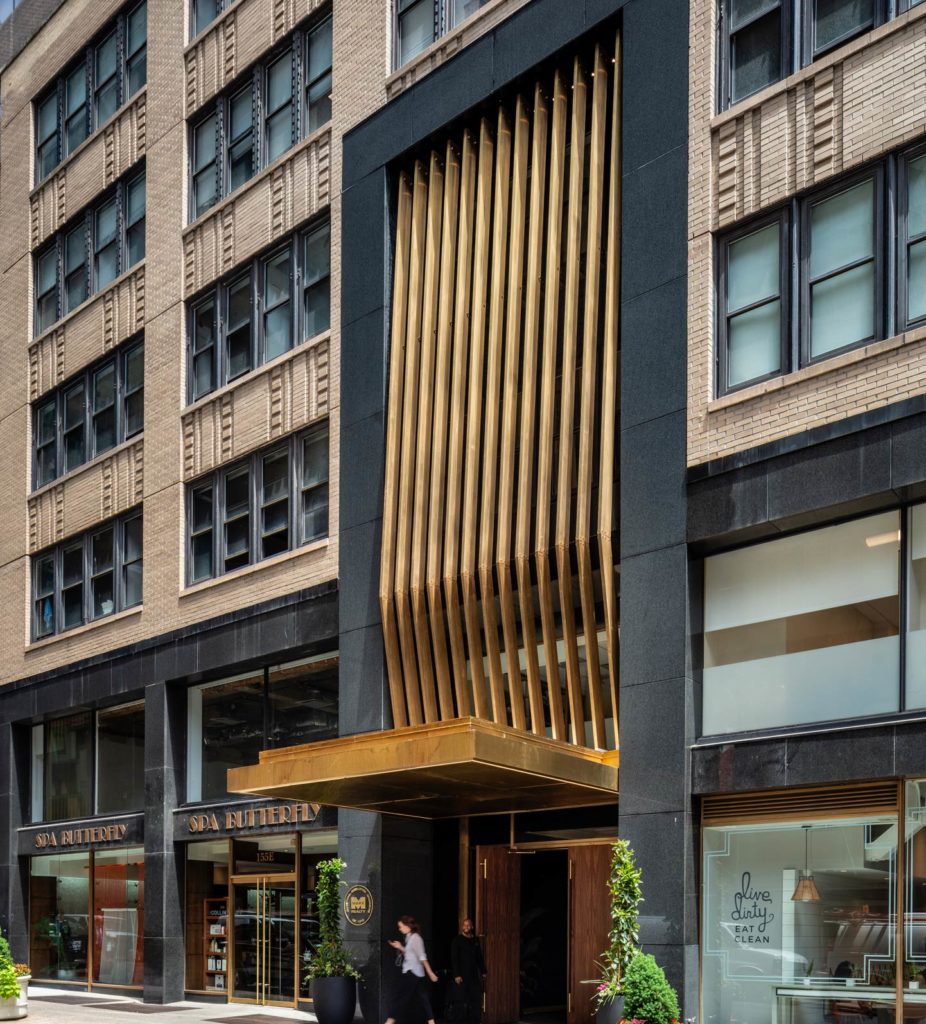
MetLife has provided Marx Realty with a $140 million loan to refinance its recently repositioned Art Deco office tower, 10 Grand Central, in Midtown, Commercial Observer can exclusively report.
The 10-year, interest-only loan carries a rate of 3.99 percent and a loan-to-value of just 30 percent.
A Cushman & Wakefield (C&W) team led by Steve Kohn and including Adam Doneger, Mark Ehlinger and Noble Carpenter III arranged the debt.
“The recent improvements to 10 Grand Central, coupled with its proximity to Grand Central Terminal, made this financing opportunity of great interest to many potential lenders,” Kohn, the vice chairman and president of equity, debt and structured finance for C&W, said in a statement provided to CO.
Marx set out in July last year to revamp the 35-story property with a $45 million renovation. With the redevelopment, the building’s entrance moved from Third Avenue to East 44th Street, where it fronts at 155 East 44th Street with a four-story entryway.
The 438,000-square-foot building was built in 1931, and the company wanted to stay true to its origin, recreating an old-school, 1930s New York feel. That features a “white-gloved” doorman attending the lobby, an area that will sport circa 1920s and ’30s art.
Marx relocated around 80,000 square feet of tenancy in order to widen the scope of the renovation as much as possible, as CO previously reported. The work included 10 prebuilt office suites, ranging from 2,500 to 8,000 square feet.
Studios Architecture was tapped to redesign the lobby and the entrance, and it also created new amenity space and a 3,000-square-foot seventh-floor outdoor terrace.
“What’s happened over the years [is] people changed the building and modified it in a way that wasn’t true to the original intent,” Marx Realty president and CEO Craig Deitelzweig told CO during an October tour of the building. “What we are trying to do is be authentic to his original design aesthetic but do it in a modern way.”
The redevelopment has spurred a lot of interest from prospective and existing tenants. In the last year, Marx has sealed around 160,000 square feet of leasing, Deitelzweig told CO.
He said the company’s renovation efforts have helped push average rents up $30 per square foot from what they were charging prior to the new construction, which averaged $44. Marx is now charging $130 per square foot at the top of the building, in its penthouse collection. At the bottom of the building, rents fetch around $82 per square foot, and throughout the rest of the asset, rents in the $70s to low $80s can be had.
The property is now 91 percent leased and Deitelzweig said that could be 94 percent by the end of this week. It houses a mix of tech, medical, financial and entertainment tenants.
With the renovation, the chief executive said the company has opened the property to the “large universe of tenants,” meeting the needs for “an insurance company or a brand-conscious financial firm or a tech company that wants collaborative space.”
In July 2018, the month the renovation started, Benenson Capital Partners jumped to renew its 15,000-square-foot lease, signing a 10-year deal to keep its offices on the 27th through 29th floors.
In March, Association of National Advertisers expanded its footprint at the property to 52,000 square feet, from 41,000, on a 15-year deal, as first reported by the New York Post.
Bringing the Amenities and Ease of Use of High-End Hotels to Other IndustriesBy Anthony Paletta | July 8, 2019
Companies are increasingly borrowing practices from the hospitality industry in order to attract and retain tenants and residents of all sorts. To address the topic, ULI New York convened a panel titled “The Hotelification of Real Estate,” held in June at the Shearman and Sterling offices in Manhattan, featuring a range of experts with specialties spanning commercial, residential, and mixed-use development.
Moderator Ellen Sinreich, founder and managing principal of the Manhattan–based consulting firm the Sinreich Group, said that the panelists agreed “that ‘hotelification’—in other words hospitality and amenities—are a way to differentiate their properties and improve their bottom lines.” These practices, which begin with how a company finds space, customizes it, and gains entry to it, expand to include the equivalent of room service and other services that go well beyond the traditional purview of the landlord but are routine at high-quality hotels.
Ryan Simonetti, chief executive officer of Manhattan–based Convene, which offers premium workspaces to companies and building tenants, contrasted searching for a hotel room for the night with finding space for a business, comparing the ease of using Airbnb with the complications of commercial searches. “Has anyone gone through the process of signing a lease, designing space for a building? How cumbersome is that process for the end user?” he asked.
“At Convene, in the next 90 days you can go online, find a space, design your space, buy your space, and at a click of a button your service contract is done,” he said. “Move in a week—that’s a fundamentally different way to deliver the office as an experience.” He added, “We like to think of ourselves almost like a hotel brand but for offices.”
David Barry, president of Ironstate Development Company, based in New York City and Hoboken, New Jersey, noted that people think about boutique hotels when they talk about the hotelification of real estate. “It’s what happened to [the hotel] industry 20 years ago, where the product became emotionally connected to the consumer, to the guest, as opposed to just being commoditized, sanitized, heads in beds, which is what the old brands had.”
Though some practices can be standardized more effectively in ways resembling the operations of hotels, the point is not economy of scale but differentiation through increasingly personalized service and amenities.
Craig Deitelzweig, chief executive officer of Marx Realty, a Manhattan-based real estate investment, development, and management firm, cited the monotony of the office lobby.
“If you look at a lobby 50 or 60 years ago, it looks kind of the same as a new development today,” he said. “They’re all white marble or gray marble. If they’re crazy and they’re all super bright, you almost feel like you’re going to a doctor’s office with the lighting. What we wanted to do was really change that up and make it warm and inviting and welcoming, so our buildings don’t have any white marble; we don’t have bright lights.
“We look at hotels for inspiration, and the reason for that is, really, hotels are spaces that make you feel good.” The approach is modeled on hotels in several particulars, he said. “Our buildings have doormen outside like you would see in a hotel. We have oversized doors; we have a marquee, not a canopy.”
One thing the buildings do not have is turnstiles. “We don’t believe in it,” Deitelzweig said. “We think it’s sort of governmental and not welcoming.” This places a premium on good doormen, adept at recognizing and welcoming tenants, he said. Instead of hiring doormen through security groups, his firm hires through hotels.
Marx lobbies have walnut, brushed brass, herringbone floors, and flowers and plants—and no white marble. “It goes upstairs, as well,” Deitelzweig said. “It’s holistic throughout the entire property. It’s the attention to difference that makes a difference. As a result, we’ve been able to obtain really premium rents.”
The resemblance to hotels does not stop there, he added. “We curate the food also: we have an app delivering cappuccinos and avocado toast—kind of like room service,” he said.
The key at large developments like Hudson Yards in Manhattan and Related’s Santa Clara development in Santa Clara, California, is not standardization but intense and specific attention to local circumstances, customers, tenants, and clients, said Ken Himmel, chief executive officer of Related Urban, a developer of large-scale mixed-use properties.
“At the end of the day, I think a lot of people who don’t work on these complicated mixed-use projects may think that the scale of the project, just the sheer size of it, creates an opportunity to simplify or make more money out of what you’re doing just because of the scale of it,” he said. “It’s just the opposite. It’s so much more complex; it’s incredible.
“It’s about the full breadth and depth of hospitality being integrated with the program, which covers a wide variety of program uses,” he said. “You always start with the programming. No one can begin planning or designing a project without understanding what the programming is. These programs are not very flexible.”
He noted that no two projects are the same. “That’s what I love about our business compared to what has happened with the commodity mall business where everybody had a formula,” he said. “When they got a formula, they thought they had it right, and they did 40 of them.”
Because Himmel’s mixed-use projects have frequently included hotels, it is no surprise that he has borrowed from hotel practices. The tailoring of each element to the local market is one practice adapted intensively from that industry—a process that often involves more initial effort. “For us, the most innovative part of the programming usually works around hospitality, and we differentiate hotels,” he said. “So in Santa Clara, I’ve got a 460-room Conrad convention hotel and I’ve got an Equinox hotel.” Equinox health clubs, from which the hotel chain originated, are a standard amenity in his undertakings and not coincidentally mimic gym offerings at other hotels.
“The next biggest amenity is to provide food and beverage—creative food and beverage: not just the most expensive food and beverage, but a wide variety depending on how big your project is,” he said. “There’s a direct relationship to the quality of the operator . . . and the amount of money you have to invest to do it. You cannot do triple-net leases with these guys, so most creative combinations or curations come from understanding the business. . . . Today, I spent as much time on two restaurants at Hudson yards as I did on my $9 billion project in Santa Clara. It’s a price you pay for delivering an experience at your projects that no one else will deliver.”
He noted that profits yielded from such efforts can be considerable, but that close attention to the product is required at the outset. “These are crazy, wild undertakings, and you have to staff yourself to be able to do it.”
Barry noted that standardization often can cost more than bespoke efforts, with standard amenity spaces—he cited a golf simulator as an example—frequently going unused. “I think there’s a military industrial complex that occurred between marketing people and interior designers where it’s just like, ‘Let’s put new stuff in this,’ and nobody’s really thinking about how it’s going to be used or operated.”
Customization must involve both attention to a tenant’s wishes at the outset and data-driven monitoring of what works for them, Simonetti said. Hotelification need not involve massive outlays of money, he added. “You can create a good human-to-human experience where when I show up, I get a person who greets me and says ‘Hey, how are you?’, where the property manager is kind, where I can pay my bills easily.”
One area the panelists disagreed on was the length of leases. Convene focuses on a “forgotten middle” of tenants, whose space demands are modest, Simonetti said. “If you’re an occupier under 20,000 square feet [1,900 sq m], you should never sign more than a two- or three-year lease agreement,” he said. “It’s impossible to predict where your future’s going to be.” Shorter leases have delivered higher profits, he noted. “We just had our first wave of big renewals, and our renewal rate was 98 percent, he said. “Each one of those companies committed to a longer rental, and they paid more.”
Deitelzweig outlined a different approach. “We are a little concerned about some of the short-term occupancy for office tenants,” he said. “In the hotel world when things get bad, those short-term stays are really troublesome. When it gets bad, the hotel industry is the first to feel it. Our model is not that short term; it’s to have tenants that are there for the duration so we have economic success even when the market goes south.”
One area of agreement was straightforward: revenues. All pointed to leasing and rental premiums from delivering a personalized service. “Because we’re highly amenitized, we have trophy-like rents,” Deitelzweig noted. These properties leave much more than a light on for you, and reap rewards in the process.
Marx introduces hospitality vibe at 10 Grand Centralby REW | May 8, 2019

Marx Realty just unveiled the redesigned lobby at the newly rebranded 10 Grand Central office tower.
The company previously announced the completion of a redesigned lounge, terrace, and conference space at the building as part of the $45 million repositioning of the 35-story Ely Jacques-Kahn designed building located at 155 East 44th St.
The repositioning represents a design disruption in the office sector with a hospitality-like appeal that includes details such as a signature scent, customizable mood music and video art installations throughout the building.
The lobby and entry have been relocated to the building’s original 44th Street location, orienting the property towards Grand Central Terminal, as the original design intended.
“The redesigned lobby fulfills our vision to transform the space at 10 Grand Central to an office experience unlike anything currently available in the New York City office market,” said Craig Deitelzweig, CEO of Marx Realty.
“We have translated this repositioning strategy into a wildly successful hotel-meets-office package that sets a new standard and creates a space that embraces hospitality in a meaningful way. It’s a truly special atmosphere with a highly stylized look and feel that begins right at the front doors and transitions throughout the building while paying tribute to the building’s original design aesthetic.”
The company recently delivered 7,500 s/f of seventh-floor amenity space, including a lounge connected to a terrace, and a conference facility.
According to Deitelzweig, the redesign has resulted in over 130,000 s/f of new leases.
A JLL team led by Howard Hersch, Sam Seiler, and Cynthia Wasserberger is handling the leasing effort. Asking rents range from $72-97 psf.