
 Contact
By Tristan Navera – September 10, 2021
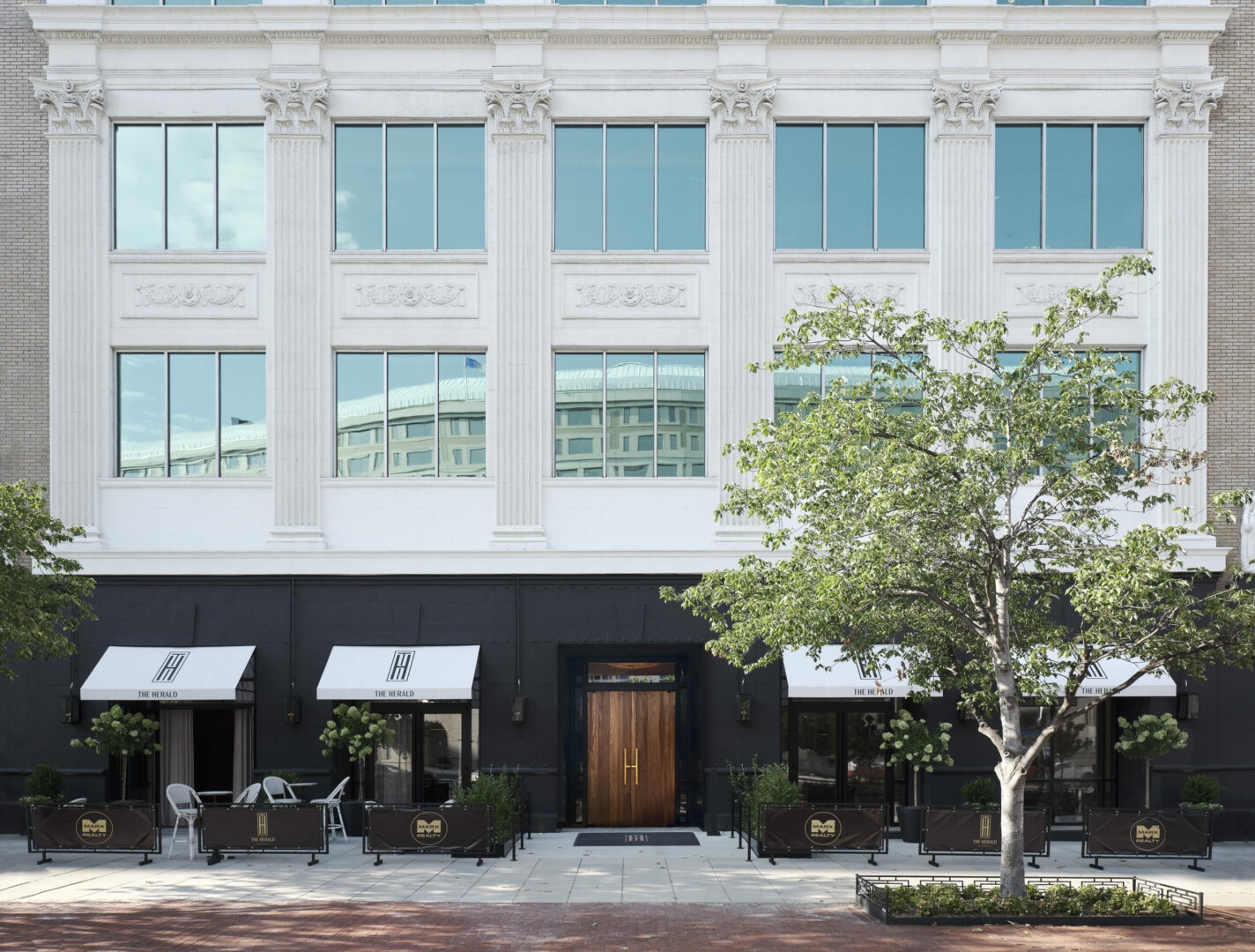
After $41 million in renovations, a historic downtown D.C. property has its first tenant.
Conservative lobbying group CGCN Group has signed a 10-year lease for 8,000 square feet on the sixth floor of 1307 New York Ave. NW, as New York-based Marx Realty completes a renovation of the 114,000-square-foot, circa-1923 building. The asking price was $72 per square foot, per an announcement.
Marx bought the Beaux Arts-style building, formerly home to the printing presses and offices of the Washington Times-Herald, in April 2020 and has since undertaken extensive interior renovations, in partnership with Invesco Real Estate and Studios Architecture. Work included an updated entry and new expansive lobby with floor-to-ceiling copper and glass feature wall.
Jacqueline Kennedy Onassis, then Jacqueline Bouvier, worked in the building as the Times-Herald’s “Inquiring Camera Girl,” so the design features many homages to her. Craig Deitelzweig, president and CEO of Marx Realty, said the building has been designed to attract office users looking for new space and updated amenities.
“Our upgrades give a very memorable aesthetic that’s hospitality-oriented,” Deitelzweig said. “It’s an important differentiator for tenants to have amenities and common areas available to them. And I think the history of the building really lends itself to a kind of eloquence we’ve got here.”
Evan Behr, Doug Mueller and Nathan Beach from JLL represented the landlord, Tyler Bensten and Scott Hoffman from Savills represented the tenant.
BY KEITH LORIA SEPTEMBER 7, 2021
CGCN Group, a Washington, D.C.-based government affairs firm, has signed an 8,000-square-foot lease at The Herald, a $41 million renovated office building in D.C. that opens on Sept. 22.
The lease is for 10 years at a rent of $72 a square foot, with the company taking space on the sixth floor.
Marx Realty owns the 114,000-square-foot building, having acquired it in April 2020, and immediately set out to create a hospitality-infused transformation of the historic property.
“We bought the building during COVID, because we believed in the physical attributes of the building and we believe in D.C.,” Craig Deitelzweig, president and CEO of Marx Realty, told Commercial Observer. “We’re seeing our vision come to fruition, and we couldn’t be happier with the interest and demand. It would have been excellent in a pre-COVID world, but it’s been unbelievable in a post-COVID world.”
Located at 1307 New York Avenue and originally built in 1923, the building once housed the printing presses and offices of the old Washington Times-Herald, where Jacqueline Kennedy Onassis (then Jacqueline Bouvier) worked as the “Inquiring Camera Girl.”
The office building now features a doorman attending to oversized wooden entry doors, an intimate foyer that opens to an expansive lobby with design elements inspired by that original use as a newspaper office, and a glass wall inspired by traditional Linotype printing machines and portraits of D.C. notable politicians.
The building also boasts 14-foot ceiling heights, a 40-seat boardroom, a fitness center, and an 8,800-square-foot “Bouvier Lounge” on the ground floor, adjacent to a European-style cafe.
“The hospitality-like aesthetic and the details we’ve infused into every nook are a big draw for discerning firms seeking a sophisticated aesthetic and spaces where employees will enjoy coming to work,” Deitelzweig said. “We are seeing interest in every floor of the building. I believe the reason for that is that tenants really want space that is special and hospitality-inspired, and space that helps bring employees back to the office.”
CGCN is the first announced tenant and more leases are expected to be announced in the coming weeks.
Marx Realty Inks 10,000-Square-Foot Lease With Snow Phipps At 545 Madison Avenue In Midtown, Manhattan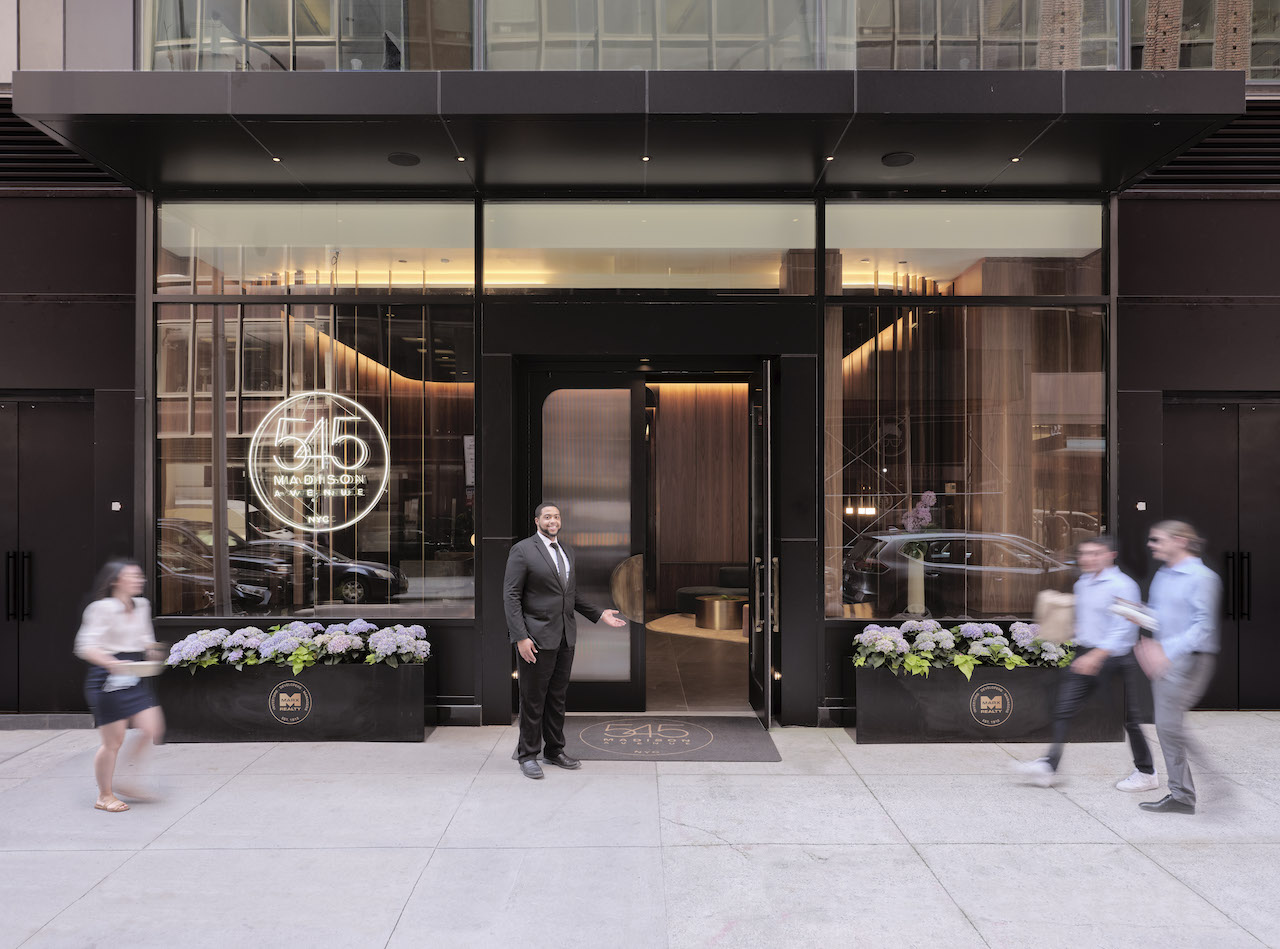
Private equity firm Snow Phipps is the latest company to join 545 Madison Avenue, a newly renovated office tower in Midtown, Manhattan. Marx Realty, the property owner, worked with Studios Architecture to complete the building’s transformation, which focused on elevating the hospitality aspects of the commercial property. Snow Phipps will occupy a suite on the building’s tenth floor that spans approximately 10,000 square feet. Lease terms were negotiated for seven years at $89 per square foot. The company is the first new tenant at 545 Madison since the commencement of construction.
“We are leading a design revolution in the office sector and it’s about much more than just ‘repositioning’ a building,” said Craig Deitelzweig, president and CEO of Marx Realty. It’s about answering the demand for office spaces that are truly special and inspiring, providing space with a soul.”
Scope of work on the ground floor included the construction of a new lobby, the installation of floor-to-ceiling glass, modern signage, concrete planters, and gray metal accents. The entrance was also relocated to 55th Street to reduce congestion and improve lobby access.
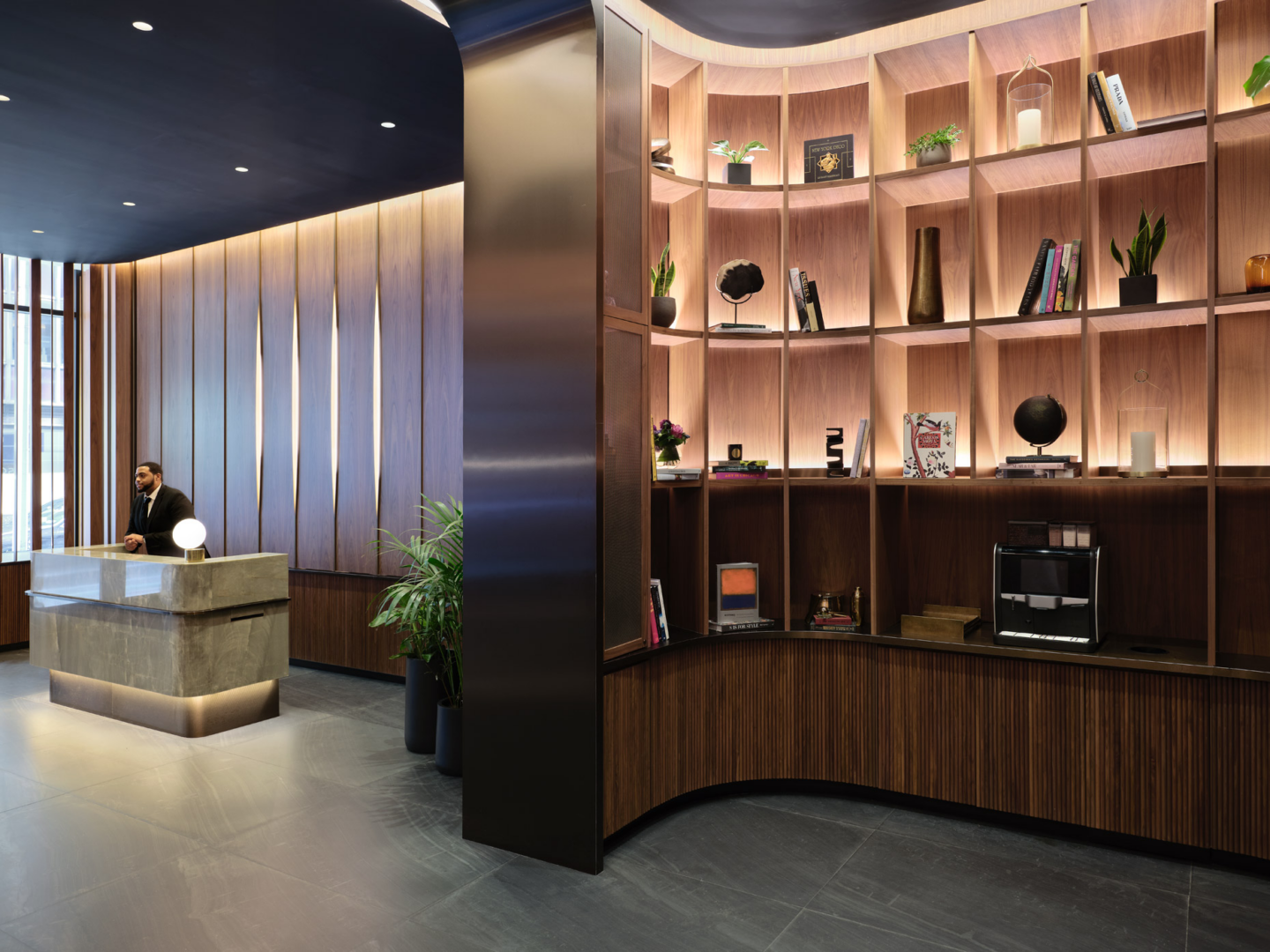
The extensive renovation will also include a library, multiple lounge and seating areas, and a 7,000-square-foot indoor-outdoor respite on the eighth floor that will debut as Leonard Lounge. When complete, the lounge will include a ceiling-suspended fireplace, bar seating, a 2,000-square-foot landscaped terrace, a boardroom with co-working spaces, a café, and walnut wood and bronze finishes throughout. For extra finesse, Marx Realty’s signature scent will waft through the amenity space.
“Job creators in the finance, media, and technology sectors understand the need to bring employees back to a beautiful space and our first-of-its-kind hospitality-meets-office aesthetic will continue to increase in relevance,” Deitelzweig said. ”Marx Realty’s signature hospitality style goes far beyond slapping some stone on a wall or adding some new artwork, and the team at Snow Phipps immediately recognized the value of providing a warm and welcoming space for employees.”
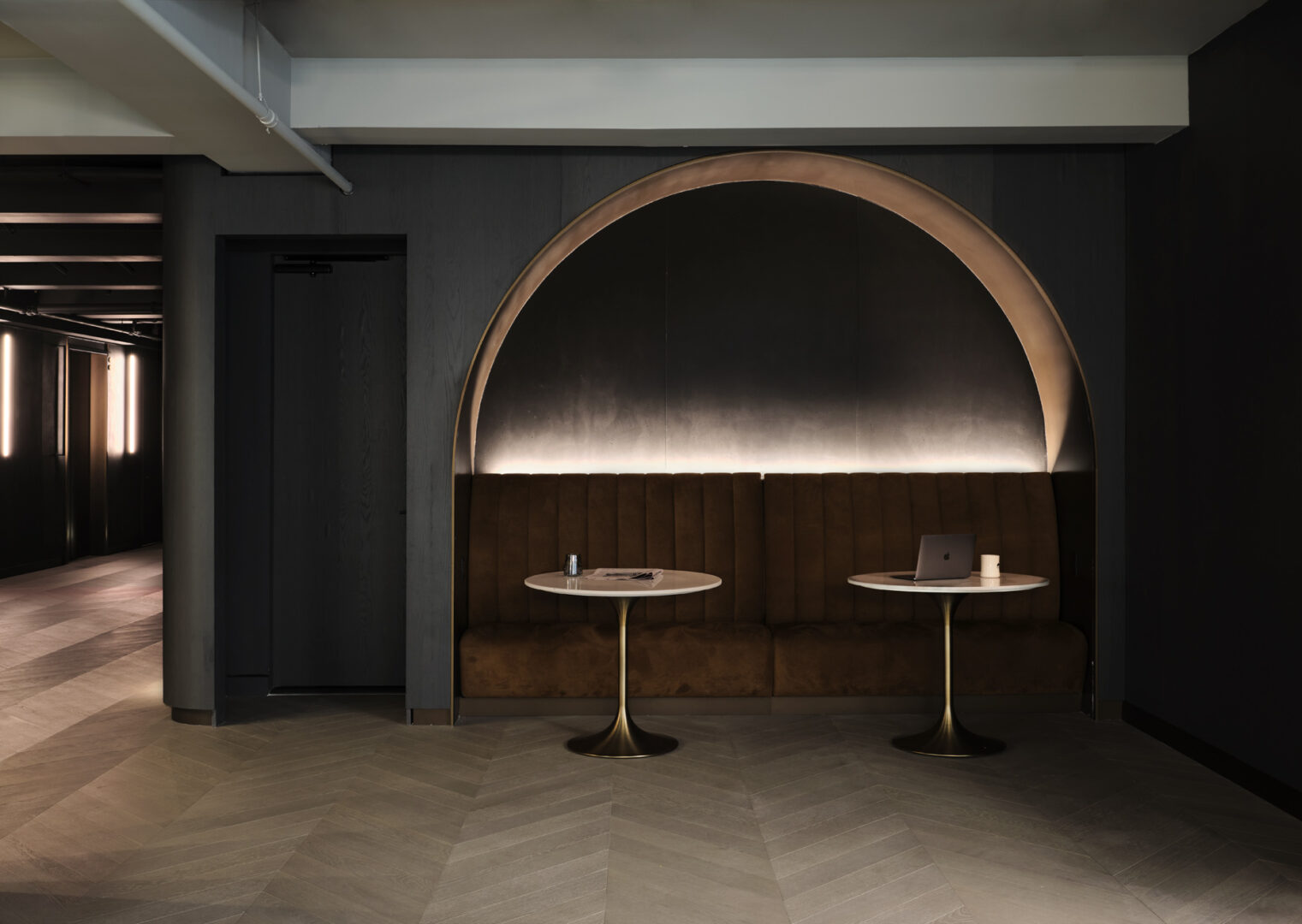
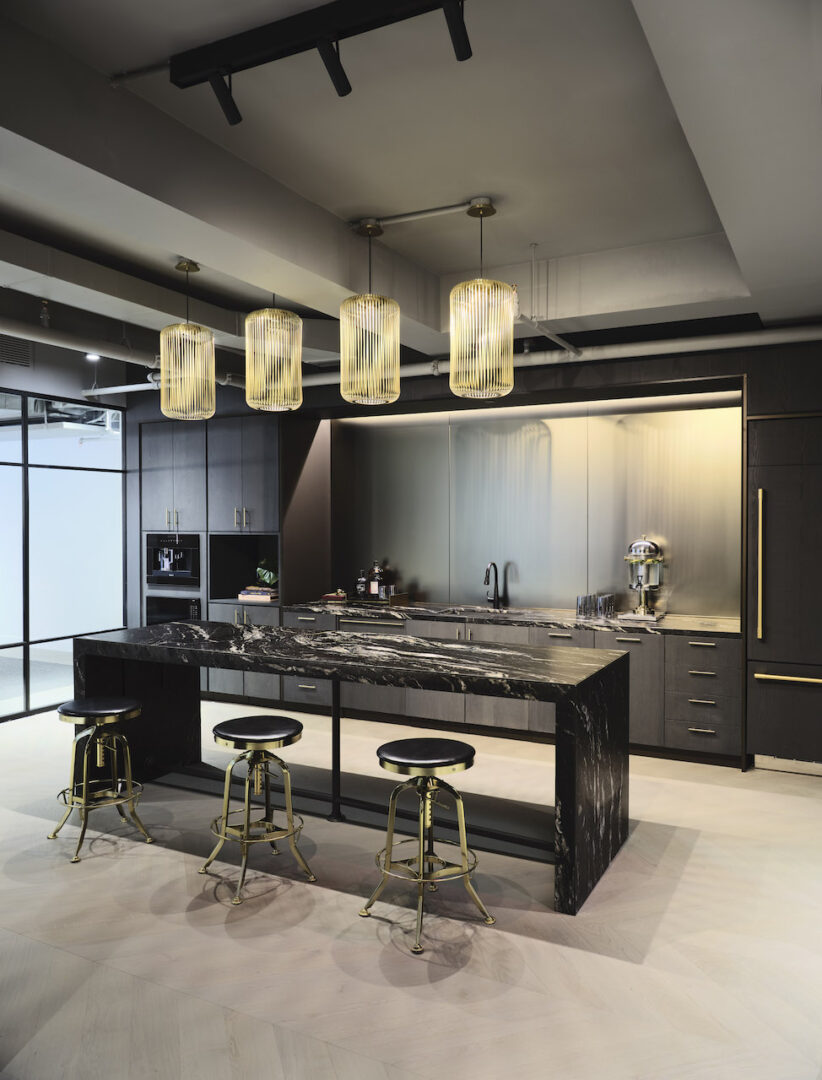
Cushman & Wakefield is the exclusive leasing and marketing agent for the available suites. OTJ Architects oversaw design of the office suites on the third and 14th floors. According to representatives from the company, total construction costs for the project hover around $24 million. Phase one of the building’s extensive modernization is currently underway.
Private-equity firm, executive search agency and fintech company behind 3 big new Manhattan office leases
By Liz Young July 30, 2021
Beyond a big expansion at the One Vanderbilt skyscraper, and a major lease renewal in lower Manhattan, other office leases that got done recently included private-equity, talent management and fintech companies taking space.
Take a look at the details here:
Private-equity firm moving offices
Snow Phipps has inked a seven-year lease for a 10,000-square-foot office at 545 Madison in Midtown.
The private-equity firm will occupy space on the 10th floor at the 18-story office tower. Asking rent was $89 per square foot. Snow Phipps plans to move from 667 Madison, about six blocks away.
Owner Marx Realty has been working on a $24 million repositioning of the property over the past year, aiming to create a hospitality vibe at the office building with hotel-like finishes, by using warm wood tones, for example.
The renovations at 545 Madison include a new lobby, library, seating areas, pre-built office suites and a 7,000-square-foot indoor and outdoor club space on the eighth floor. The entrance was moved to 55th Street.
Since construction on the renovation started, Snow Phipps is the first new tenant to sign on. Another three leases are in negotiation, according to the landlord.
The building, between East 54th and 55th streets, is close to Central Park, Grand Central Terminal and Rockefeller Center.
Evan Margolin of Savills represented Snow Phipps in the deal. Tara Stacom, Harry Blair, Peter Trivelas and Remy Liebersohn of Cushman & Wakefield (NYSE: CWK) represented Marx Realty.
David Burns and Kristin Kaiser of Studios Architecture are working with Marx’s in-house design team on the lobby redesign and the amenity spaces. OTJ Architects worked on the pre-built suites on the third and 14th floors.
Marx Realty is a division of Merchants’ National Properties. Its portfolio includes more than 5 million square feet of commercial office, retail and residential space, as well as five mixed-use projects that are under development.
by Betsy Kim
Marx Realty CEO Craig Deitelzweig
Despite the non-capitalistic overtones of its name, Marx Realty and its parent company, Merchants’ National Properties, pioneered the high-commerce trend of fusing hospitality with offices.
Now, to lure people working from the coziness of their homes for the past year back into the office, being ahead of that curve has proven advantageous.
“We want people to enjoy being there when they walk into an office building,” says CEO Craig Deitelzweig.
Sixteen months of coronavirus-induced WFH has highlighted how much offices hadn’t changed in recent years.
“Just put a lot of white marble everywhere and call it a day,” he observes. “That worked for a time. But that’s over.”
Deitelzweig says those commodity, white marble lobby buildings fail to speak to the modern tenant experience, and are now in trouble. Nearly 19% of space in Manhattan is now vacant, with 21% of Downtown offices empty, according to real estate firm Newmark.
Deitelzweig believes steering away from the generic office design differentiates Marx. Even pre-pandemic, the commercial specialist was at the forefront of designing office spaces more akin to luxury hotels or clubs. A uniformed doorman and attendant welcome people upon entering.
At 10 Grand Central in Midtown Manhattan, walnut wood, leather, velvet, brass and herringbone concrete tile flooring create an ambience linked to the building’s original 1931 construction.
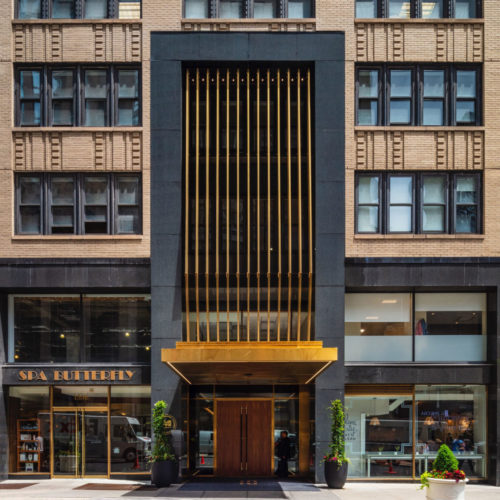
Marx Realty has designed its commercial office spaces to look and feel more like luxury hotels or clubs. 10 Grand Central in Midtown Manhattan has an ambience linking it back to its 1931 construction.
Unlike most offices, Marx properties are infused with a signature scent. Soft music wafts through common areas. Engaging five senses evokes a feeling of well-being, says Deitelzweig.
Pre-pandemic, repositioning the building increased per square foot rents, from a $48 to $78 range, depending on the floor level, to $72 to $97. Deitelzweig had seen competitors visit the space — even taking pictures.
With roots dating back to 1815 and incorporated in 1928, Merchants’ National Properties acquired Marx Realty in 2006. Together, they manage, develop and lease 71 office buildings and shopping malls, across 16 states.
COVID-19 battered the real estate industry. However, in 2020, Merchants’ National Properties reported grossed-up rental and other income of $51.3 million, compared to $48.2 million for 2019.
Throughout the pandemic, 98% of Marx’s office tenants continued to pay rent, even with employees working remotely. Now, many businesses are planning to return to the office.
“It seems the entire financial sector is coming back to work by September,” says Deitelzweig. Many tenants who moved out of their offices let their leases expire.
“All of a sudden, they realized, ‘We’re going to be an outlier. We need space now.’ We’re seeing a lot of that,” he adds. Tenants in the financial industry and private equity tenants in particular are showing interest in his company’s properties. At 10 Grand Central, five proposals are out to various private equity firms interested in leasing on the 21st and 23rd floors.
A new look and feel
Another building, 545 Madison Avenue, underwent a $24 million, hotel-like re-design. Deitelzweig describes how rounded edges and curved furniture lines evoke a more sensual experience instead of the typical hard-edged, square shapes associated with offices. In March, Marx gave two leasing tours of the property. That jumped to 17 in May.
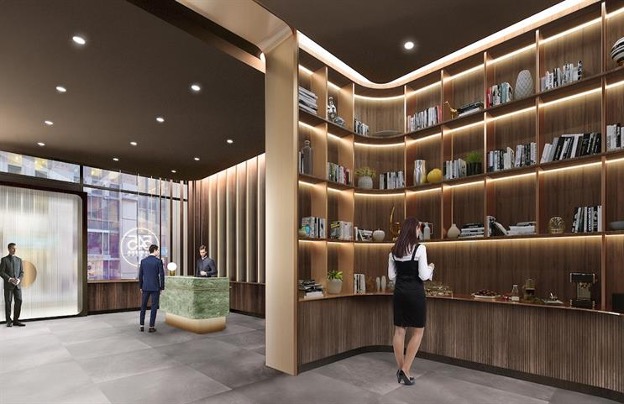
A rendering of the lobby library of 545 Madison Avenue, part of the building’s recent $24 million renovation.
“We would not have had that with the normal model,” he comments. That property has leased space to two premier private equity firms. The Herald, the Beaux-Arts building in Washington, DC, which Marx acquired in April 2020, renovated and is introducing to the market, signed three office leases.
Retail proved more challenging. April 2020 retail collections across the portfolio were at 45% and several tenants filed for bankruptcy. Marx worked with tenants, accounting for individual circumstances. But Deitelzweig clarifies it drew a hard line with national chains that should have been paying rent but weren’t.
“We said we will not accommodate you. You have to pay rent. You’ve been in our buildings for a long time. You’ve always done well and this is not the time to take advantage of us,” he says.
“For the smaller businesses, we fully understood they were really suffering and maybe didn’t have the wherewithal to make it without some help.”
Marx Realty worked with virtually all of its restaurants, most of which have now reopened. Rent collection from Marx’s retail tenants has almost recovered to pre-pandemic levels. The majority are paying full current rent, plus a portion of their deferred amounts. Marx consistently collected approximately 95% of retail rents since July 2020.
Its shopping malls performed better than other retail, benefiting from open-air and green space designs. They are anchored by supermarkets or other reliable drivers of visibility and traffic. The Cross County Center in Yonkers, New York, where a 130,000 square-foot Target broke ground in March, enjoys 98% occupancy. The mall’s rent collections dipped to 45% early in the pandemic. But they’ve been at about 97% since September 2020.
The shopping centers do not convey the same upscale narrative of Marx’s office spaces, but the solidly middle-class mall similarly focuses on the tenant experience.
Walking the walk
For its own part, Marx kept its offices open throughout the pandemic. And in June 2020, 100% of staff returned. Over the last year it even expanded, filling five new positions.
Communications were a key part of safety protocols. Doormen and desk attendants wore branded masks. The office exercised social distancing, installed bipolar ionization systems and held meetings with open windows. The firm increased sanitation measures and purchased touchless devices, such as cappuccino makers activated by phone apps.
Yet Deitelzweig did not want the office to conflict with the company’s core principles of creating pleasant and welcoming spaces. It placed PPE in attractive containers throughout the building.
“We made sure the signage was pleasant to your eyes. It wasn’t hostile in any way,” he says.
The real estate industry has obvious motivations to encourage people back to the office. Property also supports cities, providing roughly half of New York City’s tax revenue. These funds are projected to plummet by $2.5 billion next year, which The New York Times reports would be the largest decline in three decades.
Deitelzweig articulates another reason for reopening offices.
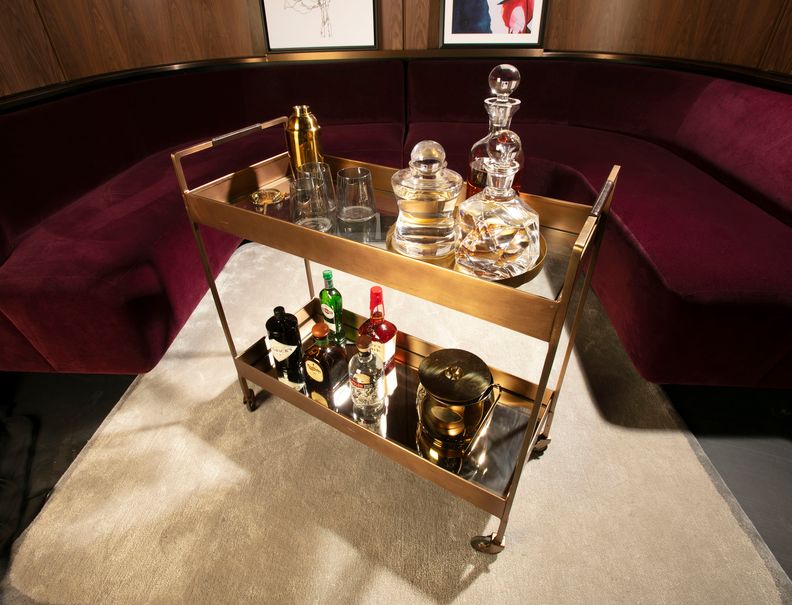
Leather scents, cafés and daily bar carts: Office tenants push for more amenities“A vibrant and thriving office environment is critical to achieving the dynamism that creates the world-class ecosystem of street activity, restaurants and city life we all love,” he says.
Commercial landlords return to throwing lavish parties to show off office space

Commercial landlords and brokers are rolling up their sleeves and getting down to business even as naysayers anguish over Manhattan’s record-high 18.7 percent office availability rate.
A sure sign of their determination — and confidence — is the return of broker parties, a time-honored lubricant of the city’s office-leasing machine.
The on-site gatherings where landlords and their agents show off new or redesigned space were on hold for what Cushman & Wakefield dealmaker Tara Stacom called 16 months of “Zoom and gloom.”
At Marx Realty’s “repositioned” 545 Madison Ave. recently, a contortionist in gold leggings twisted herself into pretzel shapes. Brokers in suits, ties and designer dresses — but no masks — nibbled miniature Peking duck pancakes. They slurped Sno Cones made with vodka, watermelon and tea.
And they hugged with abandon — a joyous moment for real-estate professionals who hadn’t seen one another in the flesh in more than a year.
The bash to show off 545 Madison’s new features was full of “pent-up energy and demand,” Marx CEO Craig Deitelzweig said. “People wanted to be together again.”
Stacom, the building’s leasing agent, said 225 invited guests checked out new amenities at the 17-story address, where floor plates of up to 10,000 square feet are ideal for smaller financial firms.
Developer Craig Deitelzweig says New Yorkers have a pent-up need to socialize in the flesh.
Joining the fun were Stacom’s Cushman colleagues Adams Spies, Bruce Mosler and Michael Burgio, JLL’s Mitchell Konsker and Mitch Arkin, Meridian Capital’s Helen Hwang, and CBRE’s Doug Middleton and Eric Deutsch among scores of others.
Among other recent mask-free showings, CBRE hosted a small party at 441 Ninth Ave., aka Hudson Commons, and landlord Joseph Moinian held one at 3 Columbus Circle.
CBRE global brokerage head Stephen B. Siegel said the trend signifies that “business is booming well beyond the doomsayers. The recovery is already under way.”
The parties, which can cost $50,000 to $100,000, give brokers a feel for newly minted or redesigned floors in a way that video presentations can’t.
“There’s no other way for them to actually experience space,” Deitelzweig said.
Marx took control of 545 Madison in October 2019 after ground leaseholder Thor Equities defaulted on its mortgage. (“I was here when the marshal came in with the eviction papers,” one party attendee chuckled in the elevator.)
To contemporize the dated property, Marx spent $24 million on a new, hotel-like lobby, a tenants’ club floor, a library, lots of walnut and bronze trim, and curved lobby surfaces to soften its hard edges.
Common areas boast what Deitelzweig called “our signature scent,” a blend of leather, jasmine and citrus.
The party featured abundant alcohol, a defining feature of such events.
A party at 545 Madison Ave. featured a contortionist and vodka Sno cones.
The party featured abundant alcohol, a defining feature of such events. “We once had incredible scotch-pairing carts wheeled around” for a “Mad Men”-themed event, recalled JKS Events founder Janeen Saltman, a leading planner who wasn’t involved at the Marx bash but has produced scores of others for landlords and brokerage firms.
Broker parties usually include raffle drawings, where prizes range from modest to magnificent.
The Marx event winner, Savills’ vice chairman Evan Margolin, scored a weekend stay at Montauk boutique hotel Marron, where rooms average in the mid-$600s a night.
Adam Hochfelder’s Max Capital, which once owned 450 W. 33rd St., raffled off a 16-foot, $20,000 Boston Whaler fishing boat in 2002, the New York Times reported.
According to an unpublished, apocryphal tale, the winner promptly sold the vessel at a deep discount from the list price to another broker.
“These guys can’t stop making deals,” an insider laughed.
Stacom recalled that at 1500 Broadway in the 1980s, “I had the idea of something for everybody. I asked everyone for their shoe sizes in advance. My team and I ended up handing out 800 pairs of Topsiders.”
But for all the fun, CBRE tristate CEO Mary Ann Tighe said, “As nice as broker parties are, what I like most are closing dinners.”

Prior to the pandemic, Craig Deitelzweig’s Manhattan-based Marx Realty prided itself on thoroughly amenitized buildings that emphasized a healthful, streamlined experience for users — the sort of offices to which employees might want to come.
You can see where this is going. Such buildings became that much more desirable due to COVID, putting the privately held Marx in the commercial real estate catbird seat.
“We didn’t slow down and we’re glad we didn’t, because now that tenants are coming out, they’re really wanting this type of product,” Deitelzweig said. “They want to bring their employees back, and the best way to do that is to bring them to a space that they’ll love going to.”
Earlier this year, Marx completed the repositioning of 545 Madison Avenue, a 17-story, 140,000-square-foot office property full of wellness features that include UV lights in the ductwork and enhanced air-filtration systems. It even turned out that the copper and brass finishes that Marx chose for 545 Madison, because they appeared warm and inviting, are particularly inhospitable to coronavirus. Marx also finished building out what the company calls its Penthouse Collection at 10 Grand Central, 25,000 square feet of top-shelf office space.
This year as well, Marx partnered with Invesco Real Estate on a $75 million plan to convert a former printing press at 1307 New York Avenue NW in Washington into a 134,000-square-foot office property with hotel-like amenities uncommon in the office stock of the nation’s capital.
Finally, the company is redeveloping and rebranding the 1.15 million-square-foot Cross County Center in Yonkers, just north of New York City. It features a 130,000-square-foot Target, which Marx landed to fill an empty Sears site.
Who says brick-and-mortar retail is dead? Or, for that matter, urban areas?
Invesco Acquires Stake in Iconic DC Office Undergoing Extensive Revamp“There were all these scary newspaper stories about people not coming back,” Deitelzweig said of cities and the early part of the pandemic. “But we didn’t believe that. We believe in cities, we believe in New York, we believe in D.C. And we believe in our product.”—T.A.

Investment powerhouse Invesco has acquired a 70 percent stake in The Herald, a 134,000-square-foot office building in Washington, D.C., and is teaming up with co-owner Marx Realty on a $75 million transformation of the iconic property.
Located at 1307 New York Avenue, the building has a storied history. Built in 1923, the property was once home to the printing presses of the Washington Herald Examiner and was the workplace of historic figures, such as William Randolph Hearst, Cissy Patterson and Jacqueline Kennedy Onassis (then Bouvier).
“One of the reasons Invesco invested in this is that it’s almost a new asset class that doesn’t exist in the market, and there’s a real demand,” Craig Deitelzweig, Marx Realty’s president and CEO, told Commercial Observer. He declined to provide the acquisition price behind the deal.
Marx Realty originally acquired The Herald last April in a $41 million deal from a group of education associations, cleared the building of its existing tenants and began renovations. The firm plans to increase rents to the $60 to $70 per square foot range.
“We will have the renovations complete the first weekend of June, and we hope to have our first lease signed before then,” Deitelzweig said. “Our pre-built floor, which is our seventh floor, will deliver the first week of May.”
Renovations will include the addition of a European-style cafe with French-style seating outdoors. Inside, there’s a rotunda and a fireplace, and the building will be the only office property in D.C. with wooden floors.
“It’s a full top-to-bottom renovation and we’re being respectful to the building’s heritage as a printing press as well as the home of Jackie Kennedy,” Deitelzweig said. “We’re changing the landscaping, there will be two giant wood oversized doors with a doorman outside and our signature scent and music playing.”
All of the furniture was designed based on a different outfit that Kennedy wore, he added.
“It’s really unlike any building anywhere, given the building’s heritage and our hospitality-inspired finishes,” Deitelzweig said. “As a result, we have nine proposals out already and even have interest for the entire building.”
Invesco Joins Marx Deal, Eyes More
March 30, 2021
Invesco Real Estate has bought a 70% stake in a Washington office building from Marx Realty – forming a partnership that’s on the prowl for more deals.
Invest last month quietly bought the majority interest in the 134,000-sf building at 1307 New York Avenue NW. The ideal valued the property at $41.5 million, the same price Marx paid in April 2020 to buy it from an American Association of State Colleges and Universities partnership. That deal was brokered by CBRE and Savills. Marx and Invesco struck their agreement off-market.
The Dallas investment manager is working with Marx to identify office buildings the duo can buy in New York and Washington, Marx’s top markets. The partnership has not set an acquisitions goal.
Marx had been planning $33 million of upgrades to the building on New York Avenue, as part of the firm’s strategy of bringing hotel-style amenities to office properties. Invesco will help fund those improvements, which are scheduled for completion by July.
The building has been emptied of tenants. The old leases averaged $20/sf, and Marx now expects rents around $70/sf. The property, known as the Herald Building, was developed I 1923 as the Beaux Arts-style home of the Washington Times-Herald newspaper.
The joint venture will reposition the six-story building with an updated lobby and rotunda, as well as an amenities floor with a lounge, a cafe, an oversized boardroom and a fitness/wellness center.
“Investment in the office sector is now b being driven by definitive and distinctive points of difference in product,” said Marx president and CEO Craig Deitelzweig. He said the firm aims for “top-to-bottom hospitality-infused ambience” to stand out forms he competition.
Marx was acquired in 2006 by Merchants’ National Properties, which now operates under the Marx brand. Its portfolio includes 5 million sf around the country and across property types.
In addition to Manhattan and Washington, Marx also is looking to reposition offices in Atlanta to its hotel-style model.