Contact
545 Madison Gets a Midcentury Modern Update
BY REBECCA BAIRD-REMBA NOVEMBER 13, 2020
When Thor Equities defaulted on its ground lease at 545 Madison Avenue last year and Marx Realty took over the building, the new landlord decided the 17-story office property could use some modern updates.
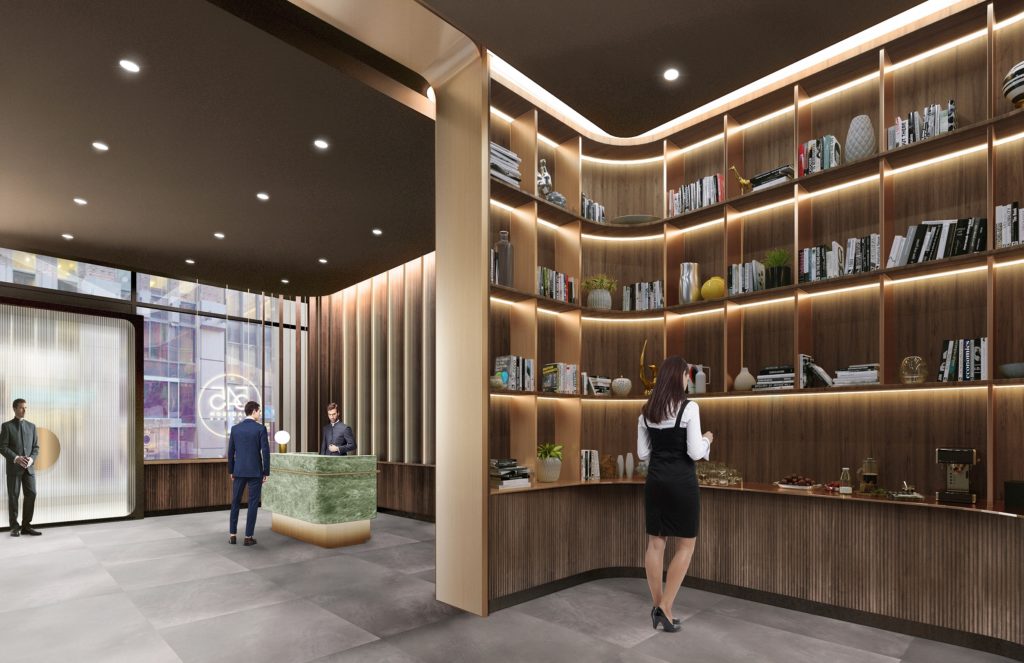
Marx CEO Craig Deitelzweig said that the glassy 1950s tower “used to have lots of sharp edges. Now there are rounded edges — rounded edges for archways, a rounded library, three rounded seating areas and a touchless cappuccino maker” in the lobby.
The entrance and lobby are being renovated in a midcentury style, much like Marx’s 10 Grand Central. The walls will be reclad in walnut wood with bronze accents, complete with what Deitelzweig calls “sexy lighting” and a reception desk made of emerald quartzite that will be lit from behind.
Even the lobby doors will be rounded and oversized “so they’re dramatic,” said Deitelzweig. The furniture will have rounded edges as well, with velvet couches in midcentury pinks and greens. Other accents include a blackened concrete wall and a bronzed mirror. There will also be fruit-infused water, jazzy music and Marx Realty’s “signature scent.”
Upstairs, Marx is doing 20,000 square feet of prebuilt office suites on the third and 14th floors. The aesthetic will be similar to the lobby, with arched seating areas carved out of dark wood, midcentury furniture in bright colors, and kitchenettes outfitted with dark wood cabinetry. The 10th floor is also up for lease. Asking rents in the building range from $80 to $100 per square foot.
The bathrooms and elevators will be revamped with a midcentury modern style, too, with bronze and grey and walnut woods. Entering the building and calling the elevators will be touchless, thanks to Marx’s in-house app. One of the doormen will be responsible for pushing the elevator buttons, rather than building tenants.
“What’s nice about bronze is that it’s antimicrobial, and all the touch points in the building are bronze,” Deitelzweig said.
Construction started last month, and is expected to wrap in February.
Ultimately, “we want everyone to feel safe and like they’re cocooned in safety and velvet and soft textures,” he said. “We want everyone to feel like they’re in a hotel.”
BREATHING NEW LIFE INTO DYING HOTELS With the industry on the ropes, investors are brainstorming ways to repurpose the now-empty buildings
BY NATALIE SACHMECHI
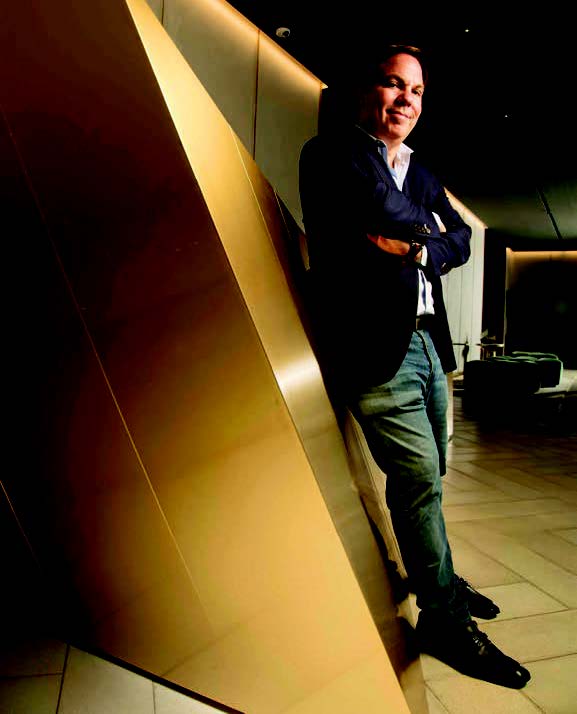
Craig Deitelzweig made his mark in real estate by buying office buildings and making them look and feel like hotels. “Why shouldn’t you feel like you’re on vacation when you’re at work?” he asks. His redevelopment of the offices at 10 Grand Central is evocative of a chic, boutique hotel with a signature scent pumping through its ducts. He’s done this at properties around the city, but now that tourism is in tatters and hotels sit empty and in danger of default, the chief executive of Marx Realty is looking at a new strategy: buy up cheap hotels and turn them into offices.
As a result of the pandemic, not all of the city’s 700 hotels will make it, and some 25% are expected to close by 2023, experts say.
“Anybody who is in the market today is looking for ways to make sense of it,” said Woody Heller a cohead of the capital markets division at Savills. In some cases, he said, conversions make the most sense.
Rooms for rent
At the low point earlier this year, hotels could fill only 15% of the city’s roughly 128,000 rooms, according to analytics firm STR. The number of rentable rooms has dropped by a third since then to 85,000 now that more than 100 hotels have shuttered temporarily. The Roosevelt, the Marriott East Side, the AKA Wall Street and a consortium of Times Square hotels are among those that have closed permanently.
More than 60 others have offered their space for alternative use on a temporary basis, including the Upper West Side’s Lucerne Hotel, which is housing homeless people and is at the center of a hot debate between neighborhood residents and the city over how long the people should stay. The W Hotel in Union Square, now owned by Marriott, is housing New York University students for the fall semester.
A handful of developers are making moves to repurpose hotels permanently, including the owners of the Bryant Park Hotel, who are in talks to convert the landmarked, century-old building back to its original purpose: office space.
“A lot of hotels in their past lives were offices, so they have the bones to be converted back,” said Deitelzweig. Although hotel floor plates tend to be too small for traditional offices, they’re ideal for boutique offices like his, he said, adding that a full conversion would take only 18 months.
Hungry investors are watching for properties that are in distress. “A lot of people are preparing themselves for the bargain basement,” said Sabena Arora-Akarte, founder of Acadia Lodging Brokers & Advisors. “They’re putting out word that they’re ready to jump.”
Deitelzweig said he is exclusively looking at properties that have been taken back by their lenders, so he can buy them from the banks at a good price. He might not have to wait long. Currently 10 hotels in the city are at least 90 days past due on their mortgage payment, according to data analytics firm Trepp. They collectively owe more than $800 million to their lenders.
One of those hotels— The Standard, High Line, in the Meatpacking District—owes $103 million. Even at the Financial District’s Holiday Inn, where rooms are half the price they are at The Standard, $87million in loans are in arrears.
Occupancy rates have crept back up to 38% since cratering in March, according to STR, but the market won’t make any kind of meaningful rebound that will put hoteliers at ease until at least 2025, according to Vijay Dandapani, chief executive of the Hotel Association of New York City.
It’s a dynamic situation, he said, but conversions are hardly a revolutionary concept in New York. The city’s structures are often built on the presumption that they’ll have many lives before they’re eventually torn down, if ever. In times like these, he said, all a property needs is some new packaging.
At least 73 of the city’s many thousand residential buildings were once factories, schools or hospitals, though hotels were most commonly reborn as apartments according to apartment search and analytics firm RentCafe.
The 116-year-old Prince George in Madison Square was a glamorous hotel until the 1980s, when it became a welfare hotel. After sitting barren for seven years, it was purchased by Breaking Ground, an affordable housing developer, which rehabbed it into a residence for the homeless.
“From the street level, it’s hard to absorb all the changes,” former Deputy Mayor Daniel Doctoro wrote in “Greater Than Ever: New York’s Big Comeback,” his account of rebuilding the city after 9/11.
Local Law 50
Hotel-to-apartment conversions were so hot in the city by 2015 that the controversial Local Law 50 was passed, barring Manhattan hotels with at least 150 rooms from converting more than 20% of them to other uses during a two-year period. The law expired last year.
At Breaking Ground calls came early on in the pandemic from hotel owners looking to reposition their properties, said Brenda Rosen, the group’s chief executive. She has fielded calls from RFR Realty about its Paramount Hotel and from the Chetrit Group for the Hotel Carter, both in the Times Square area.
The organization is converting 90 Sands St. in downtown Brooklyn, a former hotel it bought from RFR, into 500 units of affordable and supportive housing, Rosen said. And developer Fairstead is leading the $60 million renovation of the former Park 79 Hotel to 77 affordable units for senior citizens.
Still, repurposing hotels is not always easy.
“The devil is in the details,” JLL Senior Managing Director Jeffrey Davis said, referring to stringent zoning laws that outline what types of properties may exist in various pockets of the city and the unique requirements for each type.
“You put that all in the blender and think of what can be,” Davis said, “[and] you get a lot thinner about the actual properties that can make these changes.”
Apartment buildings require a 30-footlongyard, for example, while hotels need only 20 feet. To qualify for multifamily housing, apartments must be a certain size and include at least a kitchenette—which isn’t common in hotel rooms, noted James Power, a land use lawyer at Kramer Levin.
Zoning laws restrict certain building types to designated parts of the city. Apartments may not be built in most manufacturing zones, for example.
Building supportive housing is one of the easiest ways to convert hotels into useful properties, said Jessica Katz, executive director of the Citizens Housing and Planning Council. The smaller units are better for studio apartments that can be used by single, homeless adults, she said. But, she said, there are still too many rules.
“We need to take away some of the obstacles to rebalance the market,” Katz said. “If we get zoning regulations out of the way so the market can do its job, then we may find a much faster recovery.”
The flexibility to adapt existing, empty buildings would help the city leverage its strengths, said James Whelan, president of the Real Estate Board of New York. But not every property will get the green light for conversion.
And that presents a problem, Davis said. “What do you do with these hotels that can’t be used for anything else?” he said. “You have hotels that just don’t work as hotels anymore.”
In 2021, will you buy or sell any real estate? What kind?
We will continue to be buyers of value-add office buildings in New York, Washington, D.C., and Atlanta. We hope to be able to purchase and reimagine/reposition more buildings to our distinctive, hospitality-inspired office offerings.
How f@*$ed is retail?
Poorly located retail is pretty f@*$ed.However, we own the Cross County Center — one million-plus square feet of vibrant, outdoor shopping and dining space in Yonkers, N.Y. — and it is doing amazingly well, because of its ideal location and terrific tenant mix. We like to think that forward-thinking ownership has something to do with it, too — we own the center with Benenson Capital Partners.
In this environment, outdoor centers will have an advantage, continue to outperform and attract the better retailers, whereas enclosed retail centers will only become more f@*$ed as they lose tenants to the better centers and bankruptcies.
How flexible are you with negotiating rents?
Not very.
Has your “dead to me” list grown?
I love everyone. I hope this isn’t the case but, if anything, I might be on someone else’s “dead to me” list.
Are you in the market for financing?
If I say yes, we will receive dozens and dozens of calls and emails from every capital markets banker in the city, so … no, we are not in the market for financing.
What would be the signs that things are NOT going to improve in 2021?
A once-in-a-lifetime pandemic, forest fires, floods, property damage, gun violence — hard to imagine things not markedly improving in 2021.
What do you think will NOT go back to normal?
I think everyone now appreciates family life and how family time should be cherished. That’s a good new normal!
Who do you like for mayor in 2021?
Carole Baskin.
What do you think the city and/or state should do to help both real estate and the city?
New York is the greatest city in the world with the most talented, industrious and resilient workforce; but the city and state should be more business-friendly and partner with companies to make New York an even better place to live and work. I find it frustrating when I hear certain politicians speak ill of our corporations or wealthy New Yorkers. That rhetoric is neither helpful, nor wise.
When I see all of the job growth that Amazon is bringing to the D.C. region as a result of HQ2, it reminds me that, certain New York politicians have to do a better job in making the city a more hospitable place for business — Queens should have had those good-paying jobs.
How do you think the November election will affect real estate? How do you see a Trump win? How do you see a Biden win?
Uncertainty around an election is never good, but with low interest rates and a Fed that is doing everything right, real estate will bounce back once there is a COVID-19 vaccine.
LIGHTNING ROUND
Where’s your apocalypse bunker? Does the screening room in my basement count?
Favorite at-home quarantine foods?
Tara Stacom sends me a bucket of KFC every once in a while.
Did you gain or lose weight during quarantine? KFC … this COVID 15 thing is real.
Sourdough bread, banana bread, other? Chocolate chip banana bread baked by my daughter Lily. She is the best baker, which was not a good thing during quarantine.
Which TV show have you binged? I tried to watch “Schitt’s Creek,” but it didn’t do it for me. What am I missing?
What restaurant did you go to when restaurants reopened?
Katz’s Deli.Pastrami on rye.
Mayor de Blasio: Best Mayor or Best Mayor EVER? What’s behind door number three?
Best work-from-home hack? While on, yet, another Zoom call, I took a screenshot of myself, made it my background, and then slipped out of the frame. Still makes me laugh just thinking about it.
Where did you quarantine? Bedford, N.Y., with my wife, son and daughter. Although my son was not happy to leave college and my daughter was missing her high school friends, we found it great to have our kids stuck with us for a few months. Lots of time to play Monopoly together.
Biden, Trump or Kanye? They are all such great candidates, it’s just so hard to choose!
Target and H&M have signed new retail leases at the rebranded Cross County Center, formerly Cross County Shopping Center, in Yonkers, NY. Target will backfill 130,000 square feet at what was once home to the most successful Sears store in the nation. H&M signed a 10-year renewal to occupy 28,000 square feet for the first location of its upscale SOHO concept outside Manhattan.
The signings occur shortly after Marx Realty took over leasing and management of the historic shopping center earlier in the year. The firm has owned the center in partnership with Benenson Capital Partners for 65 years.
“As the retail sector emerges from the COVID-19 crisis, we have seen extraordinary foot traffic at the center showing pent-up demand,” said Craig Deitelzweig, CEO of Marx Realty.
Marx Realty was represented in-house by Mark Utreras. Target was represented by Ripco’s Jeffrey Howard, and H&M didn’t use a broker.
Target to Open 130,000 SF Store at Former Sears Location in Yonkers, New York
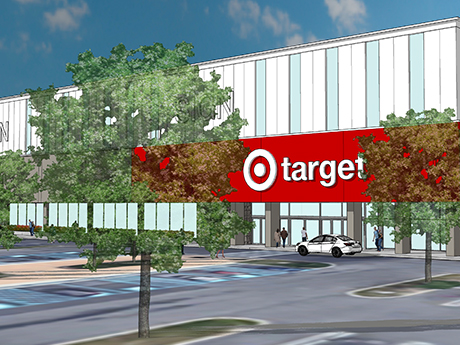
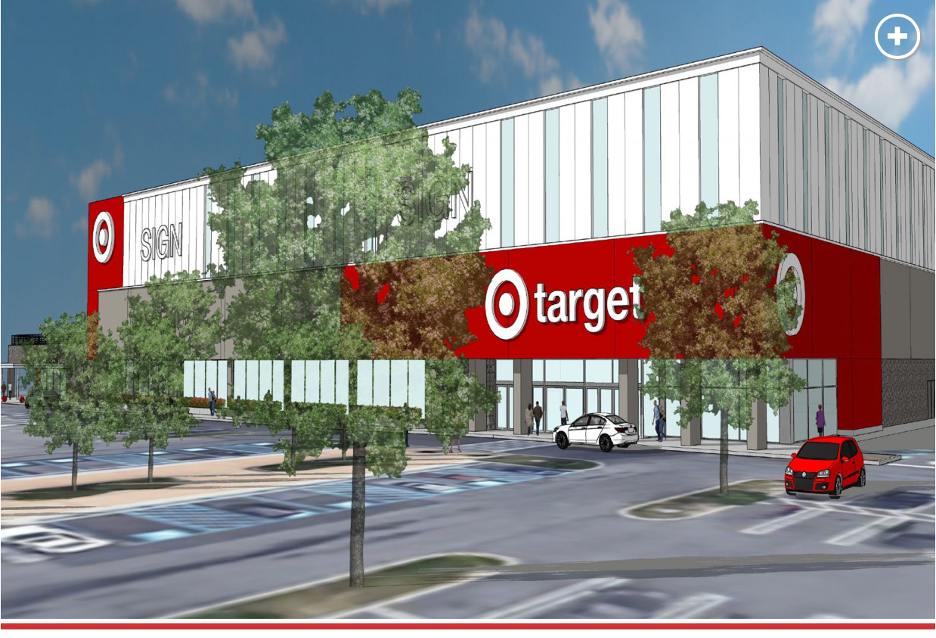
YONKERS, N.Y. — Target plans to open a 130,000-square-foot store at Cross County Center, a 1.1 million-square-foot retail power center in Yonkers, located north of New York City. Target has signed a 40-year lease to backfill a space formerly occupied by Sears.
A partnership between Marx Realty and Benenson Capital Partners owns Cross County Center, which features more than 80 retail and restaurant users. An opening date has not yet been determined.
Target to Open 130,000 SF Store at Former Sears Location in Yonkers, New York
YONKERS, N.Y. — Target will open a 130,000-square-foot store at Cross County Center, a 1.1 million-square-foot retail power center in Yonkers, located north of New York City. Target has signed a 40-year lease to backfill a space formerly occupied by Sears. A partnership between Marx Realty and Benenson Capital Partners owns Cross County Center, which features more than 80 retail and restaurant users. An opening date has not yet been established.
Marx Realty has announced that retail giants Target and H&M have signed new leases at the rebranded Cross County Center (formerly Cross County Shopping Center) in Yonkers, NY.
Target signed a 40-year retail lease to occupy over 130,000 s/f of retail space at what was once home to the most successful Sears store in the nation.
H&M signed a 10-year renewal to occupy 28,000 s/f where the retailer will incorporate its upscale SOHO concept.
“As the retail sector emerges from the COVID-19 crisis, we have seen extraordinary foot traffic at the center showing pent-up demand to experience the diverse retail, dining and entertainment offerings,” Craig Deitelzweig, president and CEO of Marx Realty, a New York-based owner, developer and manager of office, retail and multifamily property across the United States and division of Merchants National Properties.
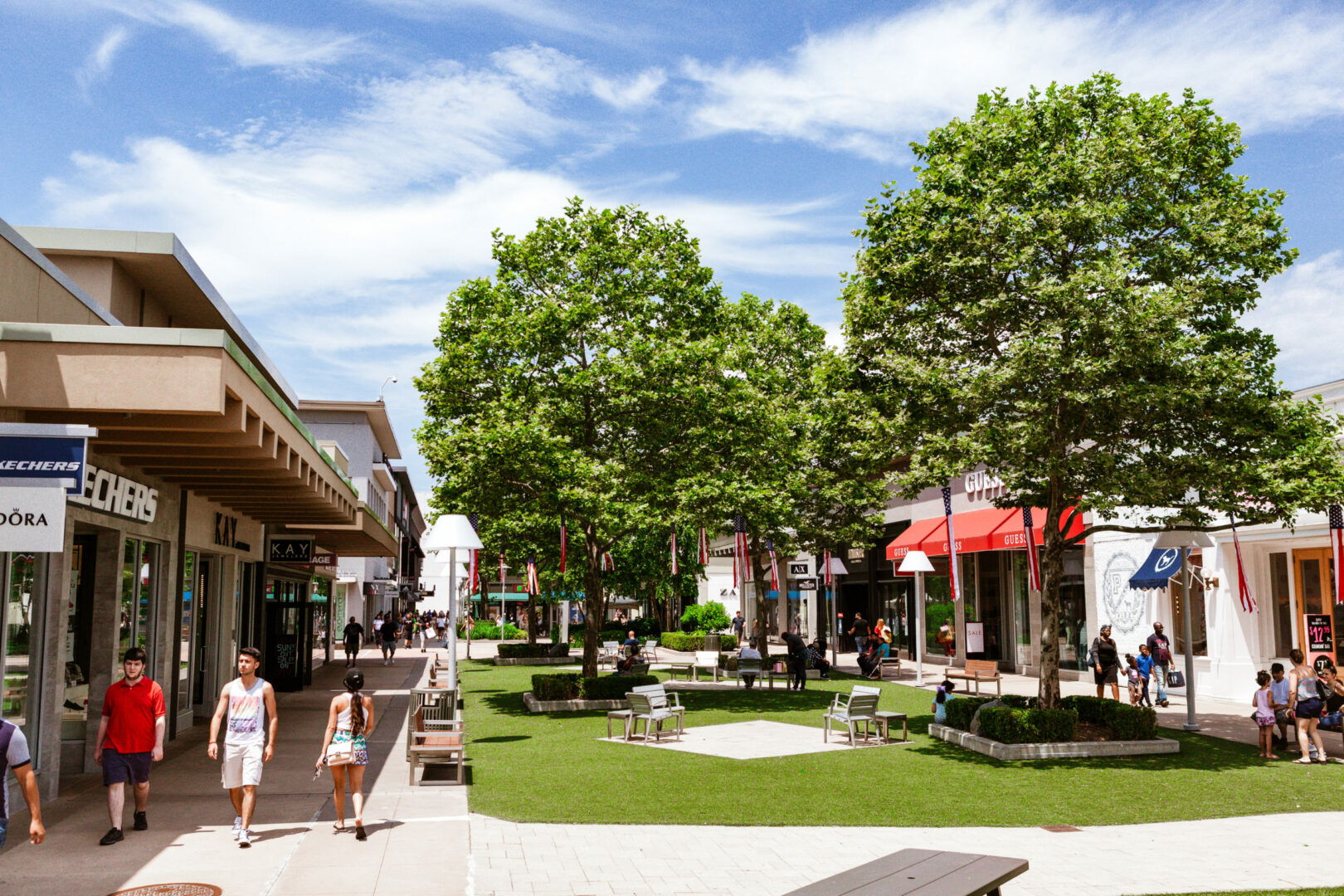
The news comes shortly after Marx Realty took over leasing and management of the historic shopping center earlier in the year. The firm has owned the center in partnership with Benenson Capital Partners for 65 years. Cross County is the nation’s first open-air shopping center, which has benefited the center as it begins a multi-phase plan focused on expanding the center’s uses.
Since the 200,000 s/f, four-story Sears store closed in fall 2019, Marx Realty has been in discussions with various national, regional, and local operators to bring a town square feel to Cross County Center. This will be the first Target store in the City of Yonkers.
Cross Country was the nation’s first open air mall
H&M has been part of Cross County Center since 2009 and they have selected the center as their second location for a revamped, cutting-edge SOHO-style concept. The retailer plans to invest $5 million in the location. The first store to embrace the new concept is located in Manhattan.
Marx Realty was represented in-house by Mark Utreras, Target was represented by Jeffrey Howard of Ripco, and H&M did not use a broker.
“As an outdoor shopping center, Cross County Center has been uniquely well-positioned during this time,” added Deitelzweig. “Marx Realty’s experienced team of professionals was prepared to follow CDC and government guidelines and create a safe and healthy experience for visitors. We are delighted to officially kick off a new era for Cross County Center.”
Jim Stifel, chief investment officer of Benenson Capital Partners, added, “We are also seeing incredible demand from some of the nation’s best retailers who want a presence here and expect several exciting tenant announcements in the coming months.”
Target to Open 130,000-Square-Foot Store at Former Sears Location in Yonkers, New York
Target’s new store at Cross County Center in Yonkers, New York, will span 130,000 square feet. An opening date has not yet been established.
Yonkers, N.Y. — Target will open a 130,000-square-foot store at Cross County Center, a 1.1 million-square-foot retail power center in Yonkers, located north of New York City. Target has signed a 40-year lease to backfill a space formerly occupied by Sears. A partnership between Marx Realty and Benenson Capital Partners owns Cross County Center, which features more than 80 retail and restaurant users. An opening date has not yet been established.
YONKERS, NY — A new retail store will be opening at the Cross County Shopping Center in Yonkers and one that has been there has renewed for a decade.
The national retailer Target signed a 40-year lease to takeover the 130,000-square-foot space that was once a Sears store.
H&M signed a 10-year renewal for its 28,000 square-foot-space where the retailer will incorporate its upscale SOHO concept.
According to a spokesperson, shopping center has been rebranded as Cross County Center.
Craig Deitelzweig, president and CEO of Marx Realty, which took over leasing and management of the center earlier this year, said there is a lot of excitement in the area about Target coming to Cross County.
“As the retail sector emerges from the COVID-19 crisis, we have seen extraordinary foot traffic at the center showing pent-up demand to experience the diverse retail, dining and entertainment offerings,” he said in a prepared statement.
Cross County is the nation’s first open-air shopping center, with such stores as Macy’s, Armani Exchange, GAP, Michael Kors, Old Navy and Victoria’s Secret.
Marx Realty has been in talks to fill the space Sears vacated since it closed in 2019.
The new Target will be the first in the city of Yonkers.
Yonkers Mayor Mike Spano said the city’s planning and development staff worked with Marx Realty to bring a “town square” concept to the center’s open-air design.
“Yonkers has hit the mark with Target’s plan for a new store at Cross County Center,” he said in a prepared statement.
“Target’s decision to invest in our city is a testament to the retailer’s confidence in our thriving economy and our business-friendly environment,” Spano said.
Target is making a long term commitment to Westchester’s largest city.
The retail giant announced that it has signed a 40-year lease to open a 130,000-square-foot store at the Cross County Center in Yonkers, replacing the bulk of the 200,000-square-foot location left by Sears that closed last year.
The 15-building Cross County Center is also home to H&M, which recently signed a 10-year renewal, as well as to Zara, Ulta, and Blink Fitness.
Target entered talks about a possible deal shortly after Sears closed in September last year, though nothing official was announced until Monday, Oct. 12.
“Yonkers has hit the mark with Target’s plan for a new store at Cross County Center, their first ever in Yonkers,” Yonkers Mayor Mike Spano said in a statement.
“Target’s decision to invest in our city is a testament to the retailer’s confidence in our thriving economy and our business-friendly environment. We are excited to get Yonkers back to business.”
Developers said that they plan to open up Target as soon as next year.
“Residents of Westchester County and the surrounding towns are over the moon to have Target coming to their backyard,” Craig Deitelzweig, President and CEO of Marx Realty, which signed the new lease said.
“As the retail sector emerges from the COVID-19 crisis, we have seen extraordinary foot traffic at the center showing pent-up demand to experience the diverse retail, dining, and entertainment offerings.”